
How to Deal With Conflict in an HSP Relationship — Without Shutting Down
Leigh Johnson
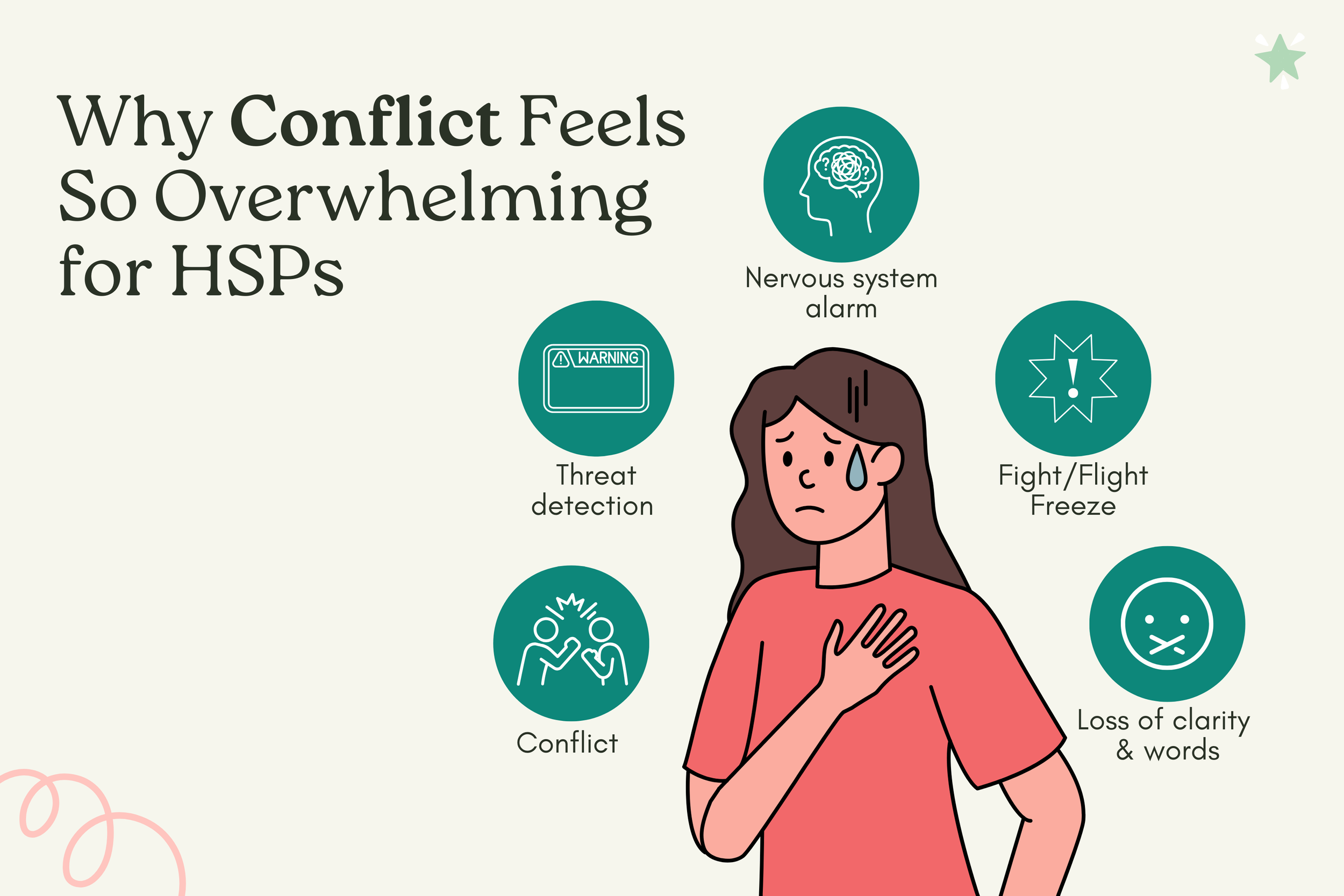
Conflict feels overwhelming for HSPs because your nervous system registers arguments as danger. You’re not “too sensitive” - you’re overstimulated. And once your system goes into fight/flight/freeze, shutting down becomes automatic.
But you can learn to stay grounded, communicate clearly, and repair conflict without melting down or withdrawing. The key is understanding what your body is doing (and why) so you can interrupt the overwhelm before it takes over.
Here’s how to handle conflict as an HSP in a way that feels safe for your nervous system and healthy for your relationship.
Why Conflict Hits HSPs Harder Than Others Realize
Your brain interprets conflict as a threat
Conflict is an inevitable part of the human experience, but our brains are still wired to send out a danger signal at the first sign of discord. As HSPs, we’re quicker to notice and respond more strongly to shifts in others’ behavior, such as a change in vocal tone, eye contact, or body language.
As our brains adjust to these changes and begin to sense tension, a part of our brains called the amygdala, kicks into gear to send out a warning to prepare us to defend ourselves (fight), escape the situation (flight, or “flee”), or shut down (freeze).
As HSPs, we take more time to process both external cues and internal or emotional experiences very thoroughly and deeply. Conflict, however, can sometimes feel like it comes on suddenly and out of nowhere. This can be overstimulating to our nervous systems!
Overstimulation can make it hard to focus, leading to confusion and agitation, further exacerbating that fight/flight/freeze impulse.
Arguments tend to escalate quickly. As the emotional centers of our brain take over, we lose the ability to access and engage our prefrontal cortex, the part of the brain that handles logic, decision-making, and reasoning.
So, when we’re deep in dispute, it’s harder to think clearly and communicate effectively, which can lead to further misinterpretation and disagreement. Because of our depth of processing as HSPs, we’re more significantly impacted by events we experience as negative, which can make conflict and our responses to that conflict feel like too much to handle.
Tone, volume, and facial expressions affect you more intensely
Research has indicated that HSPs are significantly more detail-aware than those who do not possess the trait of high sensitivity. We’re often the first people to notice a change in room arrangement or decoration, a friend’s new haircut, or even the onset of seasonal changes in weather and lighting. So when conflict is beginning to brew, our detail-sponge brains are taking in each and every little change in cue to assess for threat and adjust accordingly, which is a lot of cognitive and emotional work.
Because of our high sensitivity, when we feel and experience things we simply feel and experience them more vividly, powerfully, and intensely. We’re working hard to manage the barrage of our own emotions while also trying to make sense of what another person is saying and feeling in the moment - it’s a lot!
Sensory + emotional overload happen at the same time
For HSPs, the relationship between sensory overload and emotional overwhelm are deeply connected. When we’re taking in a surplus of external sensory information, such as during an argument, the balance between our cognitive and emotional systems can get thrown off balance. This makes it much more difficult to regulate our emotions, leading to lessened patience, frustration, and heightened reactionary emotions.
Hurt feelings, raised voices, and big reactions can be both the cause and effect of discord in a relationship dynamic. The resultant overload cascades through our nervous systems and our bodies. Heart rates elevate, we become sweaty and shaky, we may feel heat under our skin or even a feeling of numbness or sinking. The response is physiological as well as psychological - we can feel it everywhere.
If you identify as a highly sensitive person (HSP) and need tailored support, Thrive Therapy & Counseling can help. Book a call here to get the support you deserve.
The Shutdown Response — What’s Actually Happening
Freeze may be your nervous system’s protective reflex
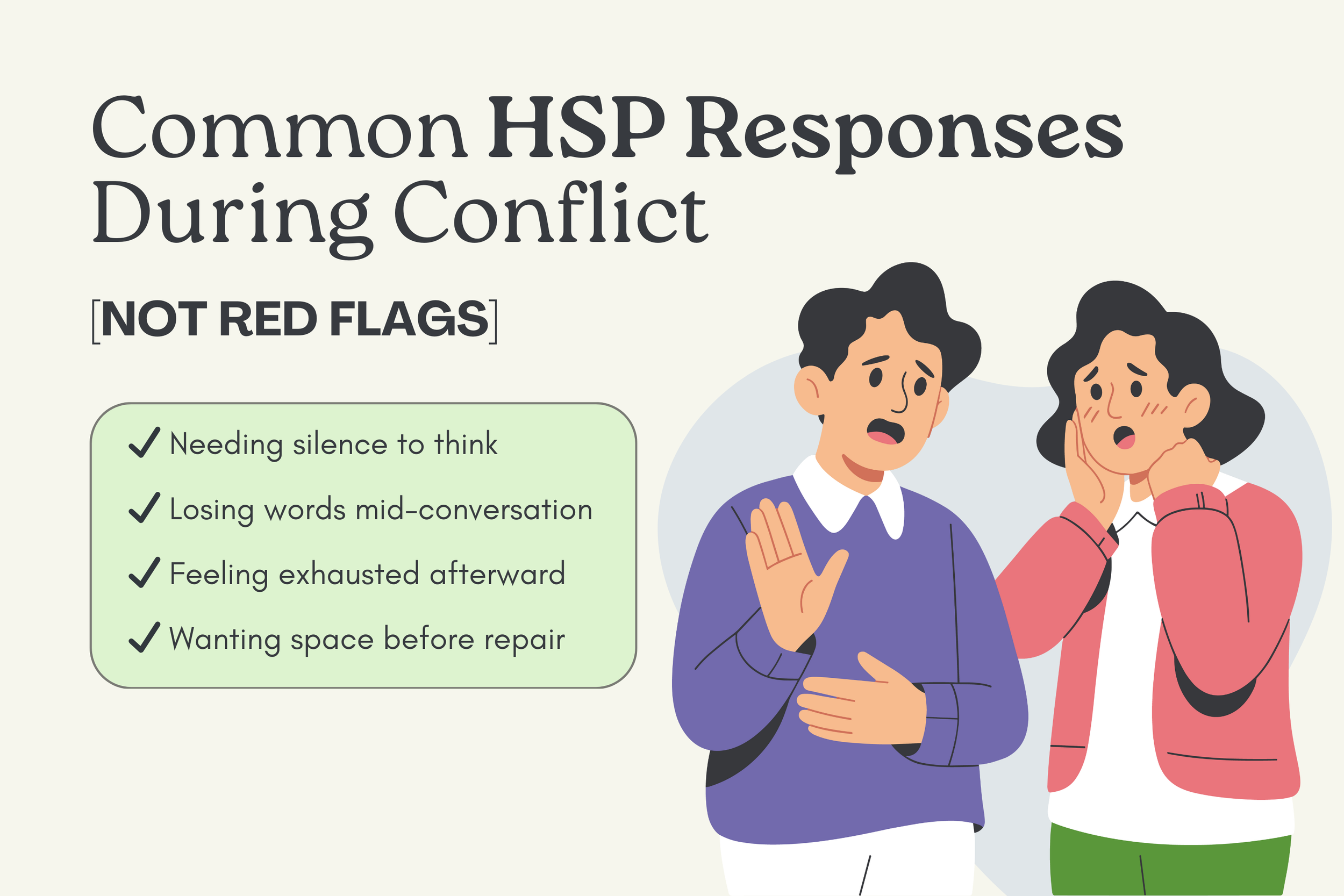
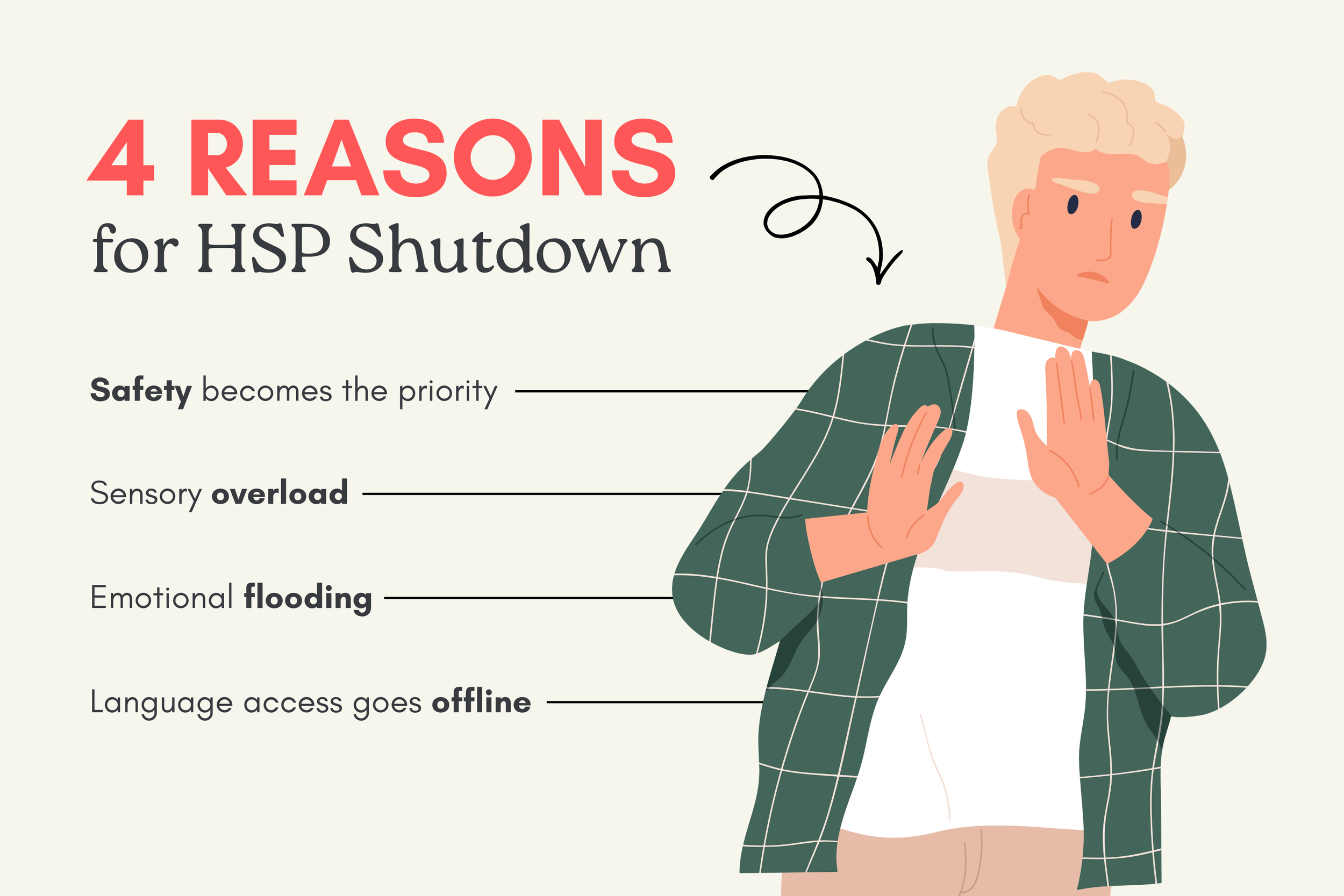
It’s important for us - and our loved ones - to know and remember that shutting down is not something we’re consciously deciding to do. Our brains are simply trying to protect themselves from the intensity of the situation at hand, and one way to attempt that is to mentally “check out” or create distance from the stressor via dissociation.
Unfortunately but unsurprisingly, our stress and trauma responses are not reactions we can simply will or wish away due to their hard wired, biological origins and nature. While it is possible to implement coping skills to improve our ability to stay present and calm during conflict, it takes time, practice, and patience.
When you freeze and shut down, your partner misinterprets it
The dynamic of one partner having a go-to response of “fight” and the other having one of “freeze” or shut down response is a strangely common relational combination. What often ends up playing out is a self-exacerbating feedback loop that leaves both parties feeling frustrated and even more disconnected than when the conflict started in the first place.
For the partner of someone struggling to stay present during a difficult discussion or argument, the shut down response can feel like dismissal, like their feelings aren’t important, or even like abject abandonment.
It is helpful to note the difference between an involuntary freeze response and using silence and withdrawal as a form of deliberate stonewalling. The prior happens due to sensory and emotional overwhelm (and the overlap between the two), while the latter is a tactical form of manipulation.
Other factors like family norms during upbringing and racial and cultural factors also play a role in our perception of conflict and our comfortability with expressing it. For example, I know of some clients who have realized that growing up in a more emotionally demonstrative household environment, ie in a family that argues openly and frequently, has lead them to internalize the message that fighting = caring or even fighting = showing love.
Conversely, folks who grew up in a more passive family system or even an emotionally neglectful one often feel conflict averse and have a lower tolerance for actual or even perceived volatility. Gaining some understanding about your partner’s background can go a long way toward better understanding one another and your similarities and differences.
You struggle to access language when flooded
When feelings become intense, the emotional center of our brain is at the wheel, and the more “logical” part that controls speech is much harder to access. The brain simply isn’t prioritizing communication, it’s prioritizing safety. This is unfortunately true even if the reason for feeling unsafe is due to strained communication. So in those moments, it makes sense that you can’t explain, respond well, or think clearly.
Step 1 — Recognize Your Early Warning Signs
So, how do you interrupt the cycle? As you read through this list, note which signals stand out to you when thinking back on what a recent moment of conflict felt like when things started to escalate.
Emotional signals
Feelings such as
Defensiveness or feeling attacked
Sudden urgency
Rising panic
Physical signals
Sensations such as
Tight chest
Hot face
Shaky hands
A “sinking” feeling in your core
Cognitive signals
Thoughts like
“I can’t do this.”
“I need to get away.”
“Everything is wrong.”
“It’s all over now”
Step 2 — Create a Regulation Pause (Without Stonewalling)
The pause is your superpower
Everyone - but HSPs especially - can greatly benefit from taking a pause to emotionally regulate in order to prevent conflict from escalating. You can think of it as not only protecting yourself and your loved one, but as shielding the relationship itself from further damage.
How to ask for space in a connected way
Sample language:
“I want to finish this conversation. I need 10 minutes to reset so I can stay present.”
“I’m overwhelmed. Please give me a couple minutes to get grounded.”
Note how the first phrase affirms your desire to communicate, and the second provides a rationale for the space. Adding these clarifiers can help your partner to feel acknowledged and ensure that the pause is in service of resolution rather than avoidance.
It is also vital that you specify - and agree upon - the amount of time you will be taking this pause. Please know that your partner is agreeing to this pause despite it being very difficult for them! So it is very much your responsibility to be the one to reengage after the allotted time has passed.
What to do during your break
You can try any or all of these suggestions
Grounding exercises such as progressive muscle relaxation or focusing on the five senses one by one
Distraction, perhaps playing a game on your phone if you have access to one or reading something random and unrelated to the argument
Deep breathing (it’s a cliche for a reason, it does work!)
Physical reset like jumping up and down to help release the built up tension in your body, or some slow stretching.
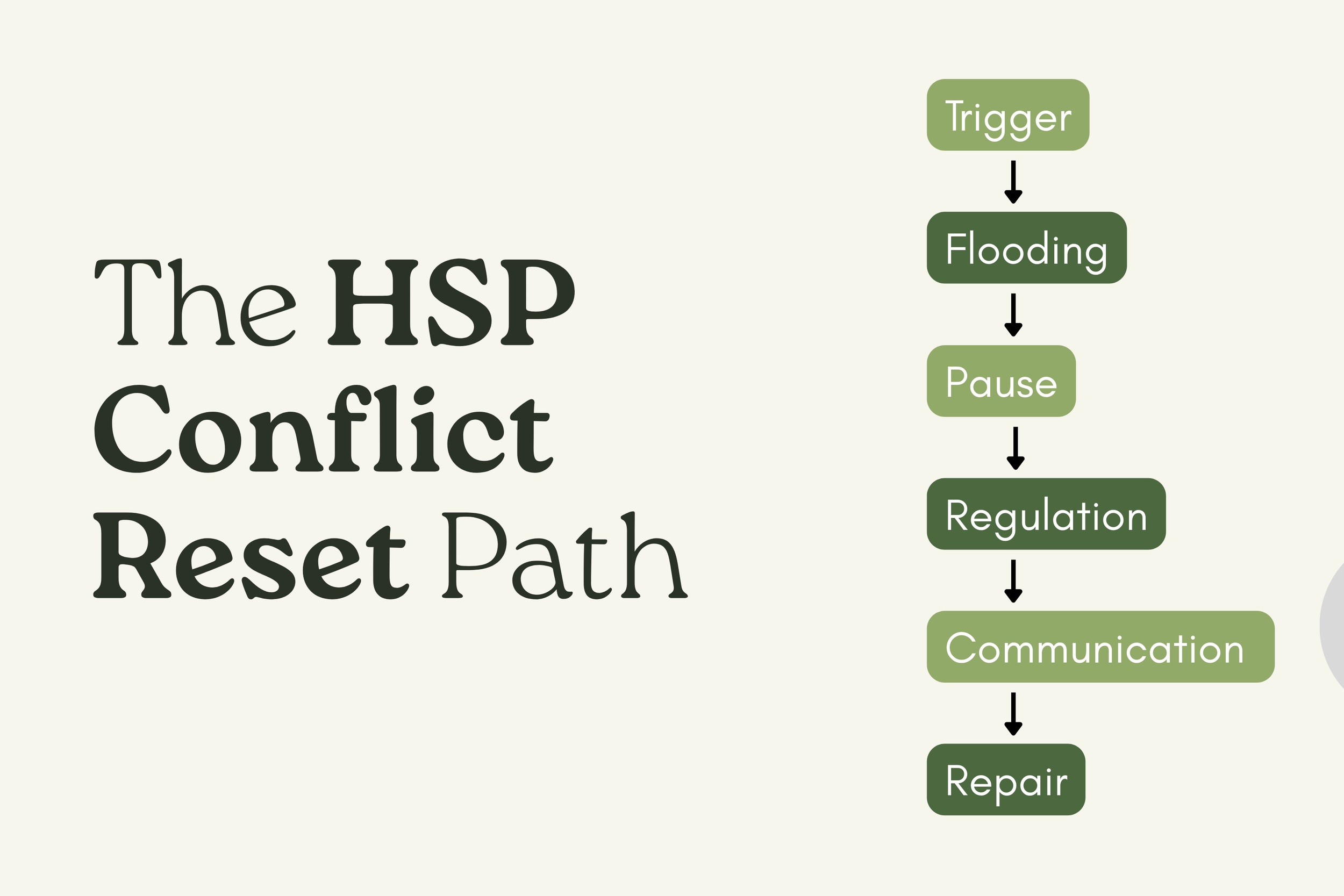
Step 3 — Use HSP-Friendly Communication After You Regulate
Speak slowly and clearly
Speaking slowly, clearly, and calmly can help your partner stay regulated with you while also allowing you to be more thoughtful with your words. If you find that you are not able to pace the follow up conversation in this way, it may mean that you need to ask for more time.
Use “impact language” instead of blame
Instead of focusing on what the other person did that caused the shutdown reaction, try phrasing it in a more general way that focuses mainly on your own knowledge of yourself and your shutdown triggers.
Examples:
“When voices get loud, my body shuts down.”
“When the tone shifts, I feel on edge.”
Be specific about what you need
Help your partner work together with you to break this difficult dynamic by being direct about what you need in order to keep the tension controlled in the conversation.
“Can we talk about one thing at a time?”
“Can we keep voices low?”
“I need pauses between points.”
Step 4 — Prevent Overwhelm Before It Happens
Create a conflict routine
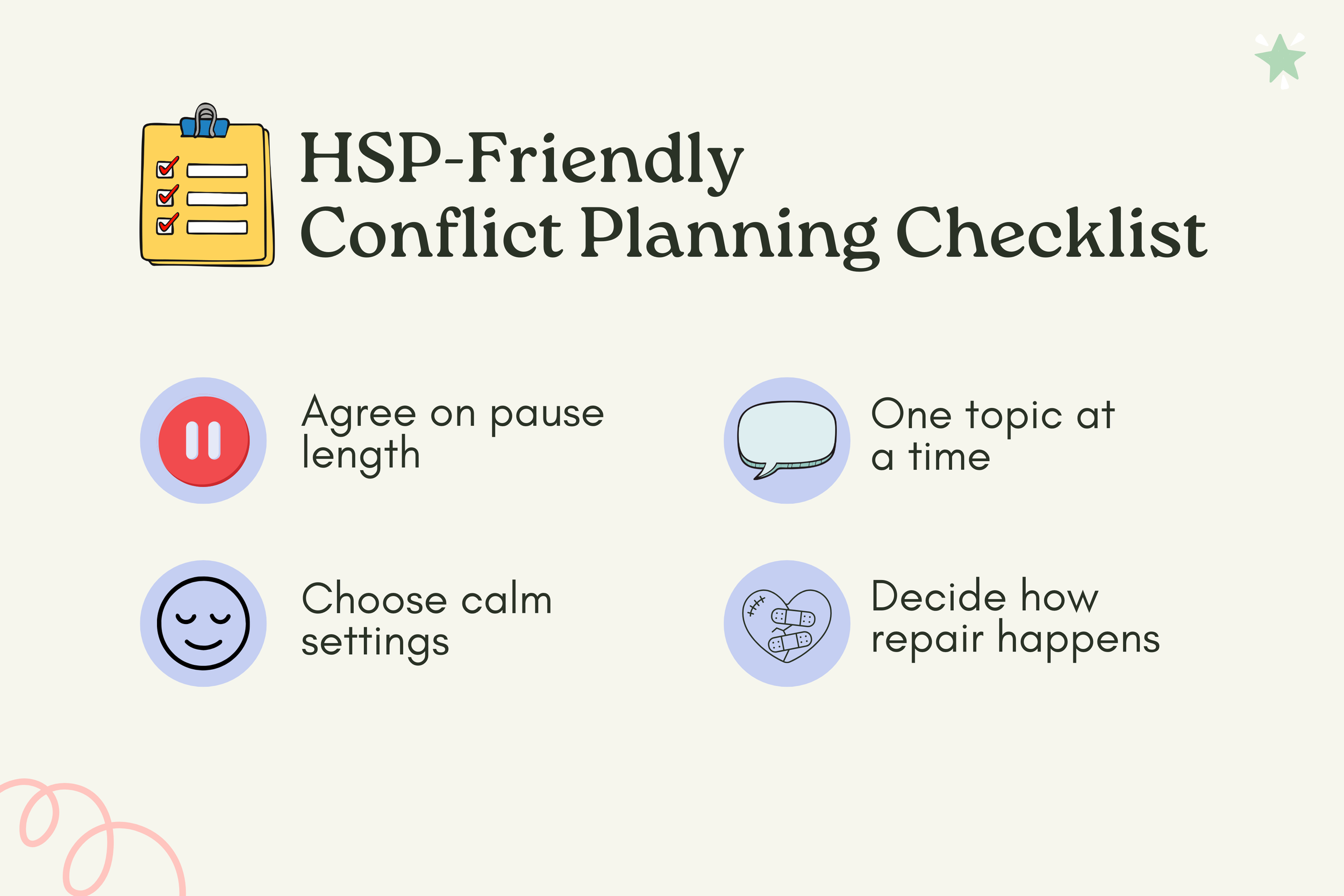
Choose a moment outside of the active conflict to establish a protocol for how you would like to manage moments of conflict when they arise. I repeat, do this outside of the active conflict (!!!) when you both are in a calm, collaborative state of mind. Decide how long a standard pause should take if either of you need a reset - I usually recommend somewhere around 10-15 minutes.
You can also establish some “fair fighting rules”, like not using offensive language or name calling, or sticking to one topic at a time.
Lastly, share with one another what your desired repair looks like. For some, it’s all about the words - hearing the other take accountability, receiving reassurance, etc. Others also need a moment of physical touch and affection, like a close-out hug to feel secure again after a fight.
Trigger-proof the environment
If you can, consider shifting some details within the environment you and your partner usually spend time in. Keep sensory input calming with warm lighting, be mindful of the volume of shows and music, and have a calm place to sit - not stand! - when it’s time to hash out an issue together.
Break big conflicts into smaller conversations
Remember, as a highly sensitive person, you process slowly and very deeply. Long, meandering fights are only bound to burn you out, so commit to tackling one tough topic at a time, chipping away at the more complex ones in parts if needed.
Step 5 — Use Repair Practices That Work for HSPs
Reassurance is not “clinginess”—it’s regulation
I know of so many people, HSPs and non-HSPs alike, who conflate asking for reassurance or words of affirmation with being “clingy” or “needy”. But it is ok and even healthy to ask for what you need, and sometimes words don’t come naturally to our partners, and they may need some reminding (within reason!).
The repair must be gentle, not rushed
Repair is about reconnection and co-regulation, so kindness and gentleness are key. Remember that after a fight, feelings are tender and you both may be feeling fragile and, well, sensitive! So take your time, use a soft, calm tone, and it’s okay to do a follow-up, smaller check-in afterward if needed.
Clarify what happened once you’re calm
Because arguments often stem from or lead to moments of miscommunication and misinterpretation, clear the air by explaining what was happening for you emotionally once you’re able to verbalize it to your partner. Here are some example phrases that may resonate:
“I was overwhelmed. I know that can look like I was avoiding you, but that wasn’t my intent.”
“I was quiet because I was shutting down, not because I wasn’t interested.”
When Conflict Patterns Reveal a Relationship Problem
While some amount of conflict in a relationship is to be expected, there are times when the patterns or behaviors during an argument indicate a greater issue at hand or even a lack of emotional safety.
If your partner mocks or shames your sensitivity
Contempt - such as using sarcasm, eye rolling, dismissive humor, and mocking - is one of the most destructive forces in a relationship. It conveys disrespect, disdain, and leads to hostility that can make repair extremely difficult.
This creates an unsafe dynamic rife with emotional damage and destruction. Research by the Gottmans has even shown that contempt is the biggest predictor of break ups and divorce, so if you notice this type of conduct in your partner, it’s important to set a boundary early on that it won’t be tolerated.
If yelling or volatility is constant
Everyone can lose their temper from time to time, but if you find that raised voices and shouting become the norm, it may be time to reevaluate. Frequent volatility like this is not only unpleasant, but causes chronic overstimulation and nervous system burnout. Simply put, it’s not sustainable or healthy for your highly sensitive self or for the relationship as a whole.
If repair never happens
Because repair is such an essential part of the conflict resolution process, skipping this step can lead to long term emotional disconnection and even resentment. When I see this occur with couples I work with, I find it often either stems from an avoidant or passive conflict style, or worse, a lack of willingness to take accountability for one’s own role in the fight. Either way, “let’s pretend this never happened” is not a sustainable attitude for healthy conflict mitigation!
If you’re an HSP who feels emotionally exhausted in your relationship, book a call with Thrive Therapy & Counseling for HSP‑informed care. We offer HSP-informed therapy that helps you understand how your sensitivity shapes your relationship dynamics, regulate your nervous system, and build connections that feel calmer, safer, and more mutual. Connect with us here.
You Don’t Need to “Toughen Up”—You Need a Different Toolkit
Sensitivity is not the issue
You, and your sensitivity, are not the problem! Overwhelm is - and in some cases, the core issue might come down to incompatibility.
With the right tools, conflict becomes connection
It may not seem like it, but discord in a relationship can be a wonderful opportunity to build trust and connection. Conflict, when approached with mindfulness, can lead to deeper understanding of one another and even an ability to accept or embrace your differences as partners. Rather than avoiding the discomfort, approaching it head on can foster deep emotional resilience and growth.
Your sensitivity can strengthen the relationship
As an HSP, you bring so many unique strengths to your relationships! You are able to employ deep empathy and care, allowing you to attune to your partner’s feelings and needs. Your keen awareness to detail and responsiveness to subtle cues allows you to sense underlying conflicts and address them before they escalate. These traits can also help your partner feel seen and understood.
Your sensitivity doesn’t have to be an obstacle in dealing with conflict effectively in your relationship. With the right tools, awareness, and perspective, HSPs can approach discord with more confidence and ease.