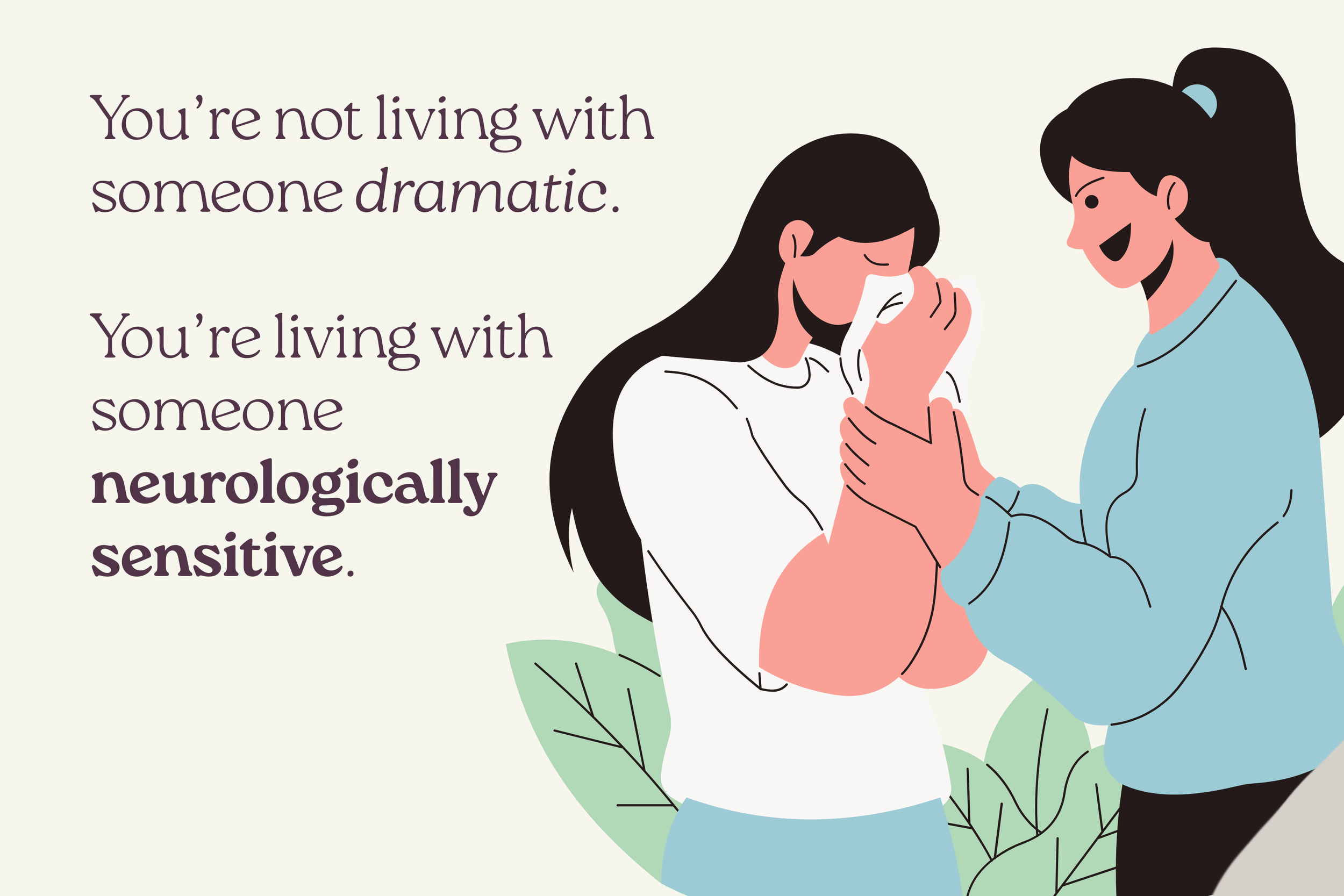
How to Live With a Highly Sensitive Person (And What Not to Say)
Megan Bell
Living with a highly sensitive person isn’t difficult—it just requires understanding. HSPs feel deeply, process slowly, and get overstimulated quickly, which means emotional tone, environment, and communication matter more than most people realize.
Once you understand how their nervous system works, you’ll find that living with an HSP creates emotional depth, loyalty, care, and connection unlike anything you’ve experienced. Here’s what helps—and what to avoid—if you love someone who’s highly sensitive.
First, What It Actually Means to Be an HSP
High sensitivity is a biological trait, not a personality flaw
● Sensory-processing sensitivity: For HSPs, their central nervous system tends to process stimuli more deeply. This includes physical, emotional, and social stimuli. Because of this, they often have heightened awareness and, in turn, sensitivity or reactivity to stimuli that a non-HSP might not notice in the environment due to their subtlety (think smells, noises, lights, textures, tastes, changes in air pressure or temperature).
This often leads to overstimulation, which drains their batteries. Which is why your HSP might ask to leave events early or sit it out entirely, might find a quiet corner/space somewhere to decompress, lash out disproportionately to a question or comment they would normally have no issue with, or retreat inward (physically present but mentally checked out).
Please Note: Sensory Processing Sensitivity (SPS), while similar on the surface is not the same as Sensory Processing Disorder (SPD). SPS is a personality trait of being an HSP. Hsps are highly intuitive and in tune individuals who take in a wide depth and breadth of information in their environment to help them navigate their world. This is an unconscious evolutionary process that helps the individual navigate the world strategically for survival purposes.
On the other hand, SPD, more common in neurodivergent individuals (ADHD, Autism, Anxiety), is a neurological condition where the brain has trouble receiving the sensory information, organizing it, and processing it.
● Occurs in 20-30% of the global population: Now, some people might look at that statistic and be skeptical or confused, assuming this whole HSP thing is just a new fad or trend in the mental health social media sphere. And to your point, this feeling might be heightened due to the recent uptick in mental health articles on social media about the metaphor of different flowers used to describe the level of sensitivity some people experience and what level of support they need.
However it's good to note that this research originated in 2005 by Dr. Boyce and Dr. Ellis (introduced the metaphor of orchid and dandelion to describe variances in sensitivity levels), was expanded upon and refined by Professor Pluess and Dr. Lionetti in 2018 (incorporated the metaphor of the tulip when it was recognized that sensitivity is not binary), with Professor Pluess currently continuing research in this area.
Under this paradigm, HSPs fall under the category of Orchid (20-35% of the population) due to their high sensitivity, the average person falls under the category Tulip (40-47% of the population) due to their medium sensitivity, and the remainder fall under the category of Dandelion (25%-35% of the population) due to their low sensitivity.
While the term orchid might feel new. The term HSP began to find its footing when Dr. Elaine Aron first began research on the subject in 1990-1991. She officially coined the term HSP in 1996 based on her research. If we look even further back, Swiss Psychiatrist, and founder of the analytical psychology approach in therapy, Carl Jung posited over a 100 years ago (1913) that some people have an “innate sensitiveness.” Even further back, during the 1800’s, doctors often identified individuals with “sensitive nervous systems.”
Unfortunately, due to socialization factors related to masculinity and suppression of emotions, female HSPs during this time were often deemed “hysterical.” Historically, there has always been a portion of the population that is highly sensitive, and HSPs are often unconsciously drawn to roles within the community where they counsel, advise, or strategize for the good of the whole.
● HSPs have often benefited the survival and well-being of the majority. At times serving as an early warning system for environmental shifts that may indicate danger. Their deep processing allows them to take in extensive past and present data and help collaboratively bring ideas to the table that are more grounded and strategic. In addition, their creative approach to problem-solving often balances and encourages realistic solutions and empathy for others.
● Not fragility: The common misconception is that HSPs are fragile. This could not be further from the truth. They are more akin to highly attuned antennae so well calibrated, and so adept at picking up the most subtle of information in their environment that if there is something there to observe or process, their brain will clock it almost immediately. Because this uses a great deal of energy, they do, however, need to be rested, recharged, and refueled more frequently than their non-HSP counterparts.
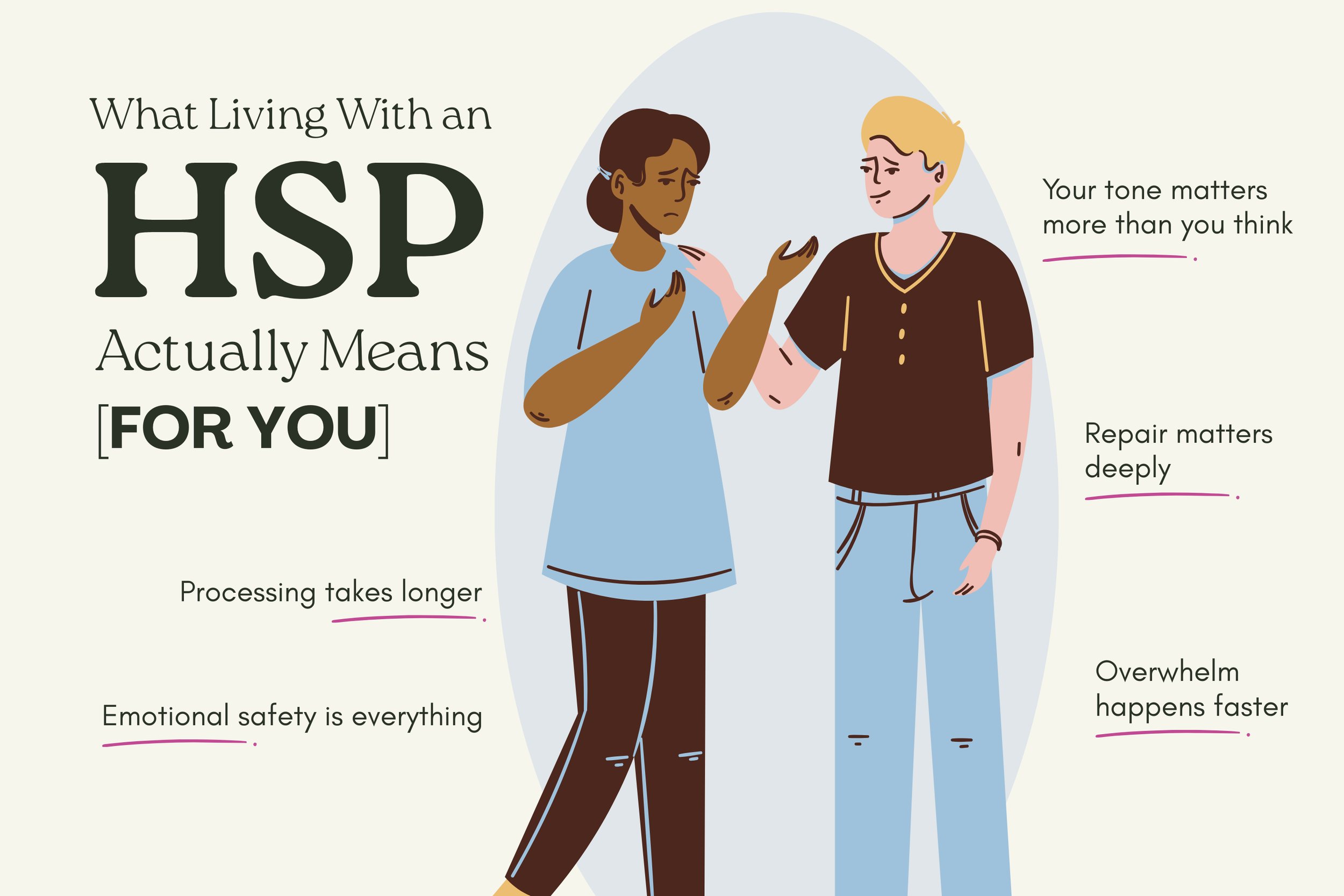
HSPs feel emotions more intensely and recover more slowly
● Emotional depths: HSPs are naturally more drawn to deep reflection and observation. They think before they act, and as a result, they often pick up on patterns that seem invisible to others, are often on a side quest for deeper meaning in situations, and tend to look at the bigger picture overall. They have heightened empathy, intuitively sensing and sometimes absorbing the feelings of others (difficult w/over absorption can lead to burnout).
They also experience the world in a very raw and intense way, so they can be more prone to extreme highs and lows. You might notice your HSP is deeply moved when watching a sad scene in a movie or hearing a sad song on the radio. They might get visibly upset and agitated when retelling a negative situation their friend is experiencing. Your HSP most likely has a rich internal world that is imaginative, creative, intense, and deep.
● Longer processing time: Now, given the depth and fullness of an HSP’s process and all the variables they are constantly weighing, it makes sense that they need more time and space to synthesize their findings before even beginning to develop a conclusion that they feel is ready to be shared.
A great example of this is the current longest novel on record, In Search of Lost Time by French author Marcel Proust, a sprawling seven-volume novel totaling 1.2 million words written over 14 years that is an exploration of the nuances of memory, the dichotomy of art and vocation, the passage of time, love, and societal mores. Proust is often touted as a prime example of the HSP mind and how it processes things.
They notice subtleties, micro-shifts, and details you may miss
As discussed earlier, being an HSP is an unconscious evolutionary process that helps the individual navigate for survival purposes. Being adept at reading physical cues in the environment (tone, body language, energy changes) in those around us allows HSPs to more swiftly make a decision to protect themselves and those around them if needed by anticipating needs or helping to resolve conflicts.
Unfortunately, in some situations, this heightened awareness can lead to feelings of self-doubt, shame, feelings of rejection, or criticism based on those same physical cues.
If you’re feeling confused, overwhelmed, or unsure how to support your highly sensitive partner, you don’t have to figure it out alone. We offer HSP-informed therapy that helps you understand how your sensitivity shapes your relationship dynamics, regulate your nervous system, and build connections that feel calmer, safer, and more mutual. Connect with us here.
How to Live With a Highly Sensitive Person (The “Do” List)
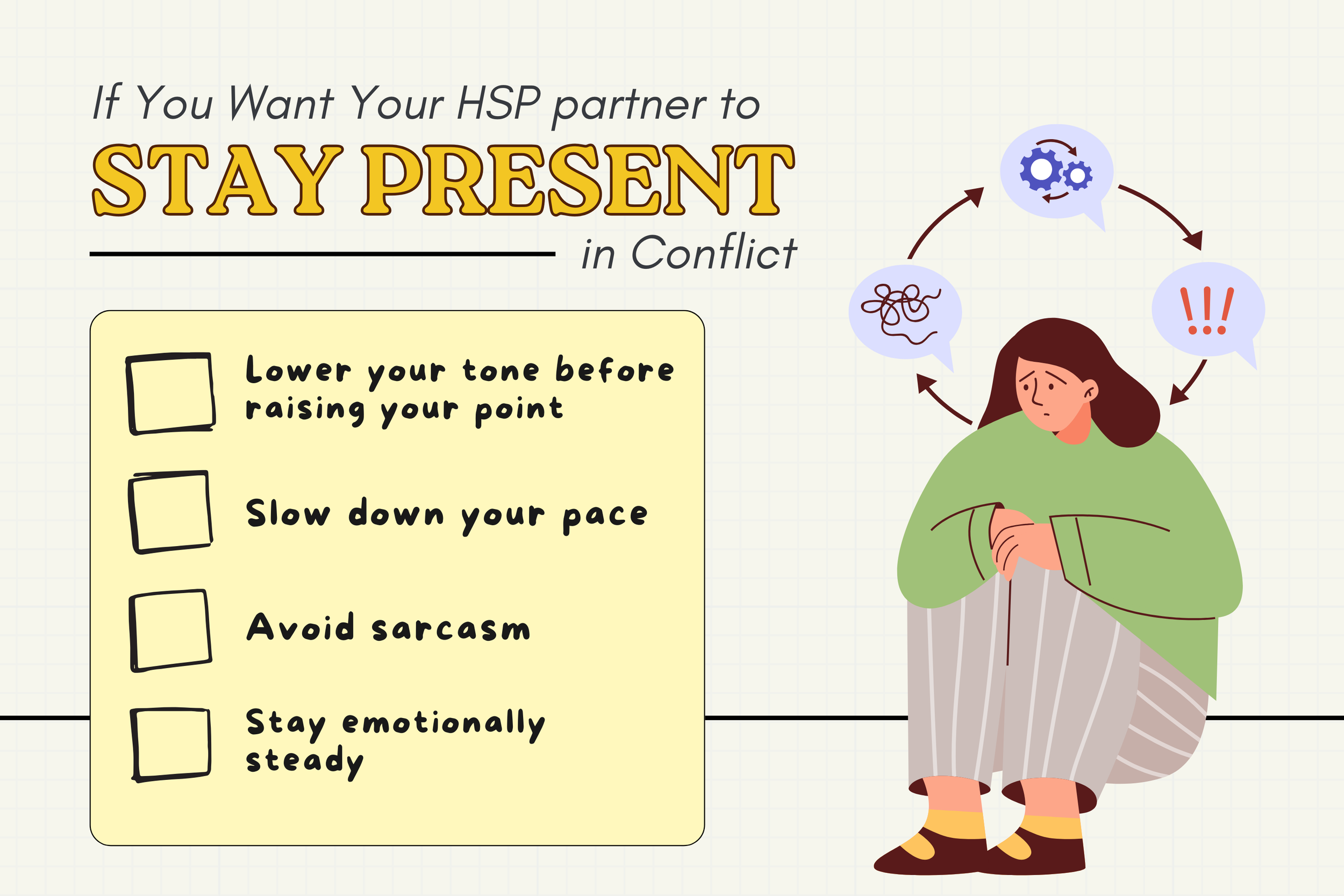
1. Speak calmly and clearly—tone matters as much as words
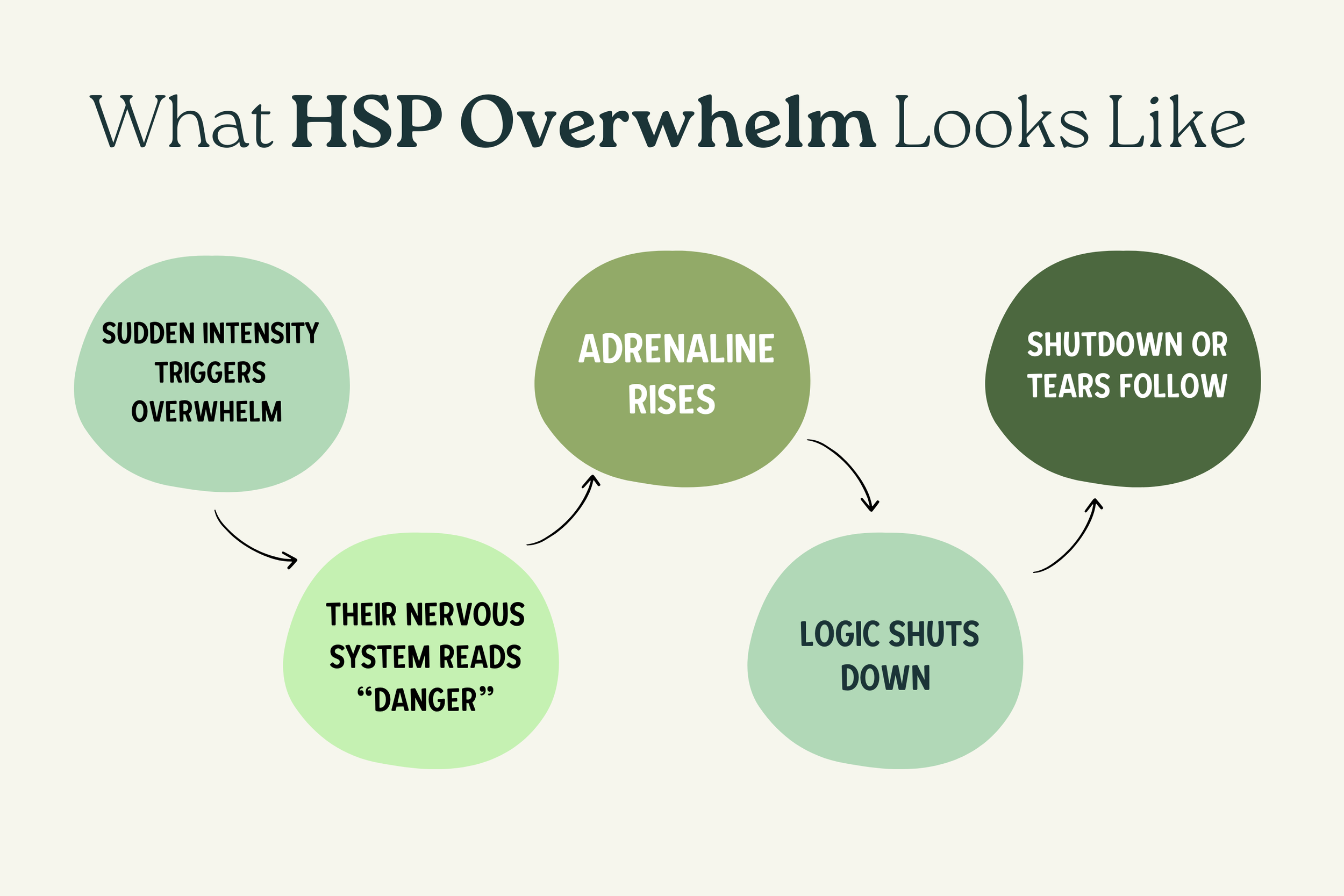
● Sudden intensity triggers overwhelm: When intensity triggers feelings of overwhelm for your HSP partner, their sympathetic nervous system gets activated. When the sympathetic nervous system is activated, it begins flooding the system with adrenaline, norepinephrine, and cortisol. The release of these chemicals helps the brain activate survival modes (fight-flight-freeze-fawn) so they can mobilize quickly in order to help them achieve the safety their brain perceives them needing.
● Calm communication builds safety: HSPs tend to have more active mirror neurons and, as a result, can unconsciously pick up and absorb the emotional state of those around them and adopt it as their own. Their abundance of mirror neurons is what makes them so beautifully empathetic. By making a conscious choice to speak in a calm and clear tone, you are serving as an external regulator. This helps your HSP partner co-regulate and helps dampen the mirror effect.
2. Give them time to process before expecting a responsE
● HSPs think deeply: HSPs don't just look at the immediate data in front of them; they consult past data they've gathered on the topic from previous experiences, future projections based on past/present data analysis, and the layered nuance as social, emotional, and physical components interplay and shift the urgency of which component to address first.
Since this personality trait is driven by navigating and getting through situations w/the best possible outcome, their brain is going to want to weigh and measure as many variables as possible, which, of course, needs time and space. If you push too soon, you will be less likely to get the response and will be more likely to encounter emotional reactivity (irritable, snappy, tearful, stressed, overwhelmed).
● Quick reactions aren’t their strength: as mentioned earlier, when an HSP is overwhelmed, the sympathetic nervous system starts releasing the chemicals to trigger the survival modes. However, there is a piece of the parasympathetic nervous system, the Dorsal Vagal Complex, that, when a situation feels too overwhelming, intense, and unresolvable, will initiate a shutdown.
The energy needed to reboot and recover following a shutdown will take far longer than if you had elected to step back and give them the time and space they needed to process. So if it's a time-sensitive issue, remember that by giving them time and space to process, you reduce the likelihood that the Dorsal Vagal complex will pull the plug and initiate a shutdown, and you will get a very thorough answer quickly by HSP standards.
3. Build predictability into routines
● Reduces overstimulation: Helping your HSP partner develop grounded and predictable routines can be helpful as predictability reduces the amount of unexpected sensory input, which reduces the amount of information the HSP needs to process. As a result, they are less likely to get overstimulated and overwhelmed.
In addition, as surprises can be a trigger for activating the sympathetic nervous system in a negative way, predictable routines signal to the parasympathetic nervous system that the environment is safe and that survival modes aren't necessary.
● Helps with emotional regulation: Supporting your partner in developing healthy and predictable routines helps reduce anxiety and frustration as their brain feels more at peace knowing what comes next and how to transition to the next task/event. In addition, it helps your HSP cultivate a sense of control in a world that is often chaotic and overwhelming for them.
4. Offer reassurance during tension—it's regulating, not needy
● Reassurance = safety: If tension is occurring due to an argument or disagreement between the two of you, reassuring your partner during moments of tension helps counterbalance their heightened perception of your emotional state (thank you, mirror neurons). And signals to the parasympathetic nervous system that the environment is safe and that survival mode activation is unnecessary.
Which means they will be better able to stay in the moment and determine next steps (implement a coping skill, ask for a break/time out, proceed w/the conversation, et cetera).
● It helps them stay grounded: Now, if the tension in the environment is coming from an external factor, offering your HSP partner reassurance helps them to ground and anchor in these moments of tension. This is because you are capitalizing on their abundance of mirror neurons, and helping them co-regulate.
As this keeps their stress and overwhelm from tipping to the point of no return, they are better able to access and integrate their coping skills and tools and can advocate for what they need (quiet, water, lowered lights, et cetera) to help the parasympathetic finish its down shift.
5. Make space for quiet time and downtime
● Alone time = recovery: HSPs need a certain level of quiet or downtime to help support natural self-regulation. As I’ve highlighted earlier, the intense degree to which the HSP mind is constantly processing information burns a lot of energy very quickly. Quiet and downtime allow for more efficient resting, refueling, and recharging so that they can ideally rejoin when their batteries are replenished.
● Not personal: Now it's easy to get offended when your HSP excitedly ushers you out the front door when you mention possible solo plans w/your friends. This is not a commentary on your value or worth to your HSP; it is simply a reflection of how overwhelming and overstimulating their life can be.
By having fewer beings (people, pets) present in the space, their mirror neurons aren’t being additionally triggered and signaling the usual urgency they feel to hold space for someone else’s emotional response as they reconnect with themself (thoughts, feelings, and beliefs). Giving them this time and space, ironically, allows them to show up and be more present in their interactions with others.
6. Notice their efforts—they give a lot emotionally
● Appreciation strengthens connection: Unfortunately, it is far too easy for an HSP to become prone to self-doubt and second-guessing, and it's quite likely that your HSP probably often has a difficult time holding onto their own light and seeing their own strengths when they are feeling overwhelmed and overstimulated by the world.
You noticing their efforts signals to your HSP that you are a safe person and strengthens your connection. It triggers a dopamine boost and can reduce activation of the sympathetic nervous system (the part that triggers survival modes).
● They are hyper-aware of being undervalued: Additionally, sensitivity is unfortunately not a trait that has historically been highly valued in the United States. While showing appreciation and acknowledgment of their efforts does not eliminate the negative experiences they have in the workplace or a friend group that deems them too much or too sensitive, it does help to counterbalance it. Which can go a long way in combating the feelings of shame they have around being a more sensitive soul.
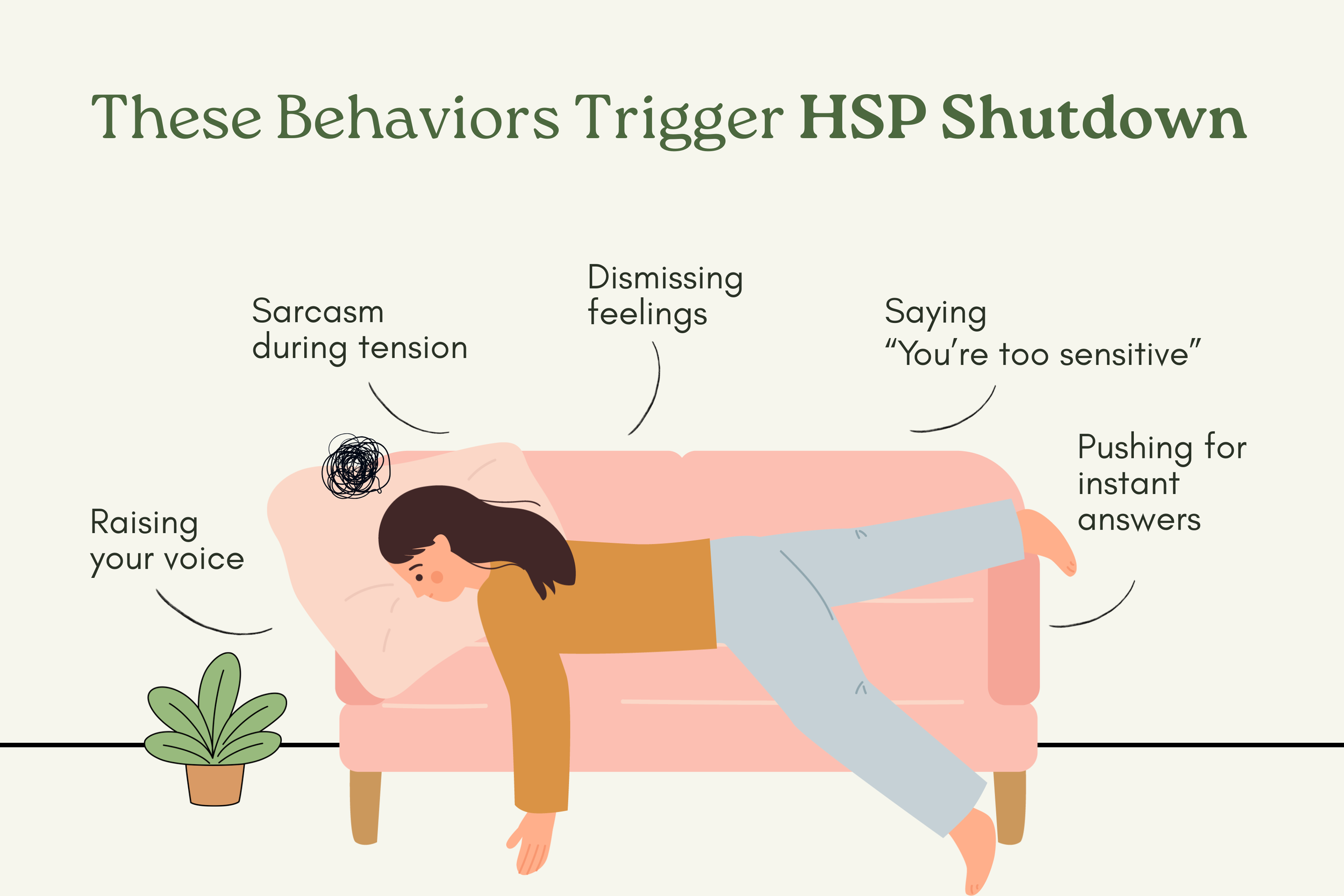
What Not to Say to a Highly Sensitive Person
(These phrases cause the most harm and trigger defensive shutdown)
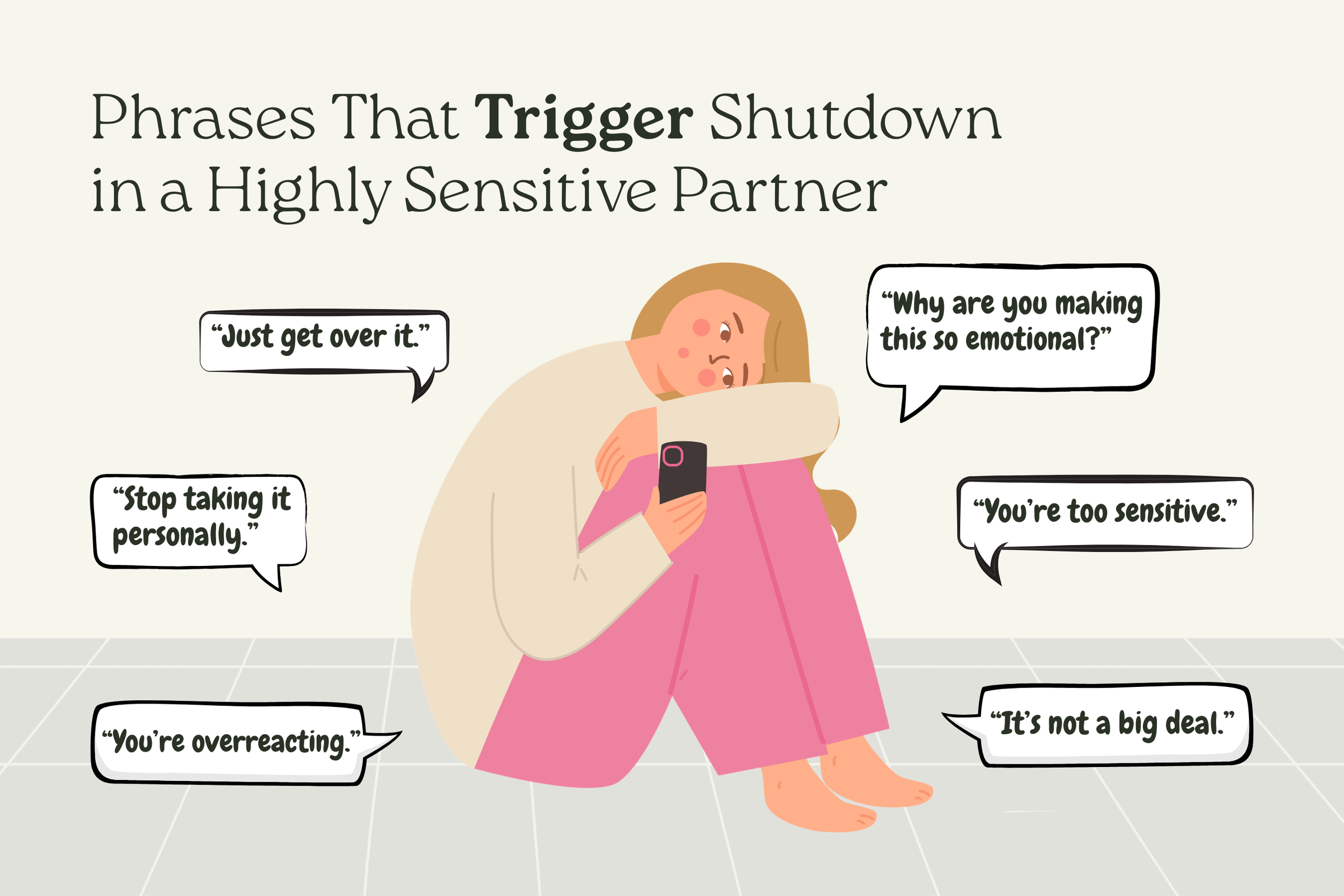
“You’re too sensitive.”
This is, unfortunately, a classic line in our society, and I can guarantee it has been the background soundtrack to your HSP's life. They have most likely heard every variation under the sun from childhood to the present. This comment offers your HSP no new insight or support, and in fact, it feels like a rejection.
Because word choice matters, and that is evident in the use of too which can unintentionally pass or telecast unconscious judgment. This word choice, small though it may be, implies that there exists a perfect level of sensitivity one must achieve and that your partner isn’t hitting it, making them feel like a failure or not good enough, exacerbating feelings of shame and self-doubt.
You have the power to choose to be a positive addition to your HSP's life. It's okay to show interest and curiosity and to share observations, but it's important to consider your motivation. Did the comment come from a place of bafflement, uncertain about what triggered the sensitivity, did it come from a place of helplessness feeling uncertain what to do for them, or did it come from a place of frustration due to having a hard time putting yourself in their shoes?
Taking a beat and pausing to consider your motivation can actually help you figure out more connected questions that help you better empathize and understand an HSP partner.
“You’re overreacting.”
This comment is unhelpful, even if it feels true from your non-HSP perspective, because the experience is real for them. Their sympathetic nervous system is overloaded and responding the way your nervous system would if it felt overloaded too. The difference is that your HSP has a more sensitive hairline trigger than you do, and they experience this intensity more frequently.
In addition, for an HSP, this isn’t their first rodeo; they most likely know that their nervous system is responding with extreme intensity that isn’t warranted. Pointing out this fact does not help. In fact, this comment invalidates their emotional experience and can lead to your HSP losing that sense of safety they once felt with you, and you might notice them beginning to distance themselves from you emotionally.
“It’s not a big deal.”
This comment is unhelpful for a few reasons. First, it assumes 100% shared values and implies that your value system is the correct one. While we often have overlap with our partners and value similar things, the thing that doesn’t feel like a big deal to you might genuinely be a big deal for your HSP, and this comment may unintentionally minimize something they value.
Minimizing things that are important to them might make them self-conscious about sharing things that matter to them in the future, and they may start filtering what feels safe to share with you. If this happens often enough, it can fracture the connection.
In addition, if their sympathetic nervous system has activated and is mobilizing the survival responses, their brain is not going to compute in that state that perhaps this isn’t as big of an issue as our nervous system is making it out to be. Allow them to enter the parasympathetic nervous system downshift, let them take the time and space for reflection that they need and they may arrive at that conclusion for themself.
“Why are you making everything so emotional?”
This comment is more harmful than helpful because your HSP connects to you, others, and the world around them through emotion. Emotion for an HSP is not a separate experience; it is interwoven in every conversation and interaction they have. It’s like asking Van Gogh not to paint (also a suspected HSP); it's so fundamental to who they are.
Your brain is assuming it’s a lack of willpower that makes it hard for them to set down emotion and think logically, but actually it's because of how their beautiful brains are hardwired (HSPs naturally have more activity in the insula-internal awareness, the amygdala-emotional processing, and more mirror neurons-ability to pick up/absorb others' emotions).
Shame not only shuts them down and invalidates their experience, but suppressing their emotions actually leads to heightened activation of the sympathetic nervous system, which can result in rebound (emotion comes to the surface later with increased intensity, which can trigger reactivity, lashing out, or burnout).
“Just get over it.”
This comment is unhelpful because, just like any person on the planet, an HSP will get over something in their own time and space when they’ve been able to adequately process and release the experience. As discussed previously, because of the depth and breadth of their self-reflection, it will take more time for an HSP, but it will happen if you are patient.
Rushing them just creates an external sense of urgency, which triggers overwhelm, which can reactivate the sympathetic nervous system, which can lengthen any already lengthy process. Save yourself time by packing your patience and recognizing that the standard time and space that your brain needs will be different from what theirs does.
“Stop taking things so personally.”
Earlier, we discussed the abundance of mirror neurons your HSP has. Which is why this comment is not doing you any favors. Those pesky extra mirror neurons help HSPs pick up on nuances and subtleties that most people miss. Their brain is often trying to connect the dots to ascertain the meaning so they can see the bigger picture. Meaning matters to them because it's a form of safety in terms of social-emotional survival.
That kind of statement can also bring up feelings of shame and self-doubt; they might begin questioning their own intuition, which can impact their connection with their authentic self. It would be more helpful to share an observation, “Hey, I notice (insert person)’s actions seem to be hitting you hard, and it sounds like you’re taking it really personally. Can I offer another perspective?”
Why These Phrases Feel Especially Painful to HSPs
They echo lifelong messages that made them feel defective
HSPs have rarely fit the mold in their life and they are often left feeling othered, like they don’t belong and that there isn’t space for their beautiful strengths in this world. They have been made hyperaware of how they don’t fit, and there has probably been a time in their life where they diminished themselves to try and squeeze into the mold. They have
been shamed not just in childhood but in adulthood too, as their high empathy and attention to detail and nuance often get misunderstood or misconstrued. In a world and a society that struggles to see their value, these negative comments coming from someone they love and trust can drown them in shame and self-doubt. These comments steal one of the few true safe places they might have in this world→you.
They trigger nervous-system distress
● The emotional invalidation these negative comments create whether intentional or not trigger intense negative feelings of doubt, shame, not enough/too muchness. This emotional distress can then trigger the sympathetic nervous system mobilizing the survival modes.
As stated earlier if the issue feels unresolvable part of the parasympathetic nervous system (the dorsal vagal complex) will pull the plug initiating a shutdown. These intense biological responses can be hard on physical, mental and emotional health for your HSP especially if they are repeated regularly.
They undermine emotional connection
● If there are repeated breaks in trust, and no attempts at repair distance can grow between you and your HSP. They may feel they have to filter what they share with you, and may be hesitant in opening themselves up to vulnerability.
Unfortunately the HSP brain learns quickly and things, experiences or people who routinely trigger our sympathetic nervous system to click into overdrive eventually get labeled unsafe which can bring the relationship to what may feel like an abrupt close.
How to Repair After Saying the Wrong Thing
We all say the wrong thing sometimes. It’s not about being perfect. It’s about knowing how to repair and reconnect when we mess up.
Start with acknowledgment, not explanation: the HSP language is emotion, not logic. If you lead with an explanation, an HSP who has been hurt by your words and actions will not feel safe enough to engage and may shut down quickly. By acknowledging the emotional aspect, you are showing them that you understand, and that their emotional experience does matter to you, and that you do want them to feel safe being vulnerable with you.
“I can see that hurt you.”
“That wasn’t my intention. I care about you.”
Repair must be gentle for an HSP: a vulnerable HSP should be approached with gentleness because their sympathetic nervous system is a second away from being triggered. Modulating your tone, volume, and pacing signals to their mirror neurons that they are safe. It also supports them in co-regulating and helps them ground and anchor.
Soft tone
Slower pace
Reassure your long-term intentions: offering reassurance to HSPs about long-term intentions helps halt the anxious spiral and gives them a sense of security. Feeling secure soothes their nervous system and signals for the parasympathetic nervous system to begin the downshift into calming and grounding.
HSPs worry about relational rupture
Reassurance soothes the system
If you identify as a highly sensitive person (HSP) and need tailored support, Thrive Therapy & Counseling can help. Book a call here to get the support you deserve.
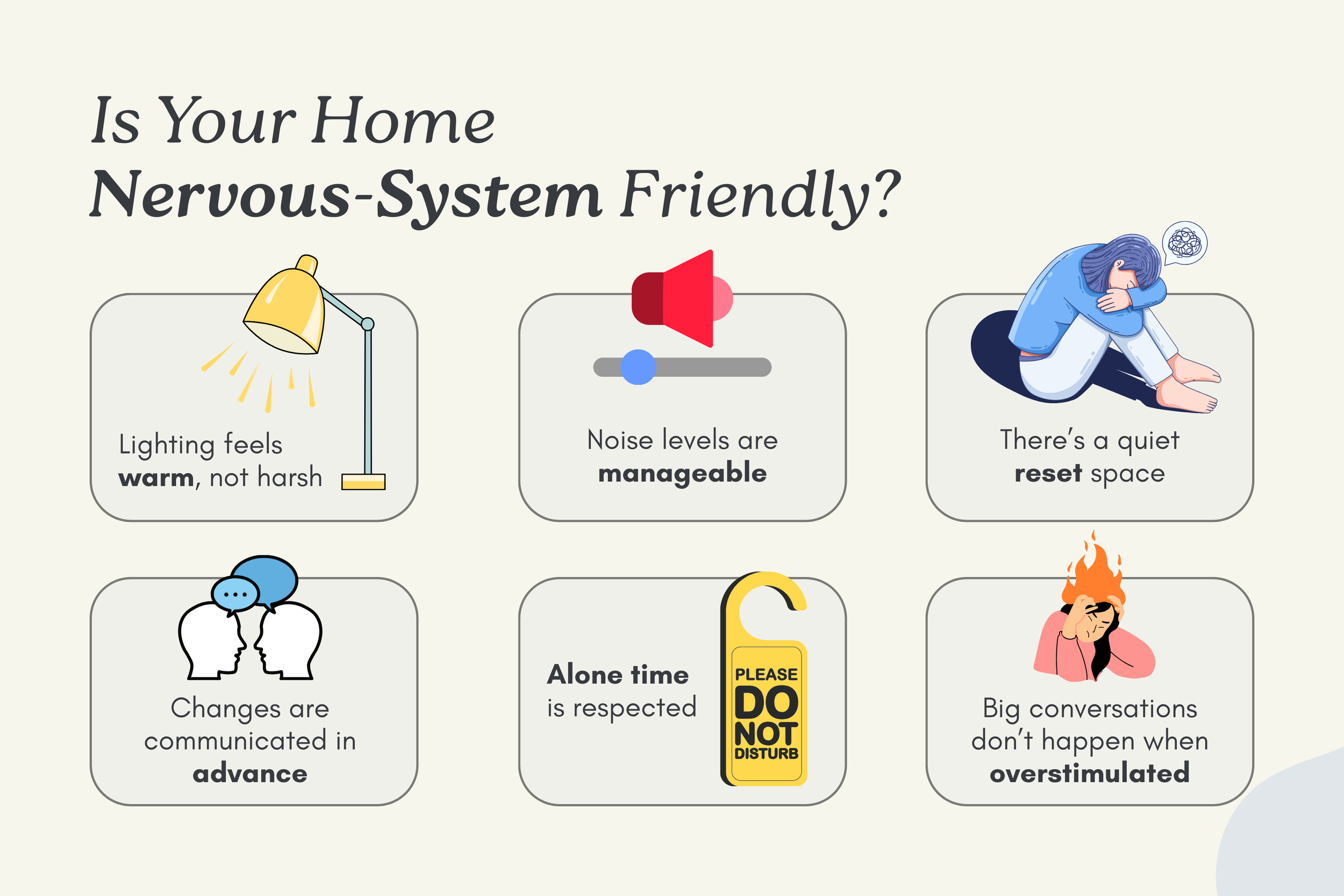
How to Create a Home Environment That Works for an HSP
Manage sensory triggers where possible: Working collaboratively with your HSP is the first step. Talk with your HSP and figure out which sensory stimuli are actually triggers for them, as not every HSP will be triggered by the same things. Then show curiosity-explore with them what they do already to manage their sensory input at home or out and about when overstimulated or overwhelmed.
Most HSPs have been managing these variables consciously or unconsciously most of their life, you are joining a program already in progress by asking instead of telling. You are demonstrating respect for the self-knowledge they have gained and showing a desire to work together to create an environment where you both can thrive. Below are just a few examples.
● Sound: If sound is a trigger, does your HSP have sensory accessories that support them in modulating? Think noise-cancelling headphones, white noise machines, ear plugs et cetera. If your HSP has identified what sounds soothe vs what sounds agitate, can they share their insights so you can better understand when to offer an assist by playing a certain playlist, lowering the volume on devices (tv, radio/speaker, video games, laptop), or when they need quiet time alone.
Is there a designated quiet space that can be made in the home where they can retreat, and do we install acoustic tiles to absorb sound or hang tapestries to muffle noise from other rooms? Do we agree to make a designated quiet time for decompression when our HSP returns home from the outside world?
● Light: Similarly, if light is a trigger, it can be helpful to explore with your HSP if there are any sensory accessories that currently or could help with managing light exposure (moon glasses for driving at night, sunglasses, eye masks, hats w/a brim, migraine mask, sheer curtains to diffuse bright natural light, blackout curtains).
As bright fluorescents can be triggering for your HSP, making sure there is a way to modulate or adjust lighting in each room can be helpful. Softer warm lights can feel calming and grounding, while blue and bright light can be activating or triggering.
● Clutter: For the HSP brain, clutter reads as unresolved stimuli, i.e., an action item. Because of this, your HSP may be unable to rest and recharge properly when faced with too much clutter. It can be helpful to designate one clutter-free zone that serves as a resting space for your HSP. You can also explore ways to reduce visual stimulation by using labeled opaque storage solutions that reduce the visual noise but keep the items easily accessible.
Other things to consider include agreeing to keep areas where our eyes land most frequently (entryway when you first come in the door, bedside table when you’re about to go to bed, countertops) clear so it won't trigger the brain to try and resolve the issue.
Build rituals that restore calm: By joining your HSP in developing and doing rituals that restore calm you are signaling that their needs are seen and valid. It may seem small, but the normalization of their needs may not be something they experience often and can actually feel quite healing for your HSP. A few ideas include:
● Quiet mornings: While conversations, music, movies, and tv shows are wonderful, sometimes having a quiet morning can give your HSP space for their quiet self-reflection, which may help them feel more ready to interact with and be present for others later in the day.
● Tech-free evenings: As mentioned earlier, blue light can be very activating and triggering for an HSP. By having tech-free evenings, your HSP can better transition from a state of activation to rest. It might also support a smoother transition from awake to sleep.
● Decompression period after returning home from the outside world: The world is a beautiful but highly stimulating place. By creating unspoken rules about quiet decompression time after returning, you give your HSP space for their nervous system to settle and for the tension to release. This reduces emotional reactivity and misunderstandings.
Respect their limits without taking them personally: It's taken a lot for your HSP to get where they are now in life. They’ve gone through blowing past their limits, struggling to figure out the right balance, and have poured countless hours into trying to figure out how to verbalize them in a way that will be well received. If your HSP is expressing a limit, know that it took a lot for them to get to this place, and their request is backed by experience. It comes from knowing themselves, and is not about excluding you in the slightest.
● Social burnout/emotional fatigue: Social burnout and emotional fatigue are real phenomena that HSPs experience. The more people they were around the quicker their energy drains because they were simultaneously trying to process the body language, vocal cues, facial expressions, subtext, surface text and reactions of every person present while trying to avoid absorbing anyone else’s emotions, and completing whatever task they set out to do (buy groceries, fill up the car w/gas, et cetera).
So when your HSP comes home exhausted from the world, socially and emotionally burnt out, and asks to be alone, please understand that they want to genuinely connect with you (HSPs love genuine deep connection), but that they have to recharge their batteries first so that they can be mindfully present and emotionally grounded. They want to be their best self for you, so practice patience and give them the space to do so.
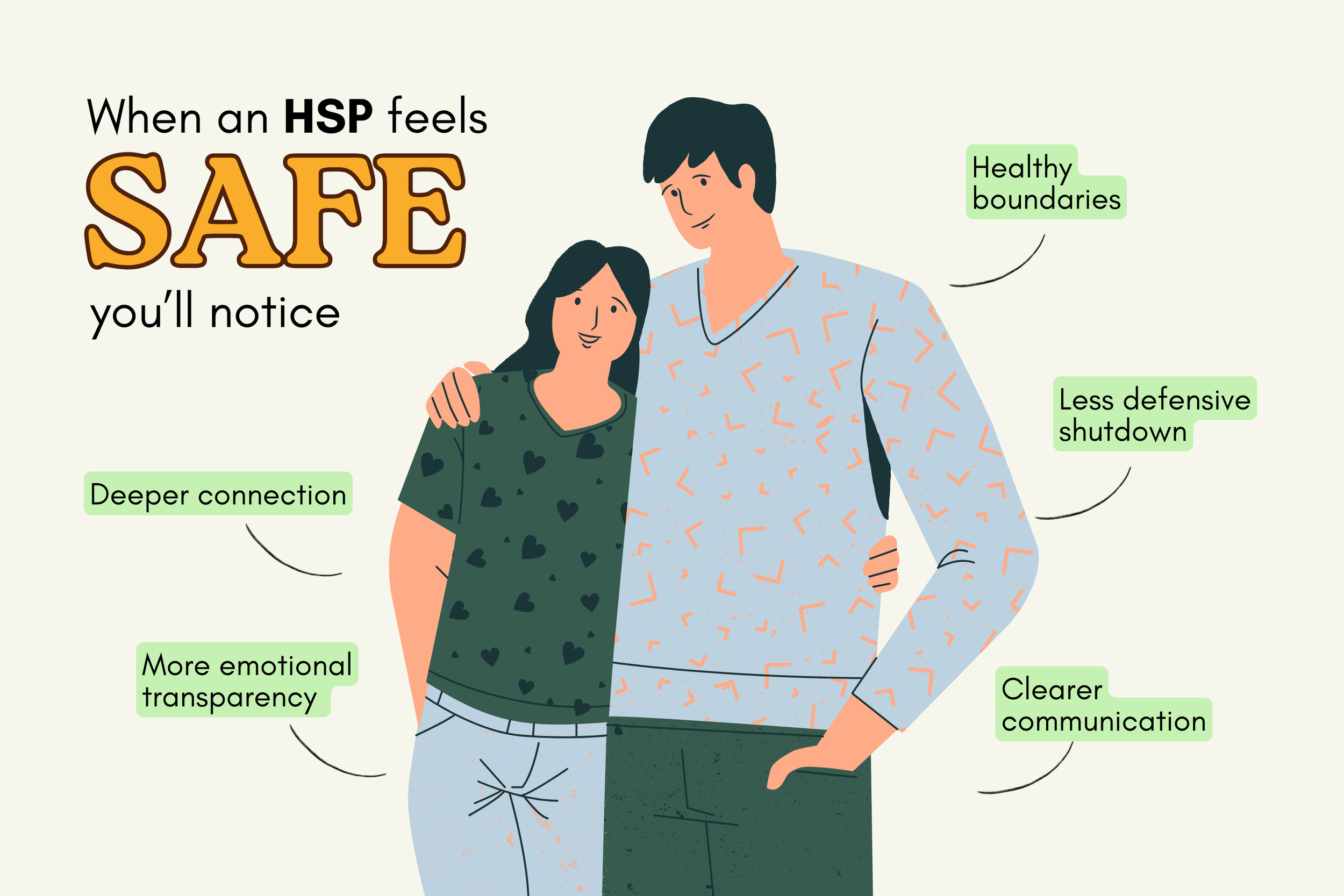
Signs You’re Doing Well With Your HSP Partner
They open up more easily: When your HSP is feeling loved, supported, and grounded, it will be evident. They will be more inclined to be emotionally transparent with you when intense feelings come up for them. They will offer more unguarded moments of vulnerability, trusting you to honor and respect that extension of trust, and over time, they will let you more and more into their deep inner world. They might even start sharing insights they have about other people or the world around them.
They feel safe expressing their needs: Initially cautious due to negative past experiences, your HSP might slowly test the water to see how you respond to small shifts before opening up about the more vulnerable things. If you have made efforts to support and reassure your HSP and shown respect for their methods, even if you don’t fully understand them, this is how your HSP will suspend disbelief and make efforts to extend trust.
When you have become a safe person in the eyes of your HSP, you will notice them making efforts to communicate more directly about issues or concerns. They might also be more forthright about limits, supports, and triggers that they experience.
Their sensitivity becomes a source of connection, not conflict: When you are making positive efforts to understand, empathize with, and support your HSP, the reward for your efforts will be deep, meaningful discussions, a sense of emotional intimacy, vulnerability, and trust, which will only strengthen your connection.
Living With an HSP Isn’t Hard—It’s Intentional
The right partner + right environment = thriving HSP + you thrive too: While encountering your first HSP can feel intense, if you choose to join with them and make efforts to understand, empathize, and support them, they can be wonderful partners in life. They often help their partner become more empathetic and think more deeply about their life and the world. They can also help their partner be more mindful about how they choose to live their life, present opportunities for their partner to reflect on their own practice of self-care, and set limits.
When they feel safe, they bring warmth, care, and loyalty: Because of the beautiful empathetic nature of HSPs, they can make their partner feel heard in ways they may not have felt heard before. Their actions in the service of their partner are often thoughtful and considerate. Because it takes a lot of consistency and effort to earn the trust of an HSP, once you do, they showcase a loyalty that is not easily found. A well-tended HSP is warm, supportive, and can make you feel at home.
Living with an HSP is one of the most emotionally rich relationships you can experience: Overall, while having a HSP partner comes with its own unique challenges and considerations, it will cause you to grow in ways you never considered. It will blend more depth and meaning into your day-to-day conversations and thoughts. It will help you to practice viewing the world through a different lens. And the level of connection, emotional safety, and warmth that will abide is a gift that will abound the more you are willing to join in, be vulnerable, and open yourself up to new experiences.