
What It’s Really Like to Date a Highly Sensitive Person
Danielle Kardum
What It’s Really Like to Date a Highly Sensitive Person
Dating a highly sensitive person means experiencing deeper emotional connection, more meaningful conversations, and a partner who cares about your inner world—and, yes, navigating moments where emotions run high, or overstimulation kicks in.
But the full picture is far more nuanced. HSPs love intensely, notice everything, and bring a level of presence most people have never experienced as long as their nervous system feels safe with you.
Here’s what it’s truly like to date an HSP, both the beautiful parts and the challenging ones.
The Heart of It — HSPs Love Deeply and Authentically
They connect emotionally faster and with more sincerity
Don’t do small talk? Neither do HSPs! Oftentimes, dating an HSP means skipping the surface level of conversation almost entirely. There’s little desire for small talk that is perfunctory.
Interactions with a highly sensitive person feel intentional and connective. Words are not just fillers for awkward silences. When they ask how you are, they really want to know! They notice when your answer doesn’t match your tone. Time spent with a highly sensitive person feels present and focused. HSPs prioritize what feels real and meaningful, and you get to feel seen and heard.
Dating an HSP can mean dating someone who is sincerely curious about your inner world. They’re interested in how you think, what you feel, what impacts you, what you’re afraid of, and what makes you feel excited. Being with a highly sensitive person can feel like a safe invitation to open up because they meet your vulnerability with attentiveness, care, and the kind of emotional presence that makes you feel deeply known.
Their affection is thoughtful and intentional
Dating a highly sensitive person means affection is never performative or automatic. Affection is given with thoughtfulness. Kind gestures, thoughtful messages, or moments of closeness are important and chosen with intention, awareness, and care. When in a relationship with an HSP, affection feels personal and attuned.
HSPs remember the little details. They take note of how you like your coffee, your favorite song, that thing you said you’d like to try someday. These little moments of feeling seen and listened to can add up to feeling profoundly cared for, valued, and held.
They value emotional intimacy over surface chemistry
Emotional intimacy matters far more than instant chemistry. Dating an HSP can feel more like a slow burn or a soft, warm glow. They’re more drawn to how it feels to be with you and desire to safely be themselves, and trust the space you create together. With honesty and attunement, connection can grow, creating more emotional depth that is typically far more intriguing to an HSP than initial attraction or excitement.
Emotional safety outweighs feeling constantly thrilled. When you know your feelings will be handled gently, vulnerability without fear of judgment allows you to open and truly be seen in a slow, steady way. For a highly sensitive person, safety supports desire. When the nervous system can relax, intimacy, passion, and real closeness have room to flourish.
Dating an HSP Means Being with Someone Highly Attuned
They notice your moods instantly
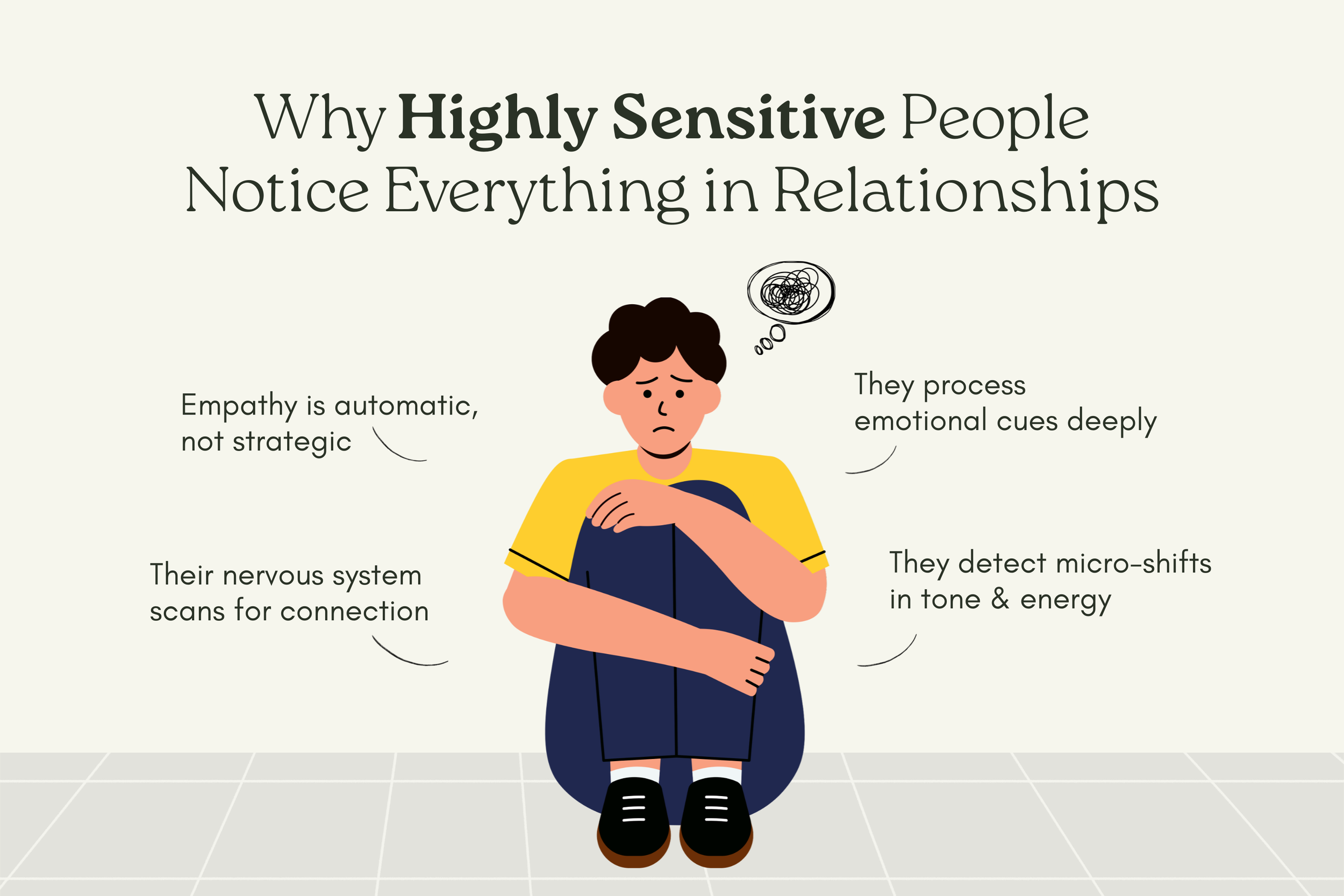
You might be surprised by a highly sensitive person’s capacity for deep attunement!. They notice your moods almost instantly and thoughtfully notice your non verbal cues. A slight pause, a change in your posture, or a quieter response is all supportive information for practicing emotional attunement. An HSP really knows how to read a room! Not because they are suspicious but because they care deeply.
This level of attunement can feel deeply validating, like being mirrored emotionally in the present moment. When in a relationship with an HSP, your inner experience matters, and it’s met with presence, sensitivity, and attention.
They respond with empathy and care
Research has found that HSPs have more empathy than the average person and are better able to understand what others are thinking (Tabak, 2022). And, having a partner skilled in empathy and understanding can make for a great relationship!
A highly sensitive person will meet you with empathy that feels genuine. If you are struggling, an HSP will likely try not to rush to fix you or minimize difficult feelings, but rather try to meet you where you are. Responses are thoughtful and emotionally present, offering comfort with consistency and sincerity. When in a relationship with an HSP, there is room to be your authentic self with authentic feelings. Their care is intentional, and your feelings matter.
They care deeply about how you feel—even when you don’t say it
Highly sensitive people are guided by a strong emotional intuition that tunes into what’s happening beneath the surface. They care deeply about how you feel, even when you can’t find the words or the energy to express it. A forced smile, a deep sigh, a slight change in tone, or a heaviness in your presence can be enough for them to sense that something is off. This awareness isn’t meant to be intrusive but rather attentive, rooted in genuine concern.
A highly sensitive person can notice unspoken pain before it turns into avoidance or resentment. Highly sensitive people create space for feelings and emotions with care, curiosity, and a sense of safety. HSPs are able to provide a sense of being emotionally held, where your inner world and emotions feel seen and respected.
If you’re feeling confused, overwhelmed, or unsure how to support your highly sensitive partner, you don’t have to figure it out alone. We offer HSP-informed therapy that helps you understand how your sensitivity shapes your relationship dynamics, regulate your nervous system, and build connections that feel calmer, safer, and more mutual. Connect with us here.
But Attunement Can Become Emotional Overload
HSPs can absorb your emotions as if they’re their own
While highly sensitive people are deeply attuned to others, this attunement can sometimes shift into emotional overload. In feeling so much and so easily, HSPs may absorb your emotions as if they’re their own. Your stress can become their stress. Emotional boundaries can blur without anyone intending it. What begins as empathy can become emotional fusion and this can become exhausting.
This emotional fusion can create challenges in separating their feelings from your own. They may struggle to tell where their feelings end and yours begin, which can lead to overwhelm or emotional fatigue. For HSPs, learning to step back, ground themselves, and distinguish what feelings belong to them is essential. Boundaries and limits can be vital to someone who is highly sensitive as these can support them in their own self care and maintaining balance in their lives.
Stress, irritation, or tension hits them harder
Highly sensitive people may experience stress, irritation, and tension more intensely. This can occur especially in close relationships. What might seem like a minor disagreement can quickly overwhelm an HSP’s nervous system, flooding them with physical and emotional reactions.
Conflict in relationships can feel destabilizing, as their body goes into overdrive trying to process. For this reason HSPs may need more time, a sense of calm, and reassurance during conflict that is supportive to their regulation. This regulation can provide an opportunity to stay present and connected even during conflict.
They sometimes overthink small changes in your behavior
Highly sensitive people are deeply attuned to shifts in people’s vibrations or emotional expression, which means they sometimes overthink small changes in behavior. When communication patterns change, if a routine is somehow disrupted, or a response feels slightly off their nervous system notices.
Clear communication and gentle reassurance go a long way with highly sensitive people. This can help them separate imagined meaning, imagined fears or worries from reality and feel grounded again in the connection. Without this, delayed replies or short answers can trigger interpretation spirals. They may wonder if you’re upset, pulling away, or needing space, and their mind tries to make assumptions and create a narrative of what is unspoken.
Conflict Feels Completely Different for an HSP
Raised voices or harsh tones feel physically overwhelming
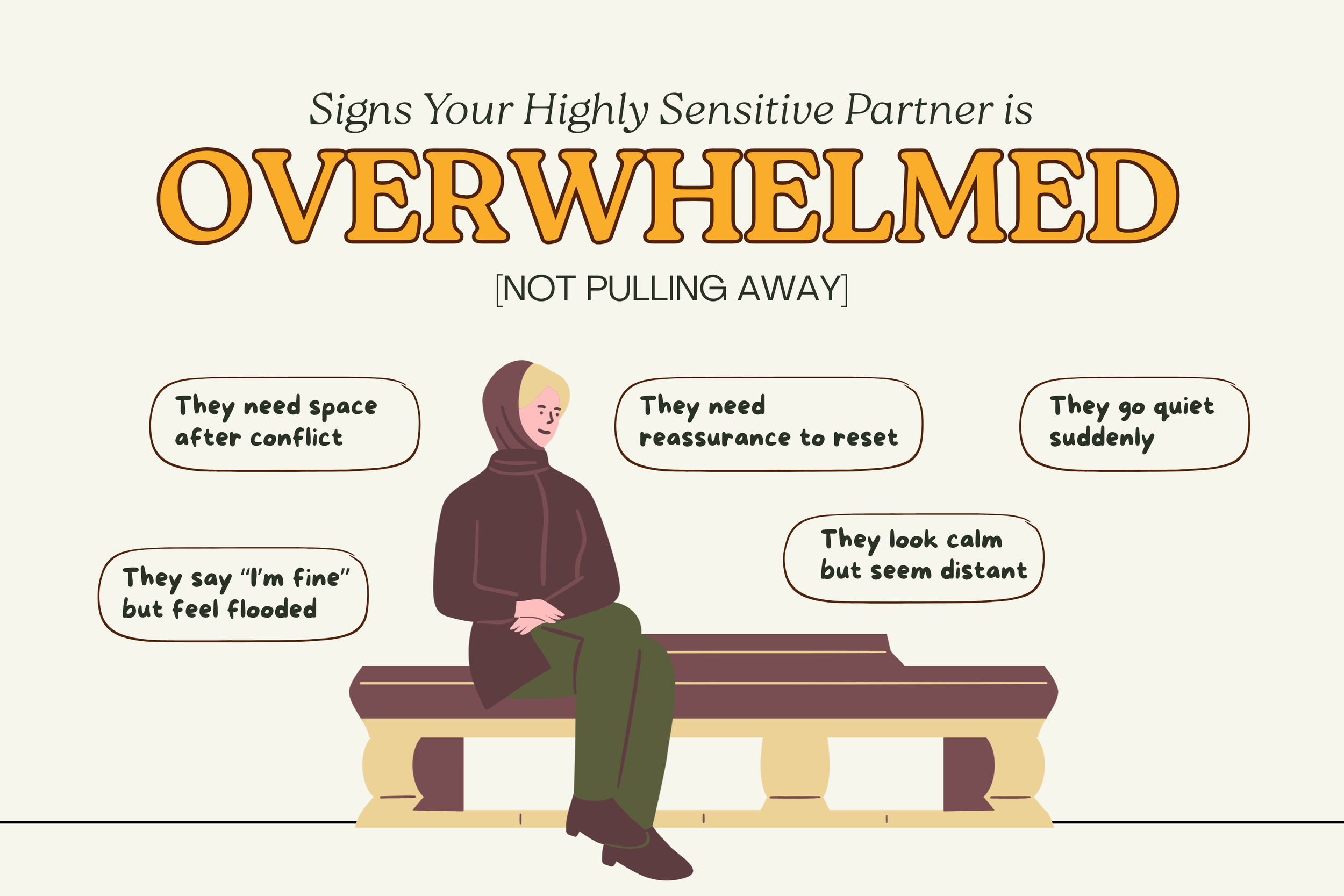
Raised voices, sharp tones, and emotional tension in the air can feel physically overwhelming to a highly sensitive person. A manageable disagreement with others can quickly become intense sensory and emotional overstimulation, making it hard to think clearly or respond calmly.
For an HSP, conflict often equals overstimulation. Their nervous system registers every nuance, be it volume, a certain facial expressions or a person’s body language. This amplifies emotional intensity. Minor disagreements can feel significantly more intense, leaving HSPs feeling drained, anxious, or on edge long after the disagreement ends.
When there is heightened sensitivity, conflict can trigger fight, flight, or freeze responses. They might instinctively withdraw to protect themselves, react defensively, or temporarily freeze, not out of desire to disengage but as a survival mechanism. Navigating disagreements with this understanding is key to keeping both partners feeling heard, seen, connected and safe.
They may withdraw—not to punish you, but to regulate
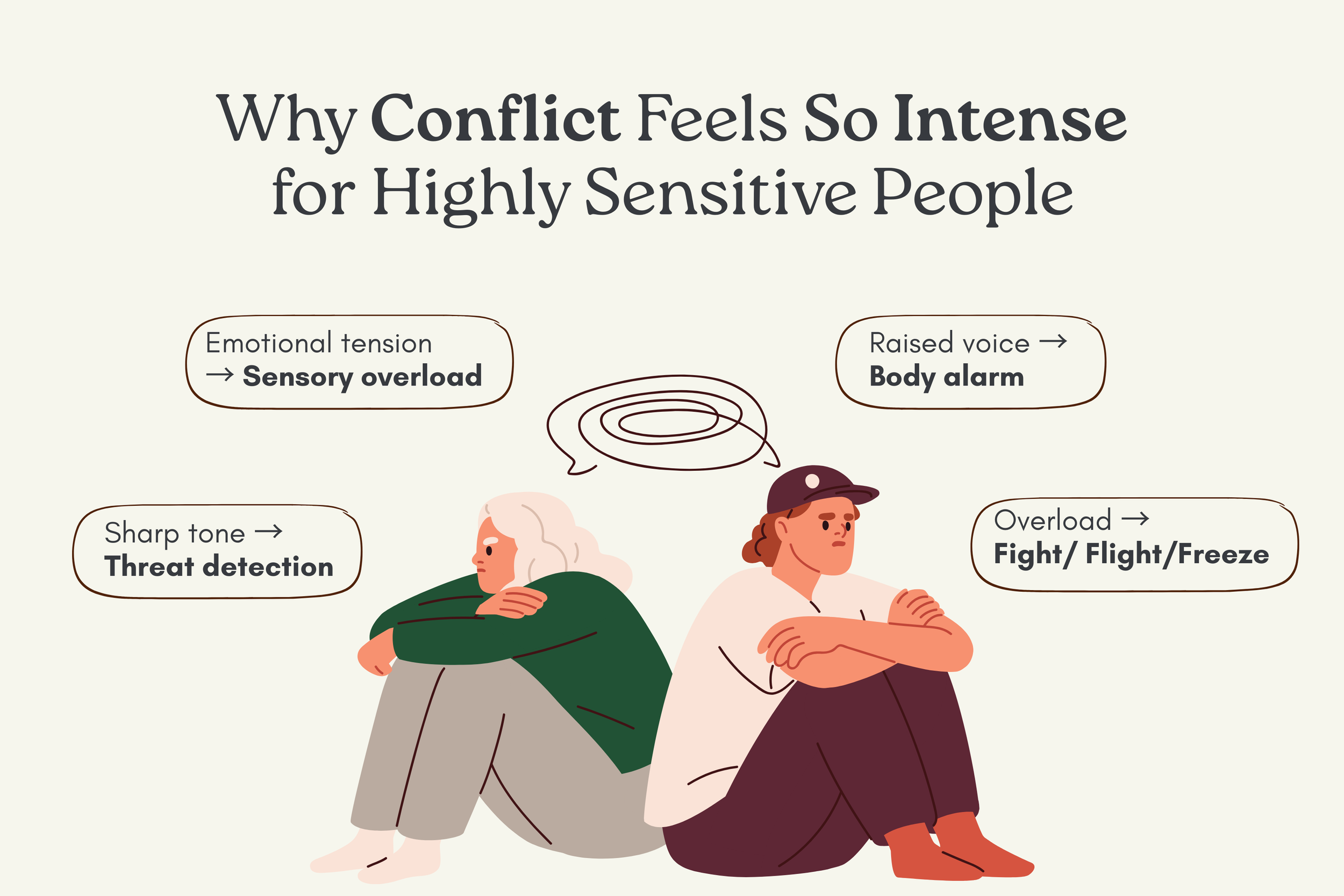
Highly sensitive people may withdraw during disagreements where there is emotional intensity. This is not in effort to avoid or distance themselves from you, but to practice their own emotional regulation. When an HSP experiences overwhelm, emotional shutdown may be used as a form of protection.
This can provide space for their mind and body to process without further overstimulation or external pressures. This can look like a need for alone time to reset, a quiet space to decompress so that they can return to the conversation with presence and clarity.
They need reassurance and clarity to feel secure again
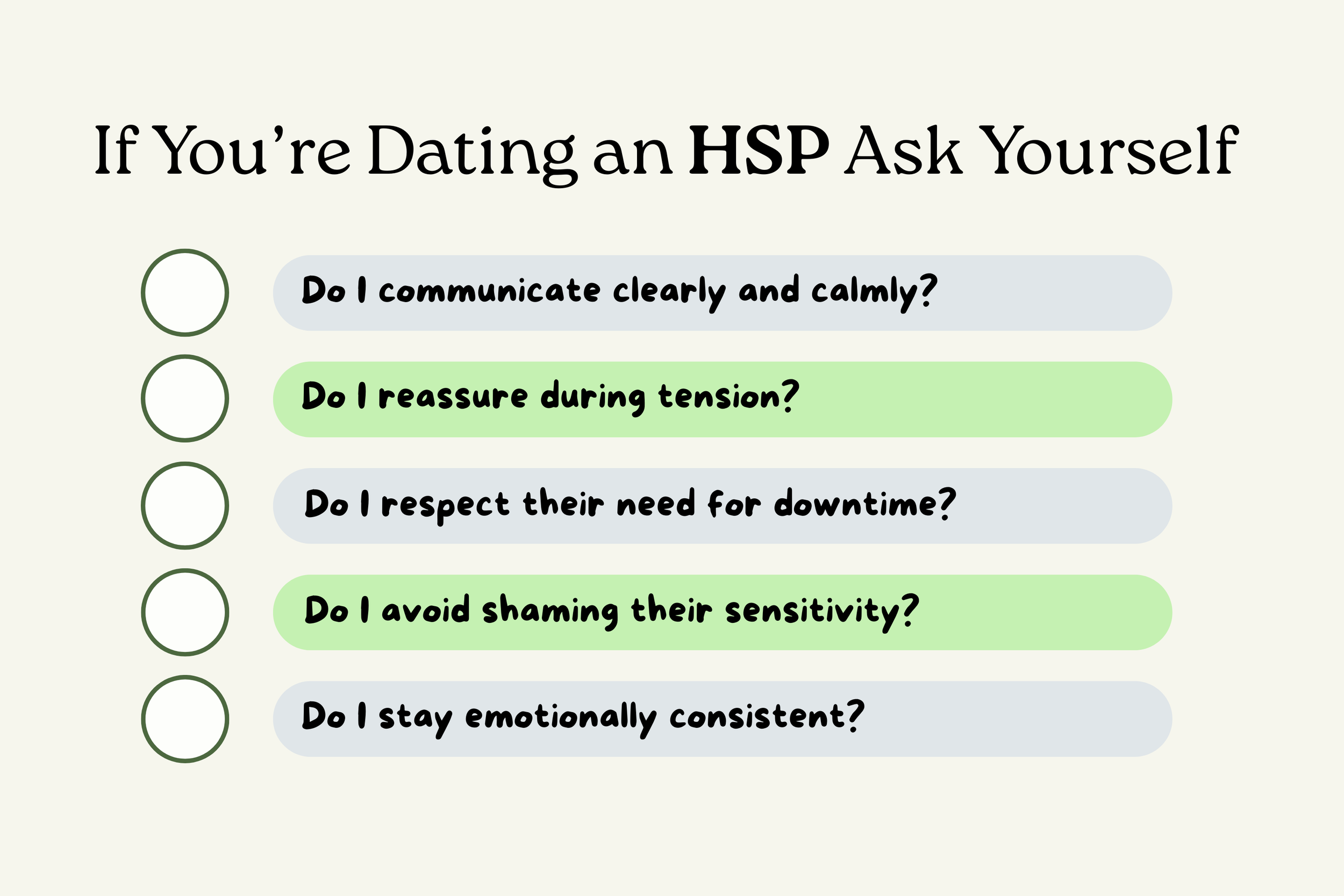
Highly sensitive people need reassurance and clarity to feel secure after emotional upheaval. Gentle repair with calm, compassionate conversations that acknowledge feelings and restore connection helps them regulate and trust again. Predictable communication, consistency in words and actions, helps reassure them that their connection is secure, making it easier for them to relax and re-engage without lingering anxiety or doubt.
HSPs Need More Downtime Than Most Partners Expect
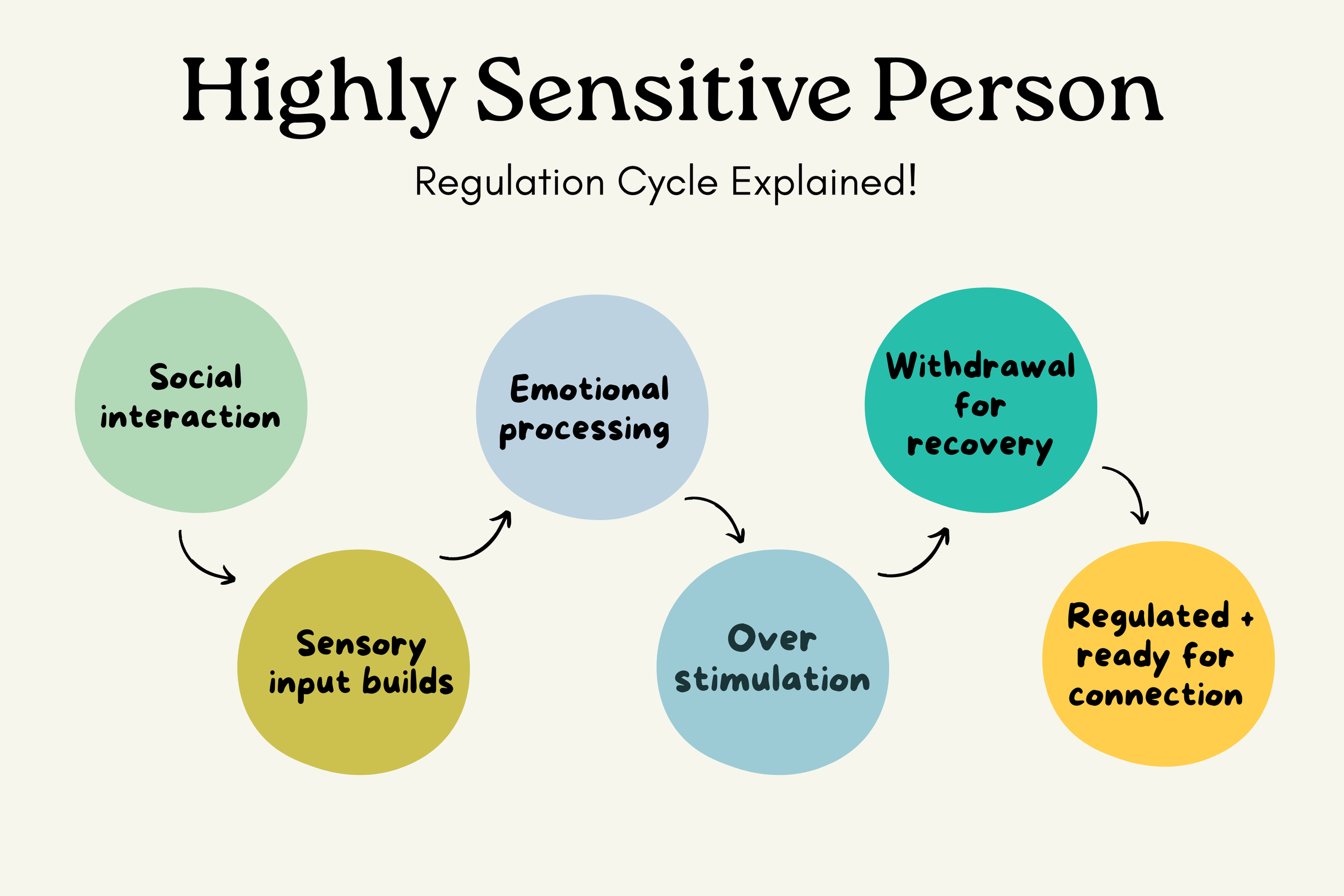
Quiet time is not avoidance—it’s recovery
Highly sensitive people need more downtime than most partners might expect. It’s important to recognize that this quiet time is recovery, not avoidance. The HSP’s nervous system absorbs more sensory input and emotional energy than average. After social interactions, busy days, or emotionally charged moments, HSPs need time and space to decompress. Alone time allows room for processing emotions, reflection, and restoring a sense of balance. This time supports HSP returning to connection and calm.
Activities such as reading, walking in nature, or simply resting are all low-stimulation activities and supportive practices for maintaining emotional and mental well-being. For an HSP, downtime is essential to manage overwhelm and stay attuned to both themselves and their partner. Supporting HSPs' need for rest and solitude strengthens the relationship. This support enables an HSP to engage more fully, compassionately, and authentically when they are in a relationship.
They reach social burnout faster
Highly sensitive people reach burnout in social settings and experiences more quickly than most. Crowds, parties, and chaotic or busy environments can overwhelm their nervous system. Even enjoyable social events can feel draining, causing mental and emotional fatigue. Space for recharging after such social events helps maintain well-being and ensures HSPs can continue to engage in relationships and social life without becoming withdrawn or overstimulated.
Their energy shifts dramatically depending on sensory load
Highly sensitive people’s energy can shift dramatically depending on sensory load. When they feel overwhelmed by noise, crowds, or emotional intensity, they often feel drained or fatigued. In calmer, low-stimulation environments, however, their capacity for presence and attunement can increase, allowing for deep connection, curiosity, and emotional presence. Understanding these shifts helps them feel safe and engaged in the relationship.
Dating an HSP Brings Unique Strengths to the Relationship
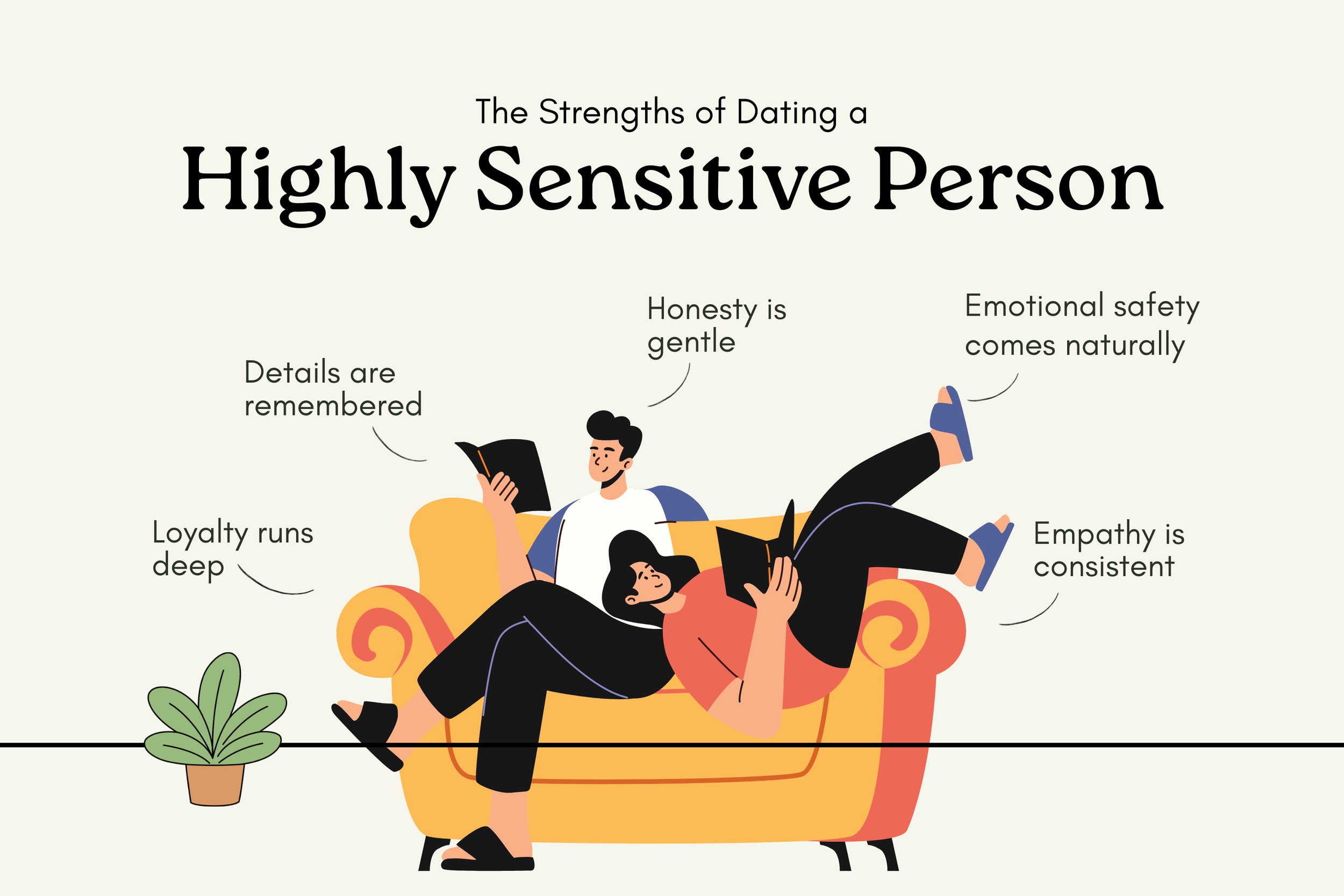
They create emotional safety naturally
Dating a highly sensitive person brings a unique depth and richness to a relationship that can be hard to find. One of HSP's most significant strengths is the ability to create emotional safety.
Their ability to notice shifts in mood and their caring responses help cultivate an environment where you can be your most authentic self. This natural ease of attentiveness and attunement allows intimacy to thrive, as both partners feel seen, heard, and valued on a deep level.
Compassion is another HSP superpower. HSPs can be deeply empathetic and will anticipate your needs. Their capacity to hold space for your feelings and their nurturing attunement and emotional presence help relationships feel supportive and meaningful rather than transactional. Vulnerability isn’t a risk to the highly sensitive person; it is a shared experience, one of deep meaning and connection. This willingness to be vulnerable encourages reciprocity, creating a dynamic where emotional honesty is safe, welcomed, and normalized.
Gentle honesty is also amongst these unique strengths. Highly sensitive people communicate difficult truths with care. HSPs aim to preserve connection rather than cause harm. Difficult conversations are framed thoughtfully, balancing honesty with kindness.
Being with an HSP often means participating in a relationship where emotional depth, compassion, and mutual respect aren’t just ideals but the foundational pillars of how they experience relationships; they are everyday practices that secure and support relational bonds in long-lasting ways.
They are deeply loyal and invested
Highly sensitive people are deeply loyal and invested in their relationships. Love is treated with intention and care. HSPs don’t just casually enter connections; they think long-term and will consider how a relationship will grow and develop over time. Commitments aren’t just about staying but rather are an active practice of nurturing, protecting, and enriching the relationship in meaningful ways.
HSPs are attentive partners who tend to their relationships in ways that can go unnoticed but make a significant difference. They remember the little details: your preferences, the subtle shifts in your mood, your unspoken needs. They show up emotionally. This attentiveness creates and encourages trust and security, making their loyalty feel active and real rather than just a promise. Being with a highly sensitive person means having a partner who is present and sincerely invested in your shared journey.
They enrich the relationship with depth and meaning
Highly sensitive people enrich relationships with depth and meaning. Their capacity for natural insight allows them to notice patterns in behavior, emotions, and dynamics that others might miss. They offer perspectives that promote thoughtfulness, clarity, and compassion. They reflect deeply on experiences, both theirs and their partner's, which encourages growth, learning, and a caring connection.
Highly sensitive people experience high levels of emotional intelligence, also enriching to the relationship. HSPs navigate complex feelings with empathy and compassion. They validate emotions while maintaining attunement to the needs of the relationship. Being with an HSP often feels like being seen and understood complexly and fully. HSPs have the ability to not only see what is occurring on the surface in the moment but also recognize the emotional undercurrents underneath.
What Makes Dating a Highly Sensitive Person Easier (and Better)
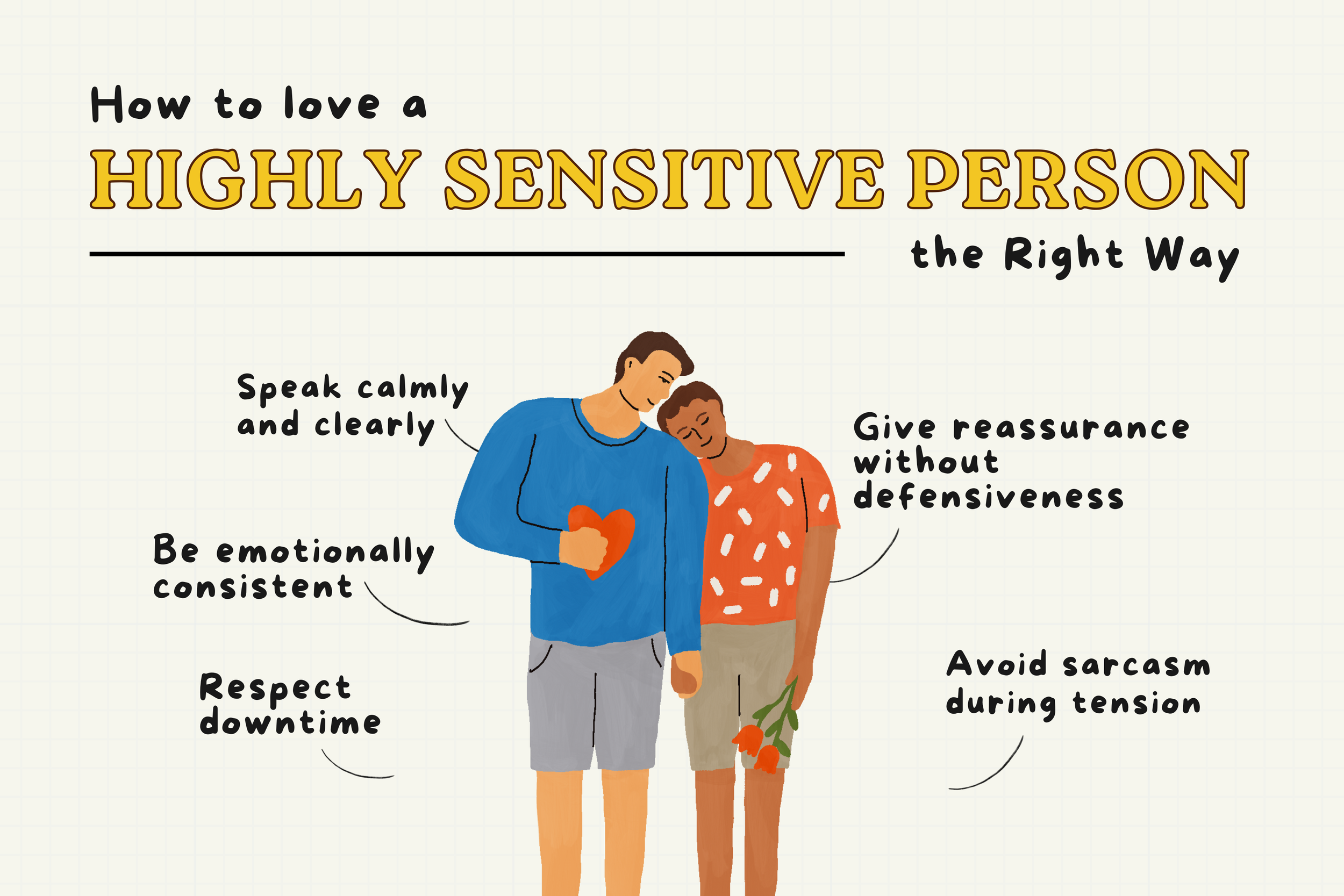
Clear, calm communication
When communication is clear and calm, dating a highly sensitive person comes with ease. HSPs thrive on transparency and predictability. Feelings, expectations, and intentions that are expressed directly contribute to feeling safe, understood, and connected. Calm and clear communication helps HSPs process emotions without triggering overwhelm or distress. Calm and clear communication allows for productive conversations instead of misinterpretations or worry spirals.
Ambiguity or uncertainty, however, can quickly lead to overthinking and even emotional shutdown. Uncertainty about where they stand in the relationship can feel destabilizing, making even insignificant issues seem larger or more important than they are. Clarity, transparency, patience, and consistency help reduce stress but also deepen intimacy, trust, and mutual appreciation, creating opportunities for connection rather than conflict.
A predictable, steady emotional environment
An emotional environment that is predictable and steady also supports more ease when dating an HSP. HSPs are attuned to change in mood, tone, and energy, tone, and energy.
Consistency in behavior and communication helps them feel secure. A stable emotional environment allows them to safely relax, be themselves, and engage fully in the relationship. In safe settings, HSPs can let their guard down without constantly scanning the landscape for potential triggers or conflicts
Emotional volatility or unpredictability, however, can be destabilizing. Erratic reactions, unpredictable moods, or sudden outbursts can overwhelm an HSP's nervous system and challenge their ability to stay present. Emotional consistency is supportive of cultivating a relationship with a highly sensitive person that is harmonious and resilient.
Sensory-conscious choices
Sensory-conscious choices also help create more ease when dating as an HSP. Quieter dates, ambient lighting, and soothing aesthetics all help HSPs to relax and be fully present. Simple adjustments, such as choosing calm spaces where you can hear each other talk versus noisy, overstimulating venues help HSPs feel comfortable and create room for emotional intimacy.
A partner who doesn’t shame sensitivity
Like most people, HSPs feel safe where there is acceptance. Dating a highly sensitive person is much easier when their sensitivity is met with acceptance rather than judgment. Shaming or diminishing their sensitivity or emotional responsiveness can chip away at trust and create distance in the partnership. When HSPs feel that their sensitivity is honored, they feel respect for who they are as their authentic self, allowing them to remove any masks and feel safely seen in the relationship.
Acceptance and respect foster openness, vulnerability, and connection. When their emotional depth is valued, vulnerability and openness are encouraged. Vulnerability, openness, and safety assist the highly sensitive person to share feelings, fears, and desires without fear of ridicule or shame. Opportunities for closeness, understanding, and mutual appreciation support relationships in becoming more harmonious.
What Makes Dating an HSP Harder (and How to Handle It)
Emotional intensity
The emotional intensity a highly sensitive person experiences can contribute to challenges in dating an HSP. HSPs' feelings can run hot or be “touchy”. What might seem like a trivial event can trigger big feelings or strong emotional reactions. Minor issues can seem overwhelming to HSPs, contributing to moments of high tension or emotional expression, which can require patience and understanding from their partner.
Because their nervous system is highly reactive, emotional responses can be big, but this should not be interpreted as an attempt to escalate conflict. Anger, sadness, and even excitement can be amplified, and HSPs may need time to fully process these feelings. While this may feel intense to some people, this is how HSPs experience and respond to the world around them.
They experience life vividly and deeply, fully emotionally present.
Navigating this effectively requires the HSP's partner’s own emotional regulation, empathy, and patience. Listening without judgement or defensiveness, providing empathic reflection and validation, and allowing HSPs space to calm down and practice their own regulation can help them feel heard and safe. HSPs and partners, over time, can learn how to handle this intensity together, and this can support them in strengthening the relationship.
An HSP’s high level of empathy can contribute to them being more anxious to please you (Tabak, 2022). This means your HSP partner might sometimes (or often) ignore their needs to prioritize yours, but then the resentment builds, and they explode, which seems out-of-the-blue to you but has been building for a long time for them.
Overthinking and self-doubt
Sometimes HSPs will struggle with self-doubt and overthinking. Slight changes in connection or minor interactions that feel “off” can trigger a barrage of questions. “Did I say something wrong?’ or “Are you upset with me?” might be common curiosities. HSP’s attunement to subtle cues can cause hyper-vigilance of potential problems even if they do not exist. This constant emotional monitoring and checking is typically rooted in the desire to maintain harmony; it can also leave an HSP feeling anxious or experiencing doubt.
Understanding this HSP tendency is crucial for HSP partners. Clear communication and consistent emotional feedback help HSPs feel more secure and grounded in the relationship. Their tendency towards overthinking and self-doubt lessens when their feelings are acknowledged and validated, when there is an understanding that minor uncertainties or moments of disconnection aren't catastrophic.
Sensory overload causing withdrawal
Highly sensitive people can withdraw suddenly, sometimes without warning, when they are faced with sensory overload. Emotionally charged and overstimulating environments can overwhelm their nervous system, causing an immediate need for quiet or solitude to recover. This can be a self protective strategy that allows an HSP to regulate and ground in order to return to engagement with calm and presence.
How to navigate it
Patience, empathy, and intentional practices that support an HSP’s emotional needs all help to support partners in navigating the challenges of dating a highly sensitive person. Patience allows the HSP partner time and space to process and understand their emotions when they experience overwhelm, overthinking, or emotional withdrawal.
Patience helps to prevent escalation and cultivates trust. Validation is also key. Acknowledging feelings, even those that feel confusing or intense, supports HSPs in feeling understood and seen, which helps to reduce anxiety and self-doubt.
Consistent routines and habits can be supportive to HSPs in feeling grounded and secure in the relationship. Regular scheduled check-ins or agreed-upon methods of communication can provide stability that minimizes unnecessary stress. Regular emotional check-ins support partners in addressing concerns before they become larger issues.
Open dialogue alongside patience, validation, and consistency makes it possible for HSPs and their partners to weather relationship challenges with grace and mutual respect, deepening emotional intimacy, trust, and connection.
If You’re Dating an HSP, Here’s What They Need Most from You
Consistency
Consistency and emotional reliability are among what HSPs need most from you. Predictable communication, follow-through on commitments and promises, and fewer surprises, unknowns, and incongruencies all help HSPs feel safe and secure. When an HSP knows they can trust and rely on your consistent presence, care, and understanding without judgment or sham,e it allows them to fully relax and deepen their relationship.
Kindness
Kindness is also essential to a relationship with an HSP. Words, tone, and attitude carry meaning for HSPs. Casual negative comments or harsh voice tones are felt more intensely, whereas thoughtful communication prompts safety and connection. Acts of thoughtfulness, choosing words with kindness and care, and showing up with warmth can support an HS{ feeling valued and emotionally secure.
Emotional presence
Emotional presence is also what HSPs need. This matters far more than any performance or grand gesture. A highly sensitive person will notice when you're just going through the motions versus when you are truly engaged and responsive to their feelings. Being emotionally available with genuine care creates safety and connection.
Respect for their nervous system
Respecting an HSP’s nervous system is crucial to a successful and healthy relationship with a highly sensitive person. Mindfulness and awareness of their sensory limits, whether it be noise, visual stimulus, chaotic environments, or emotional intensity, and respecting their need for space to process, supports a highly sensitive person in practicing their own emotional regulation, reducing emotional activity, and supporting them in feeling safe and cared for. This allows for trust and intimacy in the relationship.
The Truth — Dating an HSP Is Not Hard… It’s Different
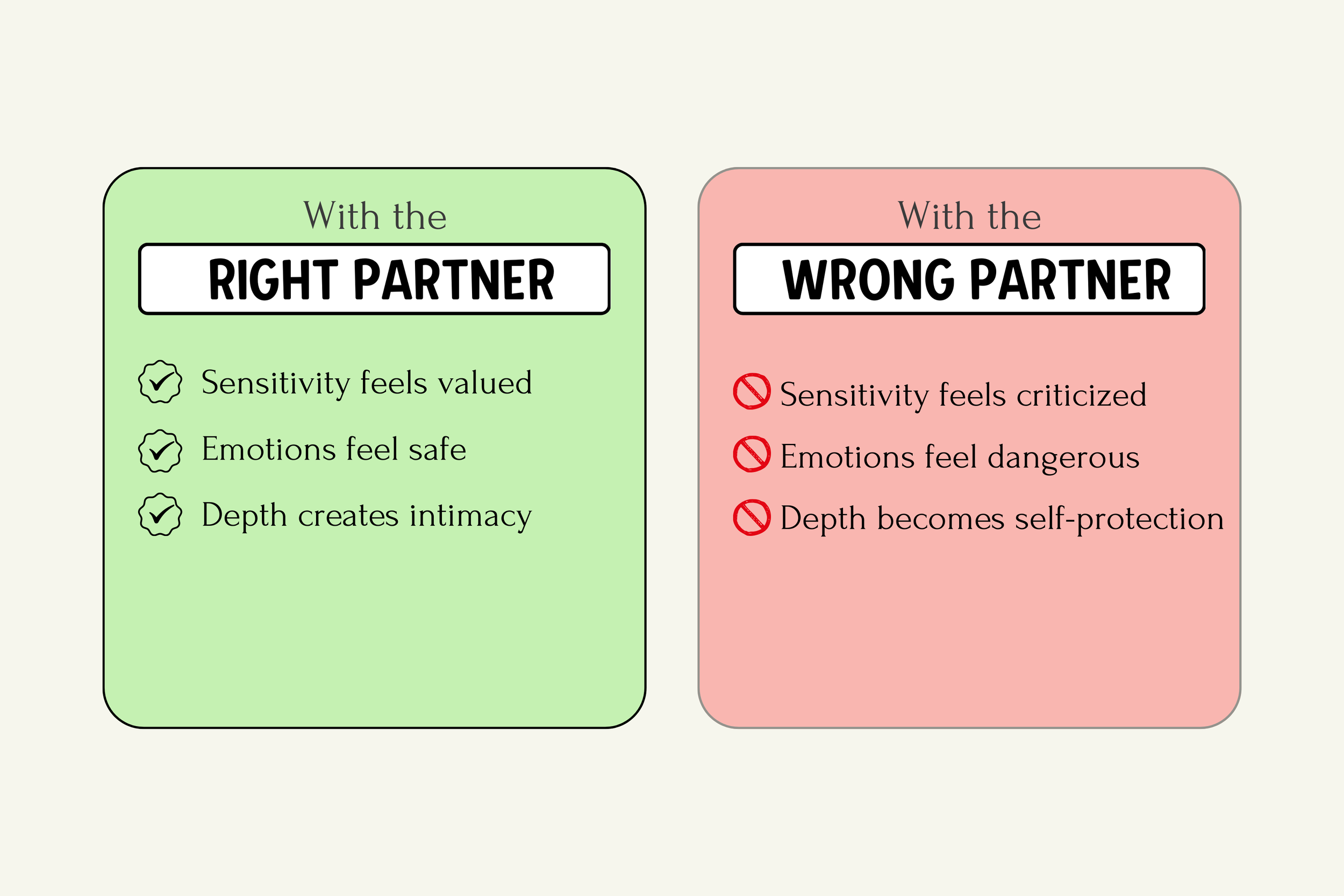
With the right partner, sensitivity becomes a superpower
The truth is, dating a highly sensitive person isn’t hard…it's just different! Their emotional awareness and presence, their attunement, capacity for empathy, and depth of feelings are all superpowers for the relationship when they are with the right partner. Their sensitivity allows for a more vivid, more deeply felt, and meaningful experience both in relationship and in the experience of the world. These superpowers allow for an emotional connection that is profoundly meaningful and unique.
Being with an HSP allows for intimacy on a deeper level than many relationships provide. Emotional closeness becomes an integral part of the relationship. When sensitivity is met with patience and understanding, trust, vulnerability, and connection transform everyday moments and interactions into experiences of genuine love and care. When in the right partnership, dating and HSP is less about struggles or emotional challenges but a celebration of emotional depth and fulfillment.
With the wrong partner, sensitivity becomes a survival strategy
With the wrong partner, an HSP’s sensitivity can shift from superpower to survival strategy. To protect themselves, an HSP will employ hyper-vigilance, constantly monitor for emotional cues, anticipate conflict, or worry deeply about being misunderstood, all in an effort to defend themselves from harm. HSPs will over-function, take on extra emotional labor, or compromise the authentic self to accommodate their partners’ needs, further eclipsing their own well-being. In such dynamics, empathy and attunement are depleted. Rather than being celebrated, sensitivity becomes a source of stress and fatigue.
Compatibility matters more than “toughening up.”
When in a relationship with an HSP, compatibility is far more important and effective than the HSP simply "toughening up”. HSPs are less likely to become hardened, nor should they be forced to endure stress. They are far more likely to flourish in relationships that prioritize emotional safety, understanding, and connection.
Pressuring and HSP to conform will likely backfire and amplify tension and withdrawal. A partner who is able to meet and HSP where they are, see them fully in their depth of feeling, and allows for empathy, attunement, and understanding will experience a healthy connection that will only strengthen and grow harmoniously.
If you identify as a highly sensitive person (HSP) and need tailored support, Thrive Therapy & Counseling can help. Book a call here to get the support you deserve.
Reference:
Tabak, B. A., Gupta, D., Sunahara, C. S., Alvi, T., Wallmark, Z., Lee, J., … & Chmielewski, M. (2022). Environmental sensitivity predicts interpersonal sensitivity above and beyond Big Five personality traits. Journal of Research in Personality, 98, 104210.