
What Kind of Partner Does an HSP Really Need? (Traits That Make Relationships Feel Safe)
Ivy Griffin
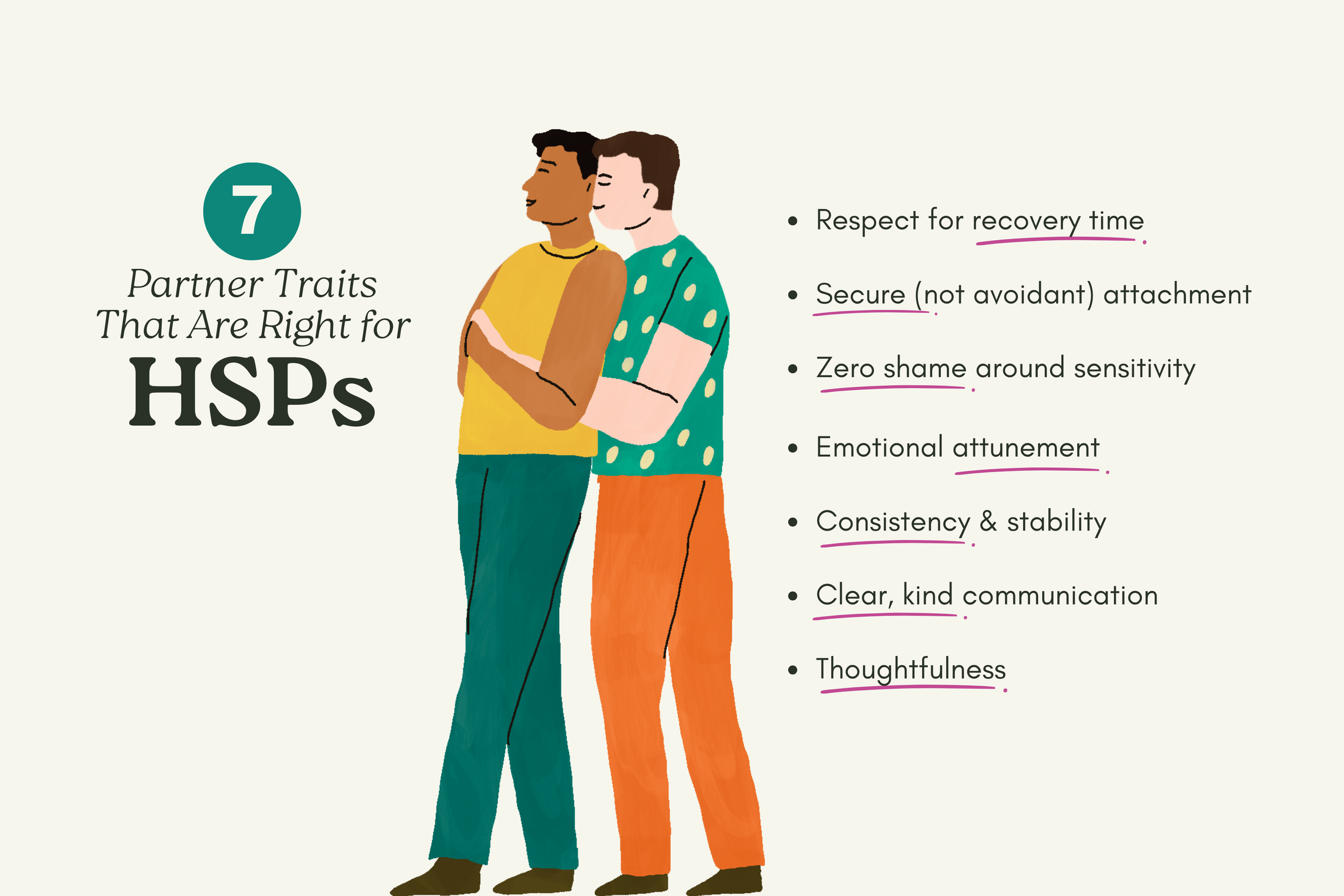
The best partner for a Highly Sensitive Person (HSP) is someone who provides emotional safety, steadiness, and deep attunement—someone whose presence calms your nervous system rather than overwhelming it.
Most HSPs think they’re “too much,” when in reality they’ve simply never experienced what it feels like to be with someone emotionally safe, consistent, and receptive. Working with a therapist who specializes in therapy for highly sensitive people can help you understand what you truly need in a relationship.
Let’s break down the exact traits that make a partner deeply compatible with an HSP.
First, Why the Right Partner Matters So Much for HSPs
HSPs can partner well with another HSP or with someone who is not highly sensitive. Each option comes with pros and cons, but the most important factor is having a partner who is supportive and willing to work together to meet both of your needs.
Please remember that no partner is perfect. When I say “right partner,” I’m referring to the partner that is a good match for you. No one person can fulfill anyone else’s needs all the time, so we’re all aiming for good enough, not perfection.
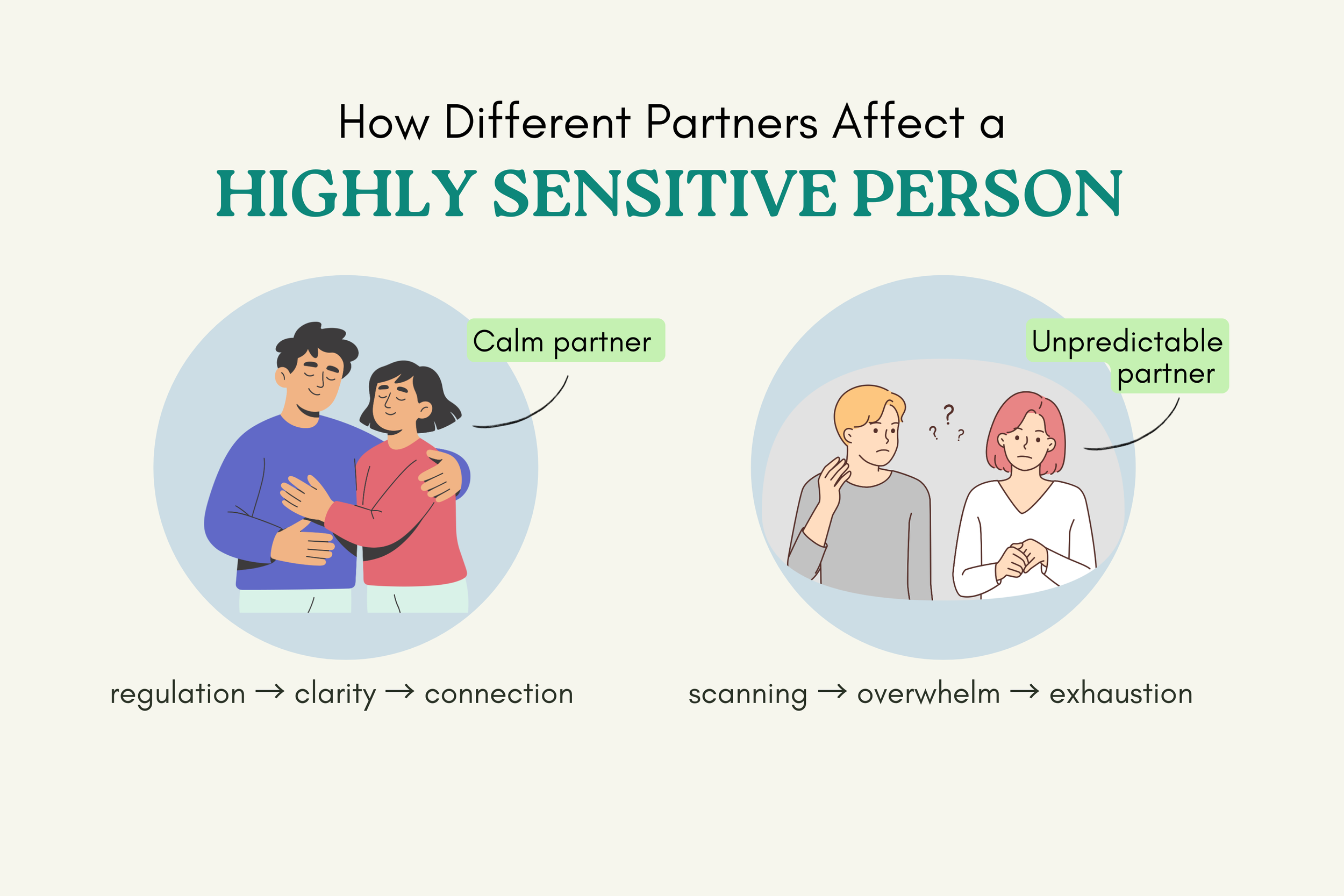
Your nervous system responds strongly to relationship dynamics
As an HSP, you are constantly picking up on the energy of other people. This is especially true for your partner, family members, close friends, and anyone you care deeply about. In fact, research has found that more areas of your brain light up in response to your loved ones’ emotions (Acevedo, 2014). When the people you’re around are calm and relaxed, you naturally find this very soothing.
You also tend to be soothed by consistency and routine. When you know what to expect, your nervous system doesn’t need to work so hard. Because of this, unpredictability can throw you off balance, and unpredictable people are especially dysregulating as your energy is drained from noticing all the ever-changing social cues and trying to make sense of them.
Emotional mismatch affects you more deeply
It makes sense that inconsistent partners trigger overwhelm for you. With so much of your awareness and energy consumed by trying to read a partner’s fluctuating behavior, you become exhausted and overstimulated, which requires more down time, grounding, and coping skills to get yourself back to your baseline.
As an HSP, you are impacted more strongly by positive and negative experiences, which is called differential susceptibility. When you have a partner whose moods change quickly or who is often loud, aggressive, highly energetic, or chaotic, it takes a toll on you. That’s not to say that these qualities are deal-breakers, but you may need more alone time or stronger grounding rituals (think breathing, journaling, meditation) to keep you balanced with all the ebbs and flows happening around you.
The right partner doesn’t make you less sensitive—just safer
A partner who sees, understands, and appreciates you for who you are will help you feel safe and secure, and your partner will deeply benefit too. Your empathy and attunement enable you to connect in deep, emotionally rich, and meaningful ways that create really satisfying relationships. Plus, the insight, curiosity, compassion, and appreciation that are part of your trait add a lot of enjoyment to life. With the right partner, your sensitivity is a strength that enhances the relationship for both of you.
Trait #1 — Emotional Attunement (Feeling Truly “Gotten”)
You need someone who listens beneath the surface
You naturally notice nuance, including a shift in your partner’s tone of voice or body language, and respond accordingly. So it’s natural that you also appreciate a partner who picks up on your tone and checks in.
Because HSPs can be so habituated to prioritizing other people over themselves, it can be extra meaningful when your partner picks up on your cues without you having to ask. You really appreciate when others show you the same empathy that you offer them. When your partner notices you getting quiet, asks what’s wrong, and listens with genuine empathy, you feel truly seen and understood.
As HSPs, sometimes we feel hurt if a loved one doesn’t notice a change in our mood because we’re so attuned to theirs. It can seem like, “If you loved me, then you would pay attention and know when I’m xyz.”
While there may be some truth to that thought, depending on the dynamics, it might also be that your partner simply isn’t as adept at noticing subtle changes, and they’ll appreciate you giving them some grace to not respond as you do. So, it helps if we balance appreciating a partner who listens beneath the surface with the understanding that a non-HSP may not be quite as attuned as we are, and that’s ok because they bring their own strengths to the relationship.
Someone who values emotional depth
You connect best with people who don’t take life at face value. You gravitate toward going deep, whether that’s telling your partner about a painful memory of when you were bullied as a child or analyzing the themes of the latest Oscar winning film.
Because you’re not scared off by big feelings or complex topics, you value a partner who isn’t either. Not only do you work best with a partner who is not avoidant or dismissive of your emotions and needs, but you will also pair well with someone who is not overwhelmed by feelings and can match your emotional depth.
Someone who believes your feelings make sense
Validation goes a long way for HSPs. It matters a lot to us when we hear, “Me too!” In Western culture we’re often trained to hide many aspects of our sensitivity, which makes us feel alone and like something is wrong with us. So, it becomes that much more meaningful when the people we love validate our experience.
This is not to say that HSPs are always “right” or that our emotional reaction always matches a situation. We’re still humans with our own baggage and past experiences, and sometimes we may be triggered and overreact.
Your partner doesn’t need to always agree with your feelings, but they do need to allow that you have a range of emotions, just like everyone else. It also helps if they understand that you feel those emotions more intensely than others do. Sometimes everyone’s feelings come out messy and sideways, but it’s how you and your partner work through these moments that counts.
If you’re an HSP in a relationship who’s tired of feeling unheard, book a call with Thrive Therapy & Counseling for HSP‑informed care. Thrive Therapy & Counseling offers a safe, supportive space for HSPs to help you process your thoughts and find healthier ways to cope. Connect with us here.
Trait #2 — Emotional Stability and Consistency
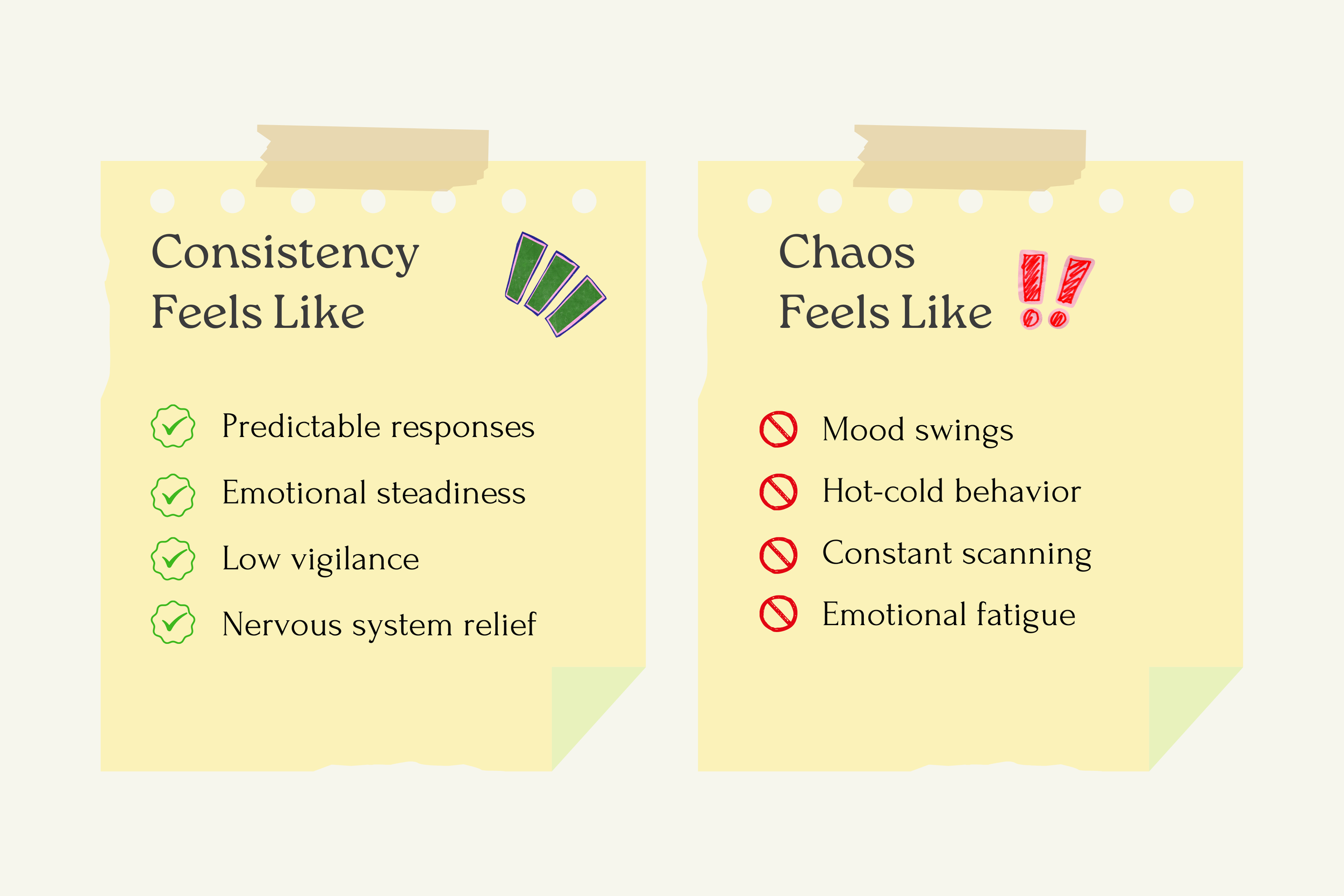
Calm partners regulate your nervous system
Everyone has mirror neurons in their brains that mimic and “mirror” the emotional reactions of the people around them. Because HSP mirror neurons are even more active around their loved ones, you soak up their moods without meaning to. If your partner is usually calm and steady, this will help you feel steady and regulated too.
Most people enjoy some amount of predictability, and this is especially true for HSPs. When your partner responds in predictable ways, it helps you relax. You don’t have to process a new situation or figure out how to respond, giving your brain a break to rest and feel safe.
Unpredictable partners create tension for HSPs
When you’re with someone who is moody or volatile or prone to shutdowns, you feel on edge. You can’t let down your guard because you’re constantly scanning to see if something has upset your partner.
Did they sound irritated?
Are they being quieter than usual?
Why are they rubbing their head?
Your brain goes into overdrive trying to identify and respond to the changes that happen much too frequently. This is exhausting for your nervous system and for your energy levels.
Consistency = comfort to a highly sensitive person
Small daily habits offer a lot of comfort for HSPs. Routines like asking your partner how they slept or how their day at work went or spending time together over dinner or before bed provides a reassuring bookend to your day, and your partner’s reliable responses can bring you comfort and reassurance.
These small habits strengthen your emotional connection, tell your brain that it’s time to relax, and allow you to enjoy time with your trusted person. Plus, if one of your love languages is acts of service or quality time, such rituals can make you feel very loved too.
Trait #3 — Someone Who Communicates Clearly and Kindly
You need clarity, not guesswork
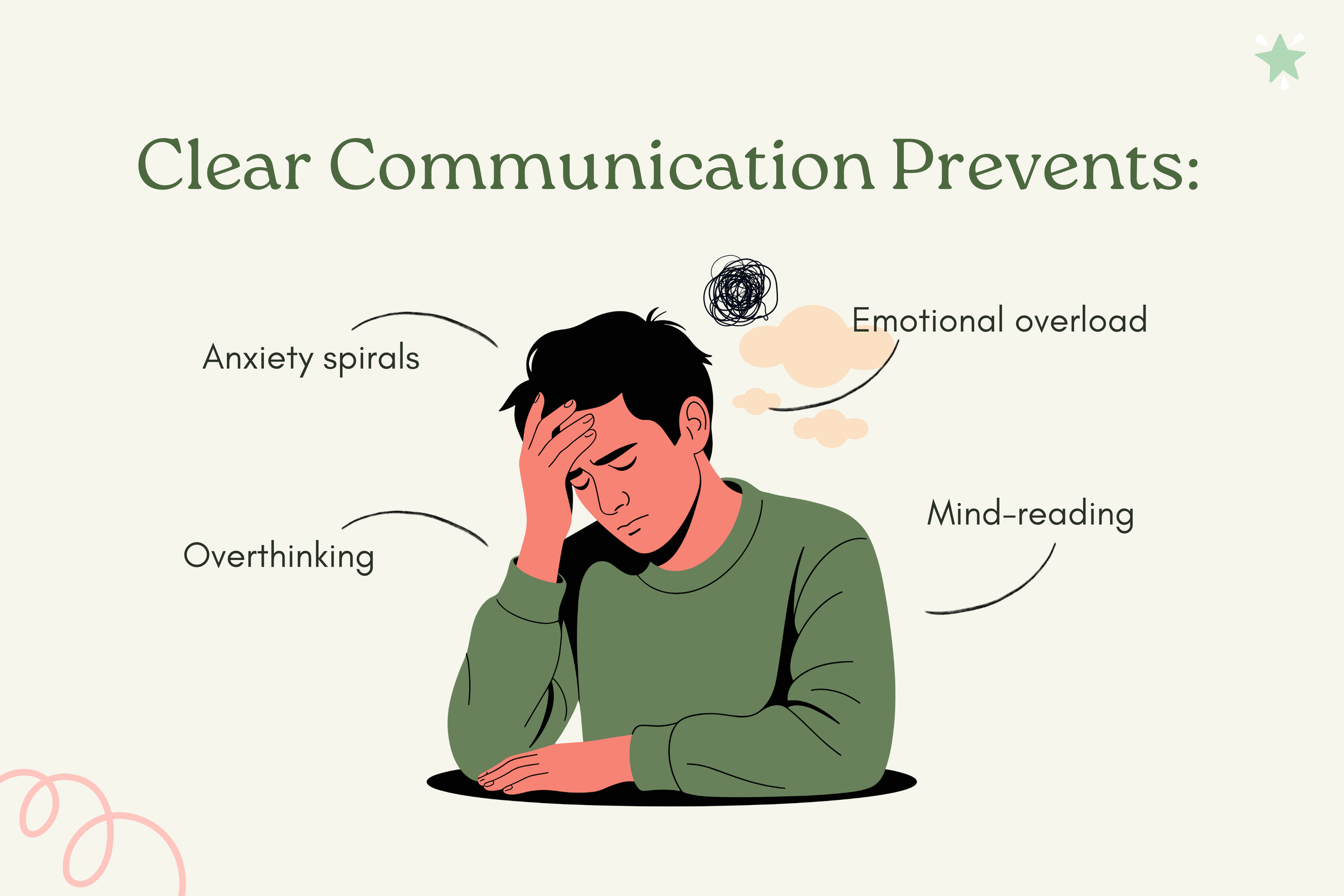
Knowing what to expect helps you feel more calm and relaxed, which, in turn, helps prevent overthinking and allows you to be more present. If you know you can count on your partner to share when something has bothered them, your brain doesn’t have to go into overdrive trying to mindread and decipher every clue. You can sit back and trust that if your partner needs to talk to you about an issue, they will.
When your partner does need to talk to you about a problem, it works best for you if they approach the topic using kind and honest communication. If they beat around the bush, you’re likely to start thinking the worst, which amplifies your emotions and makes it harder to stay focused on what they’re actually saying.
Gentle communication reduces overwhelm
If your partner tells you gently and directly what is upsetting them, your empathy will guide you in supporting them to explore the issue and work together to find a resolution. This kind of communication involves respect, kindness, and openness.
Depending on the issue, this style of communication can still be really hard and painful, but it isn’t mean or biting or hateful. There’s no room for sarcasm that’s designed to sting, and there’s no weaponizing silence. Those behaviors are red flags that this partner isn’t a good match for you or that they need to improve their communication skills.
Someone who can talk about conflict calmly
You benefit from a partner who can remain calm through conflict most of the time or who knows how to take a break and come back to an issue when they’re getting too heated. This means:
No yelling
No stonewalling
No blame games
If either of you notice these patterns are happening, you and your partner might need the support of a skilled couples therapist to help you learn and implement better ways of working through conflict.
Trait #4 — Someone Thoughtful and Conscientious
HSPs thrive with considerate partners
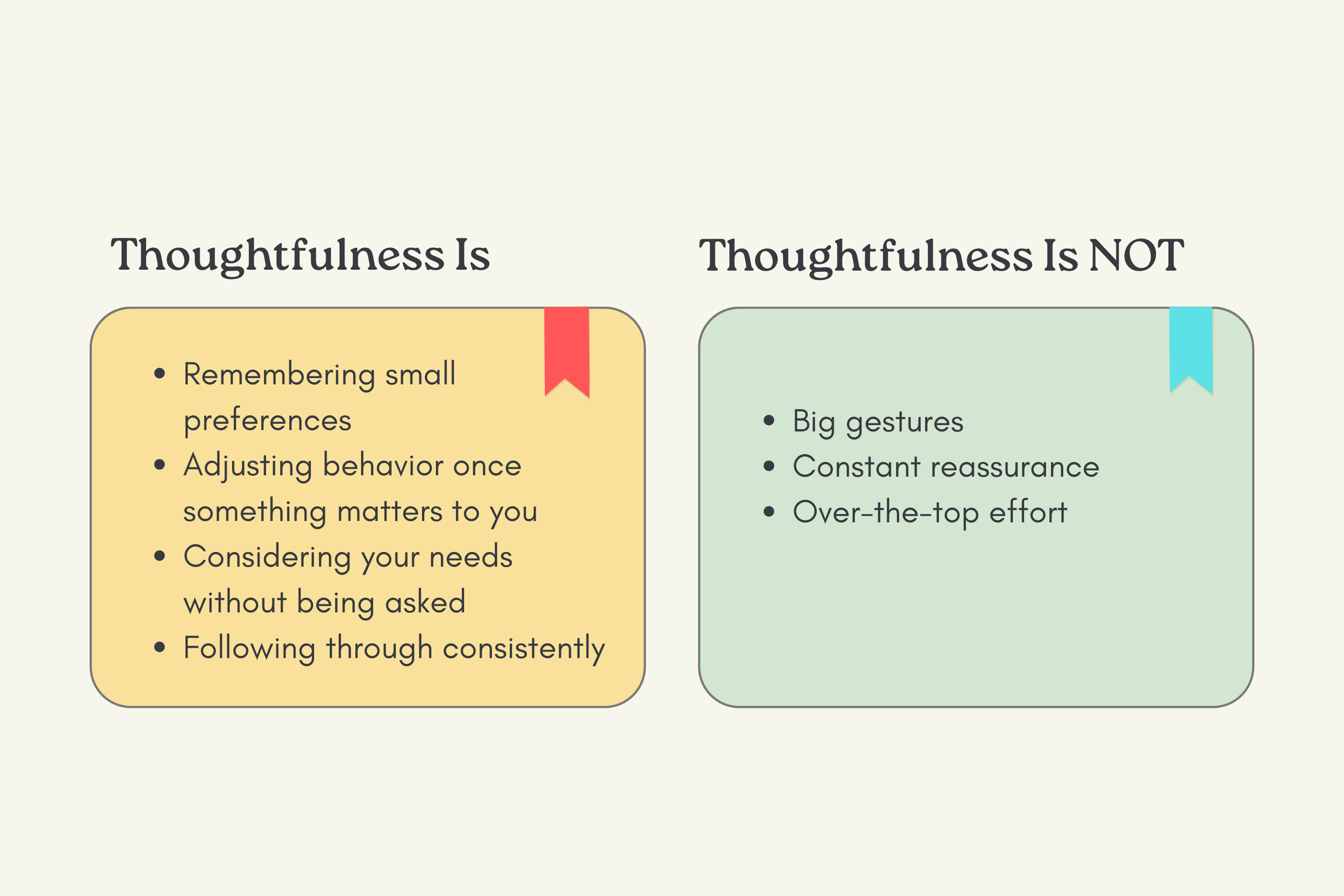
You are not someone who needs big gestures. Sure, those can be nice, but you might even find a big romantic overture overwhelming. Instead, it means a lot to you when your partner shows you they care in small ways. Whether they tell you what they love about you or remember exactly how you like your eggs cooked or cuddle up with you on the couch, you feel loved by these simple gestures.
It’s especially meaningful when your partner pays attention to what matters to you and even changes their behavior because of it. Things like remembering to put certain containers in the recycling, making a donation to an organization you support, or going with you to a movie that’s not their preference just because they know you care are great signs of a considerate partner.
Thoughtfulness = emotional safety
When your partner is thoughtful and takes your feelings and needs into account, you don’t feel like a burden. You get to experience what it’s like to be supported without judgment, and you get to see firsthand that you’re not “too much.” Instead, you feel loved, understood, and appreciated just as you are.
Considerate people naturally make space for your sensitivity
A healthy partner can balance their own needs, be empathetic about your needs, and make space for both. They have the awareness to recognize that any partner’s desires will not always align with their own and the adaptability to be flexible, allow for, and even appreciate differences.
Trait #5 — Someone Who Respects Your Need for Space and Recovery
Alone time helps you regulate
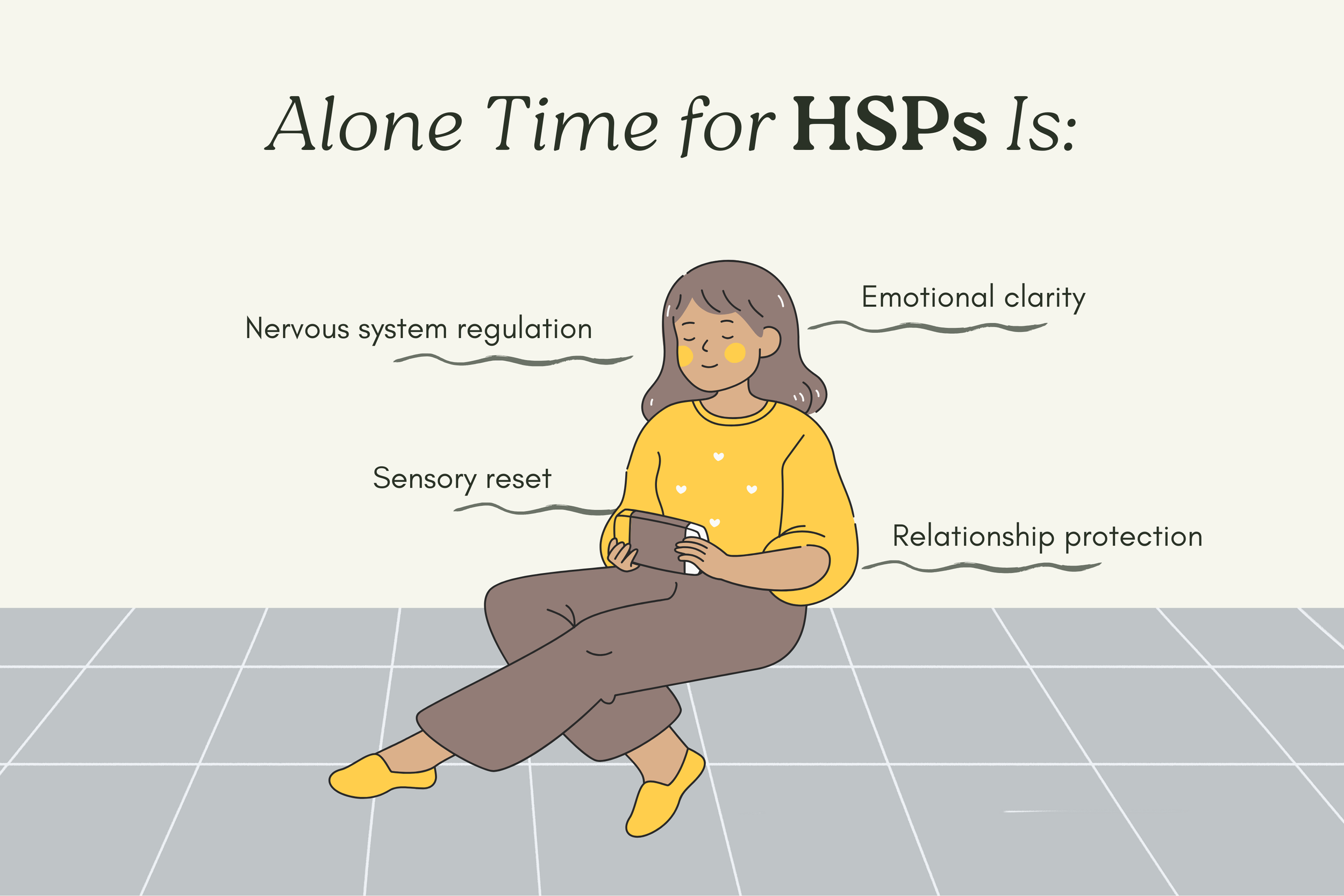
As an HSP, you need time to yourself to regulate. Because of how much information you naturally take in as you go about your day, you need space to get emotional clarity and to have a sensory reset.
Exactly how much time and what activities are restorative to you will vary based on your personality, including whether you’re introverted or extroverted. While there’s no one-size-fits-all approach, the key is to figure out what works for you and stick to it.
You may need alone time every day for rest and reflection, or some time once a week may be enough. It’s okay whether you take 5 minutes or 4 hours, and the right partner will understand and support you with taking the time you need.
(Caveat - of course, there are times in life when it may not be feasible for you to take as much time as you really need. A good enough partner will work with you, so you can figure out together what’s doable and necessary.)
Your partner doesn’t take your need for space personally
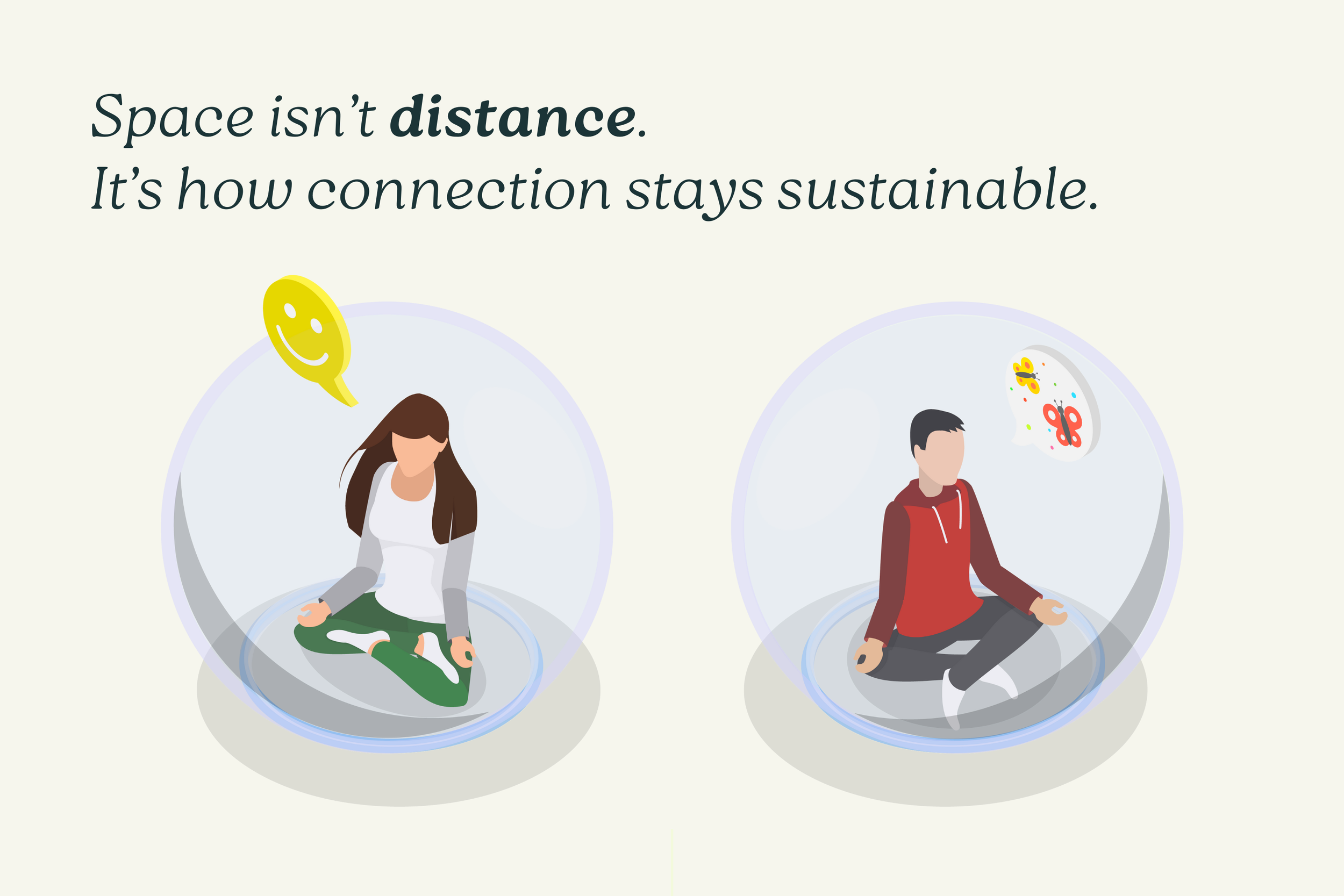
A healthy partner will understand your need for alone time and respect it without laying on the guilt trip about how if you really loved them you wouldn’t need time away from them and so on. (Or, if they ever do this, they’ll be receptive when you tell them how it affects you and what would be more helpful instead.)
A partner who’s a good match won’t play the neediness card either. They’ll be able to make other plans or enjoy their own alone time, and they won’t pressure you to give up your “me time” because they’re too lonely or bored or unhappy.
They understand your capacity fluctuates
As an HSP, your energy levels may change moment by moment. The dinner with friends that sounded fun last week seems utterly exhausting to go to in the next hour, or your best laid plans to hit the gym are not going to happen after your day filled with meetings.
It’s normal for everyone’s energy to fluctuate, but you get more wiped out than other people, and your partner will understand and take that into account. You might create a Plan B where your partner goes to the social function without you because your partner understands that you’ll try your best to make it next time, and they would want you to do the same if the situation were Reversed.
Trait #6 — Someone Secure, Not Avoidant
Avoidant partners trigger HSP sensitivity
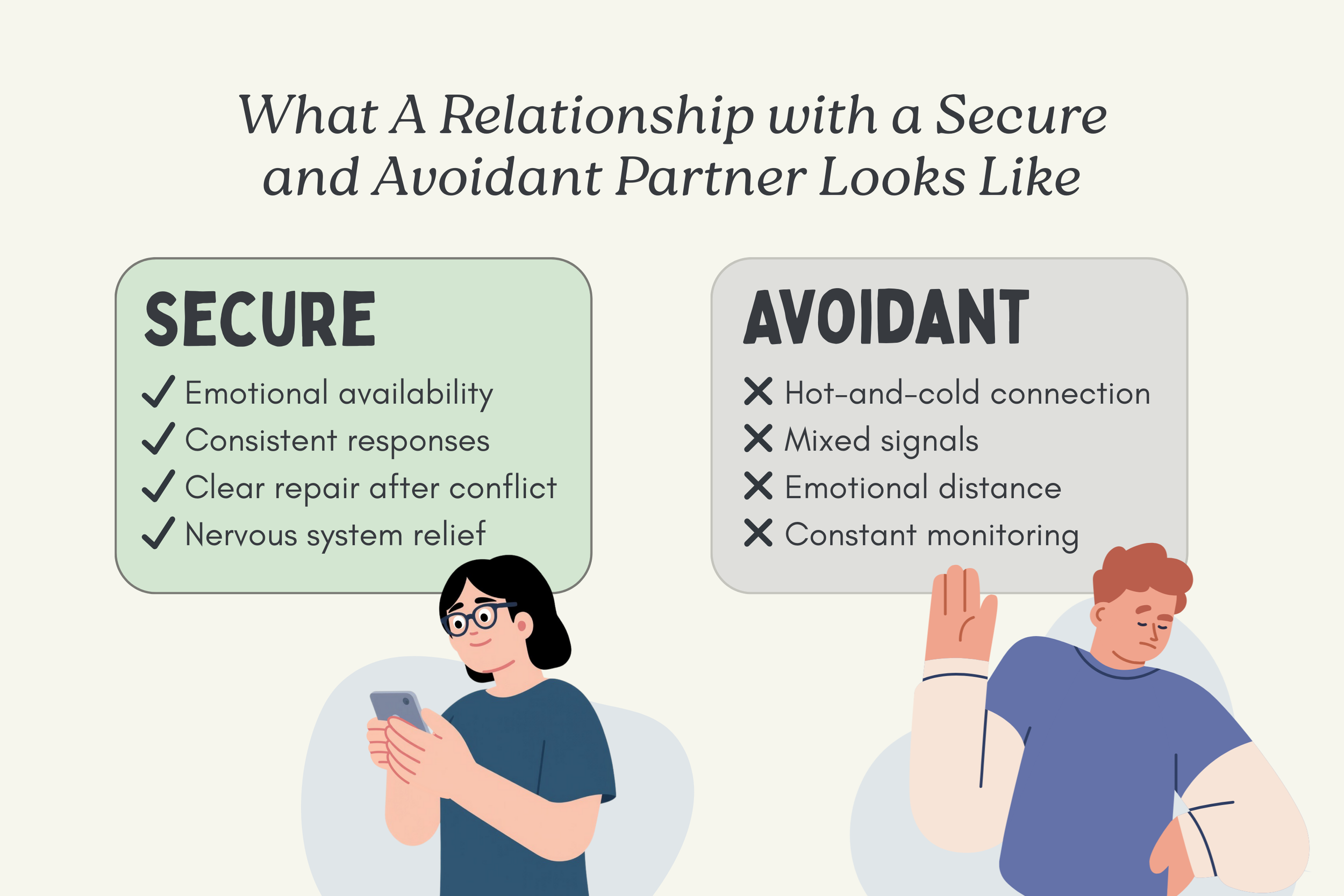
When someone’s behavior runs hot-and-cold, it’s overstimulating for your sensitive nervous system. You benefit from a calm partner, so if your partner pendulates between extremes of showing love and being distant or cold, the constant changes exhaust you.
As a deeply feeling person, it’s really difficult for you if your partner frequently engages in emotional distance. While it’s common for people with a more avoidant attachment style to become uncomfortable with emotional closeness and react by putting more distance in the relationship, this can be a nightmare for you as you notice all the shifts, which naturally trigger anxiety (that you feel strongly) and may also trigger insecurities or fears from your past.
Secure partners feel grounded and safe
When you’re with a partner who is emotionally available, you feel safe and secure. You can let your guard down and not have to interpret every single cue because you can trust that your partner will talk to you about issues that arise. So, you can relax and don’t have to try so hard to stay on top of a shifting foundation.
Secure partners create healthy interdependence. You’re both able to have your own interests, hobbies, and friends while still sharing in activities you enjoy together. You get to be healthy individuals and a healthy couple.
With secure partners, sensitivity softens instead of intensifies
When you’re with someone who’s calm and steady, you’re more calm and steady too. You aren’t getting triggered by your partner’s mood swings or abrupt behavior changes, so you feel less reactive, which also makes you feel more confident - in yourself, your needs, and your relationship.
Trait #7 — Someone Who Doesn’t Shame Sensitivity
Sensitivity isn’t a flaw—it’s part of your blueprint
You were born as a highly sensitive person. This trait is an innate part of who you are and how you interact with the world. It’s a two-sided coin comprised of strengths like your empathy and care for people, animals, and the natural world; your insight; and your emotional depth. It also has its challenges like overstimulation, overwhelming emotions, and sensory sensitivity, all of which you might feel ashamed of (especially because Western culture has taught you that these are problems).
This shame can create anxiety about your sensitivity and a desire to hide it from others. However, when your partner sees and loves you just as you are, this acceptance creates relaxation and helps you better accept yourself.
The right partner protects your sensitivity, not mocks it
A partner who’s a good fit for you will seek to understand and support your sensitivity. They won’t mock you for feeling deeply or having needs. Instead, a good enough partner will bring kindness, curiosity, and respect to knowing and understanding you as a whole person, including your sensitivity.
You feel free to be your full emotional self
You won’t need to mask when you’re with the partner who’s right for you. You’ll be able to show up as your full and complete self and be supported for who you are. Even if your partner isn’t highly sensitive and doesn’t quite understand your experience at times, they’ll listen and do what they can to support you because they care. So, there’ll be no shrinking. You won’t have to hide or make yourself smaller to be accepted.
Signs You’ve Found the Right Partner for an HSP
Your nervous system feels calmer around them
You’ll feel less anxiety when you’re with a partner who’s a good fit for you, and you’ll get caught up in less overthinking. You’ll find that you don’t need to worry about your relationship or question their motivations as much because there’s a foundation of trust and respect. Thus, you will feel calmer, more relaxed, and more grounded.
You feel deeply understood
As humans, we all have a need for emotional safety. As a highly sensitive person, this need is even more acute. So, you benefit greatly from being in a relationship with emotional reciprocity in which you both share your feelings and experiences with one another, feel heard and validated, and are able to build deep trust and understanding.
Your sensitivity feels like a benefit, not a burden
To be seen and understood as you are builds deep emotional connection. Your empathy, insight, and awareness become huge strengths in your relationship leading to more attunement. Your partner will appreciate the genuine, meaningful connection the two of you build together, and you’ll be able to see the strengths of your sensitivity.
When It’s Not You—It’s the Wrong Relationship
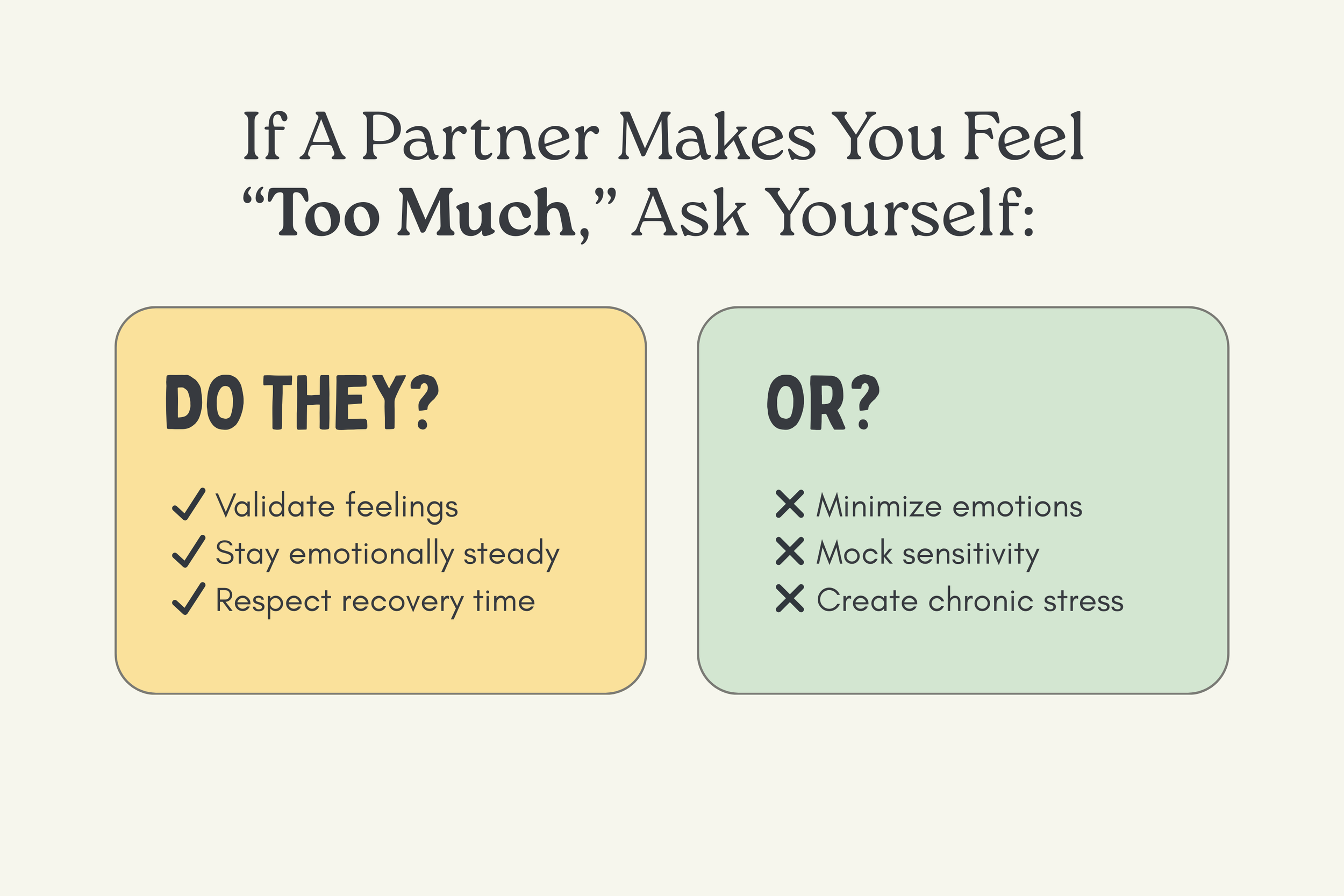
If you feel “too much,” you may be with someone too little
Emotional mismatch - not enough awareness or reflection about their own emotions
Incompatibility - not enough of an internal world
This doesn’t mean that they’re a bad person, but when there’s emotional mismatch in arelationship, you may feel like you’re “too much.” If your partner isn’t very in touch with their own emotions, doesn’t reflect much on their experiences, or doesn’t have a lot of self-awareness, you’re going to operate from different spheres. Having such divergent experiences can make each of you feel “wrong,” like you’re “too much” or “not enough.”
If you identify as a highly sensitive person (HSP) and need tailored support, Thrive Therapy & Counseling can help. Book a call here to get the support you deserve.
The wrong partner intensifies your sensitivity
If your partner criticizes you for your sensitivity, of course you’re going to feel worse about yourself and feel shamed for who you are. While there’s room in a healthy relationship for constructive feedback (which will work best for you if it’s shared very gently), criticism should not be a cornerstone of your dynamic.
Likewise, if your partner frequently minimizes your needs or requests, they’re not the right fit for you. Even if they don’t always understand your sensitivity, a supportive partner will try to meet your needs within reason most of the time.
Sensitivity thrives in safe environments
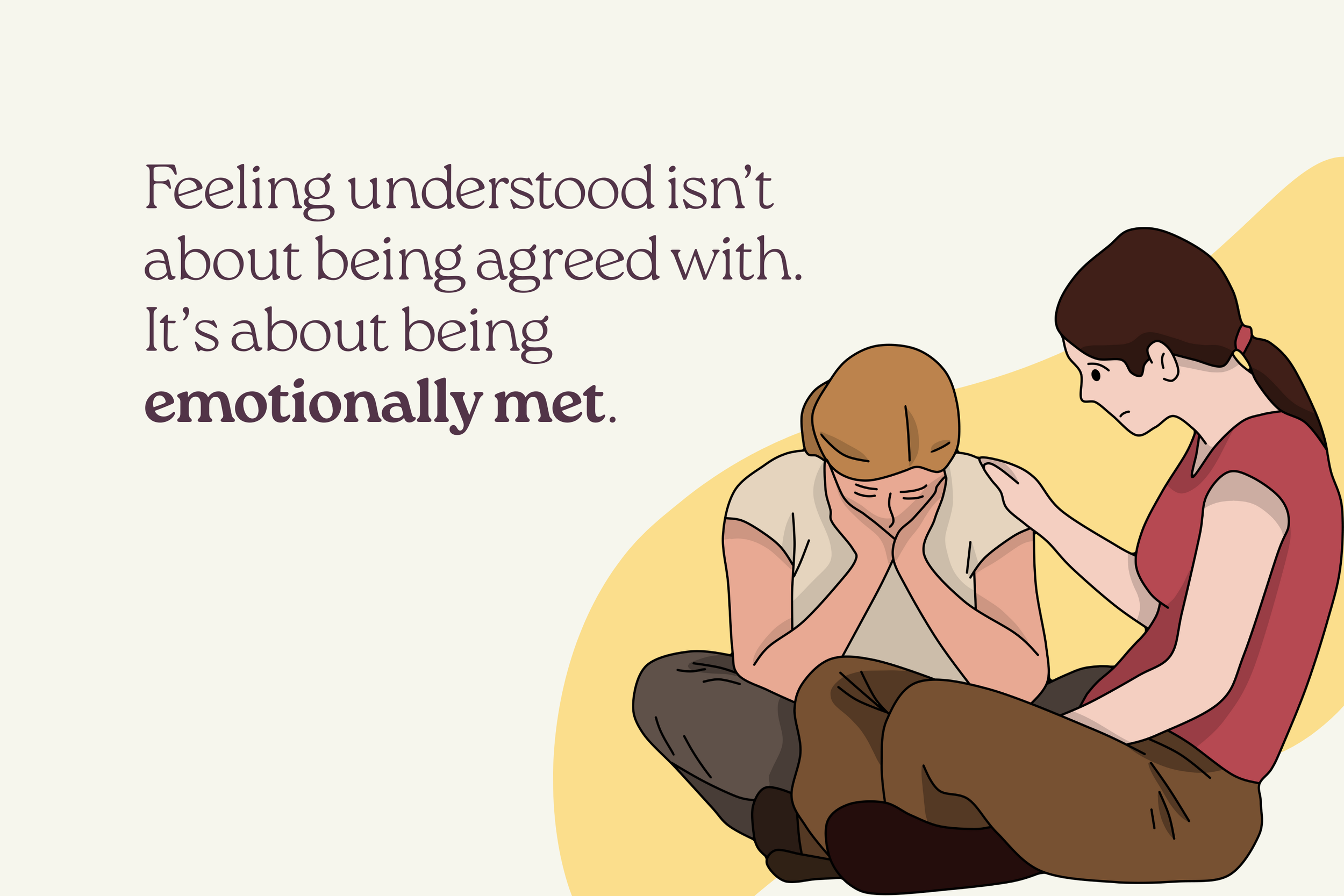
Because of your differential susceptibility (you benefit more from positive experiences and are more impacted by negative experiences), you’re at your best with calm, safe people. They enable you to lean into your strengths of empathy, compassion, and insight, and they help your nervous system relax and ground without having to frequently respond to new cues.
You’ll feel more compatible in a relationship that supports you in these ways, and you won’t have to obscure who you are, toughen up, or try to grow a thicker skin.
References:
Acevedo BP, Aron EN, Aron A, Sangster MD, Collins N, Brown LL. The highly sensitive brain: an fMRI study of sensory processing sensitivity and response to others' emotions. Brain Behav.
2014 Jul;4(4):580-94. doi: 10.1002/brb3.242. Epub 2014 Jun 23. PMID: 25161824; PMCID: PMC4086365. https://pmc.ncbi.nlm.nih.gov/articles/PMC4086365/