
Finding a Therapist in Sacramento: How to Avoid the Most Common Dead Ends
Ivy Griffin
If you live in Sacramento and you’ve tried to find a therapist lately, you already know the problem:
It can feel less like “getting support” and more like a lot of work. I’ve even heard people say, “Finding a therapist is like having a part-time job.”
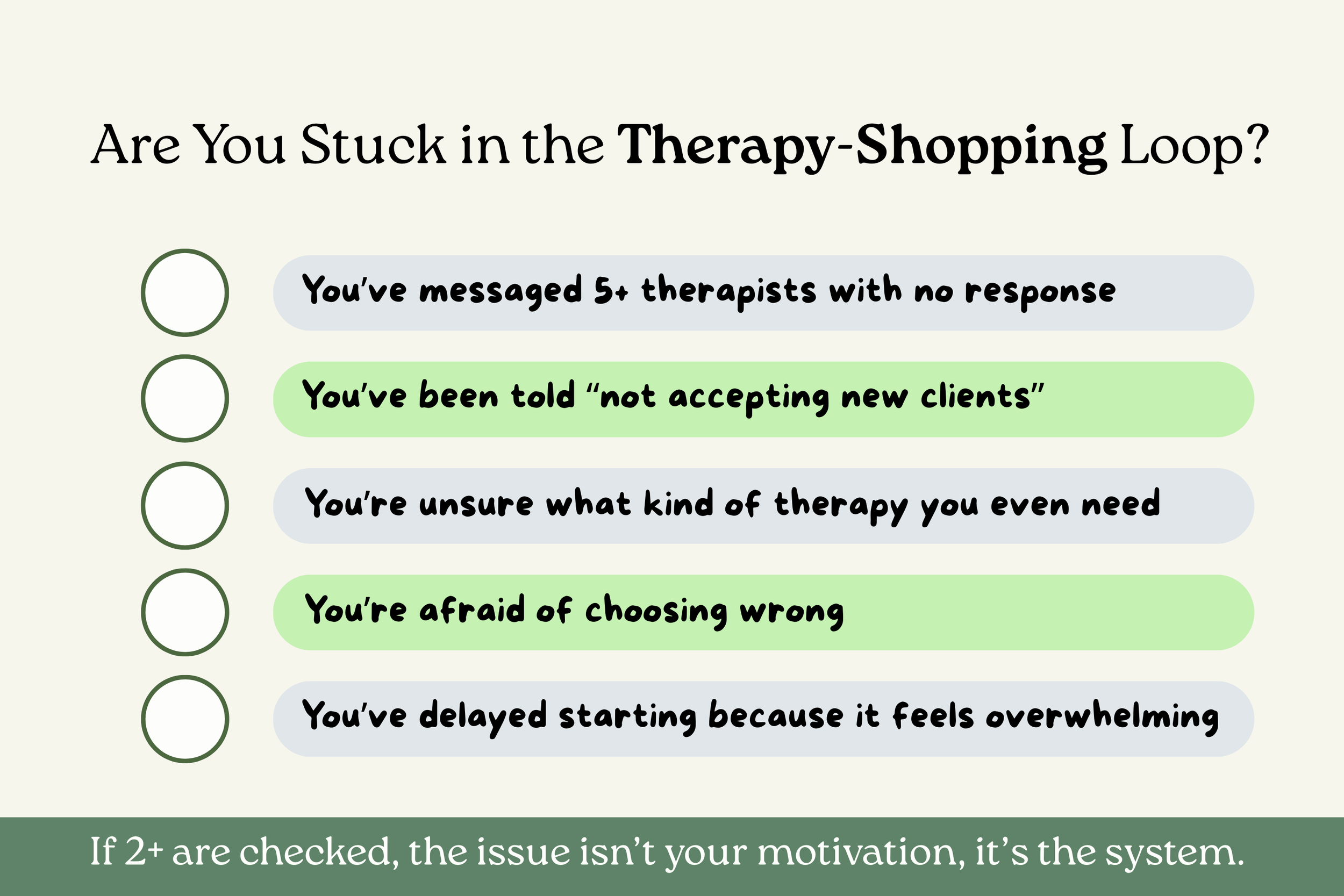
And if you’ve been stuck in the loop of scrolling directories, sending emails, leaving voicemails, getting no responses, or finding out nobody is taking new clients, you’re not alone.
This post is here to do one thing: help you avoid the most common dead ends, so you can stop losing time and start getting help that actually helps.
I’m Ivy, and I run Thrive Therapy & Counseling. We work with teens and adults in the Sacramento area, and we’ve designed our intake process specifically to solve the “therapy shopping” problem, because people shouldn’t have to burn out just trying to get the help they need.
Before we get into it, let’s name the hesitation that keeps a lot of people stuck: “I’m worried I’ll choose the wrong therapist… waste months… and have to start over.”
That’s a completely normal fear. And it’s exactly what we’re going to clear up.
Why therapy shopping feels so exhausting (and why it’s not your fault)
If you’re overwhelmed by the search, it usually isn’t because you’re being “too picky.” It’s because most people are trying to solve a complex problem with a tool that wasn’t built for it. Here are the most common forces working against you:
Scarcity: many therapists aren’t taking new clients.
Insurance friction: most therapists in California aren’t in-network with insurances (There are many frustrating and complicated reasons why.) Plus, there’s phone tag with your insurance, hold times, referrals, approvals, and more phone tag with therapists.
Information overload: directories give you too many options, every therapist starts to sound the same, and it’s completely overwhelming.
Fit uncertainty: you’re trying to predict a relationship and a clinical approach from a short bio.
Emotional cost: every intake call or first session can mean re-telling difficult parts of your life.
People end up doing what feels logical: keep searching until they find “the right person.”
But without a process, the search becomes endless. And that’s where things start costing you more than time.
The real cost of the wrong fit (or the endless search)
Most people think the cost of therapy shopping is just an inconvenience. In reality, it can cost you:
Months of momentum — because you’re waiting, restarting, waiting again.
Emotional energy you don’t have — the search steals the very capacity you’re trying to rebuild.
A weird kind of numbness — after telling the story so many times, you stop feeling connected to your own experience.
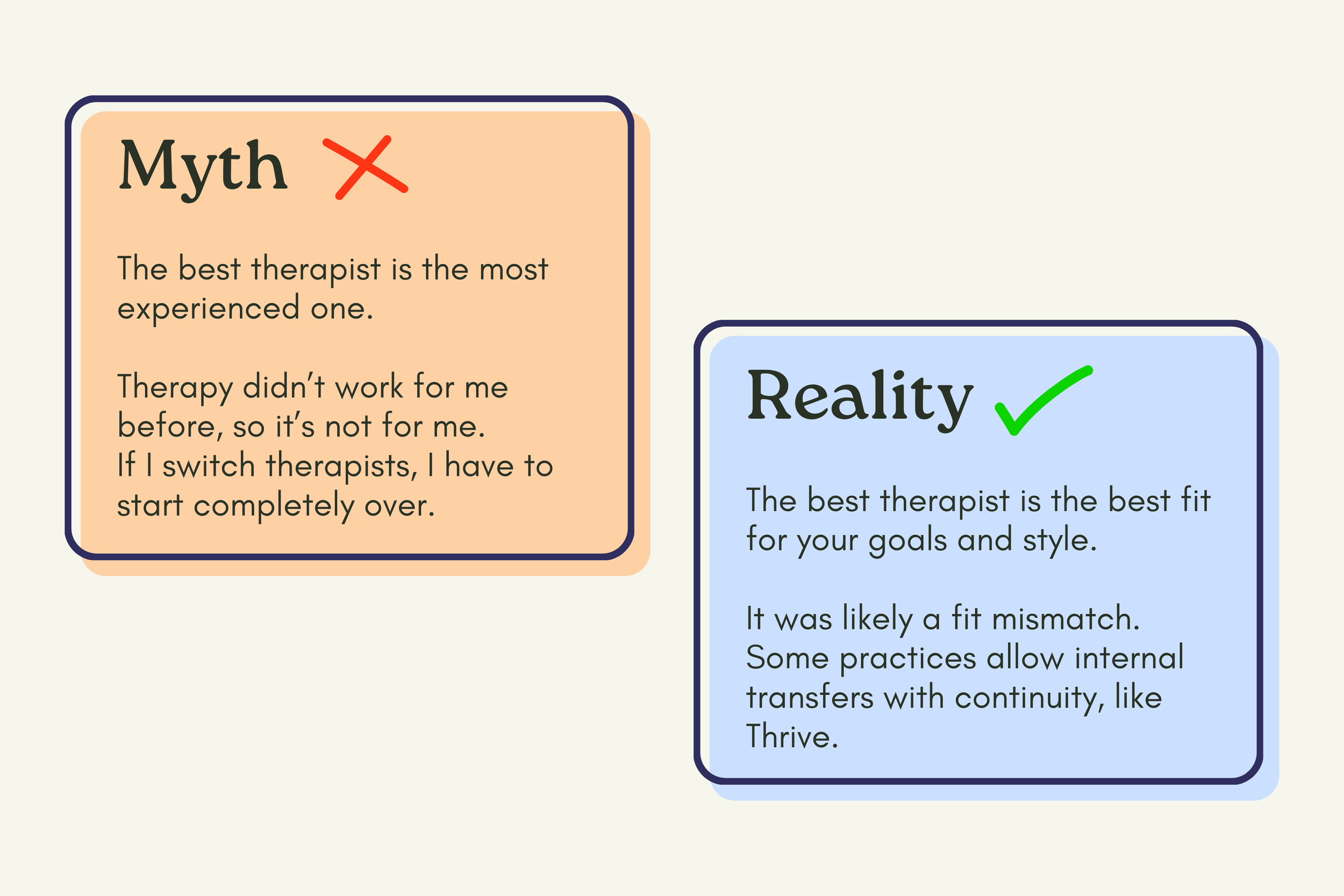
More shame — “If therapy didn’t work before, maybe I’m the problem.”
Here’s the truth: when therapy doesn’t “click,” it’s often not a failure of therapy.
It’s usually a fit problem. And fit is not a vibe. It’s a clinical variable.
The most common therapy-shopping dead ends in Sacramento
Let’s talk about where people tend to get stuck — so you can spot it early and pivot faster.
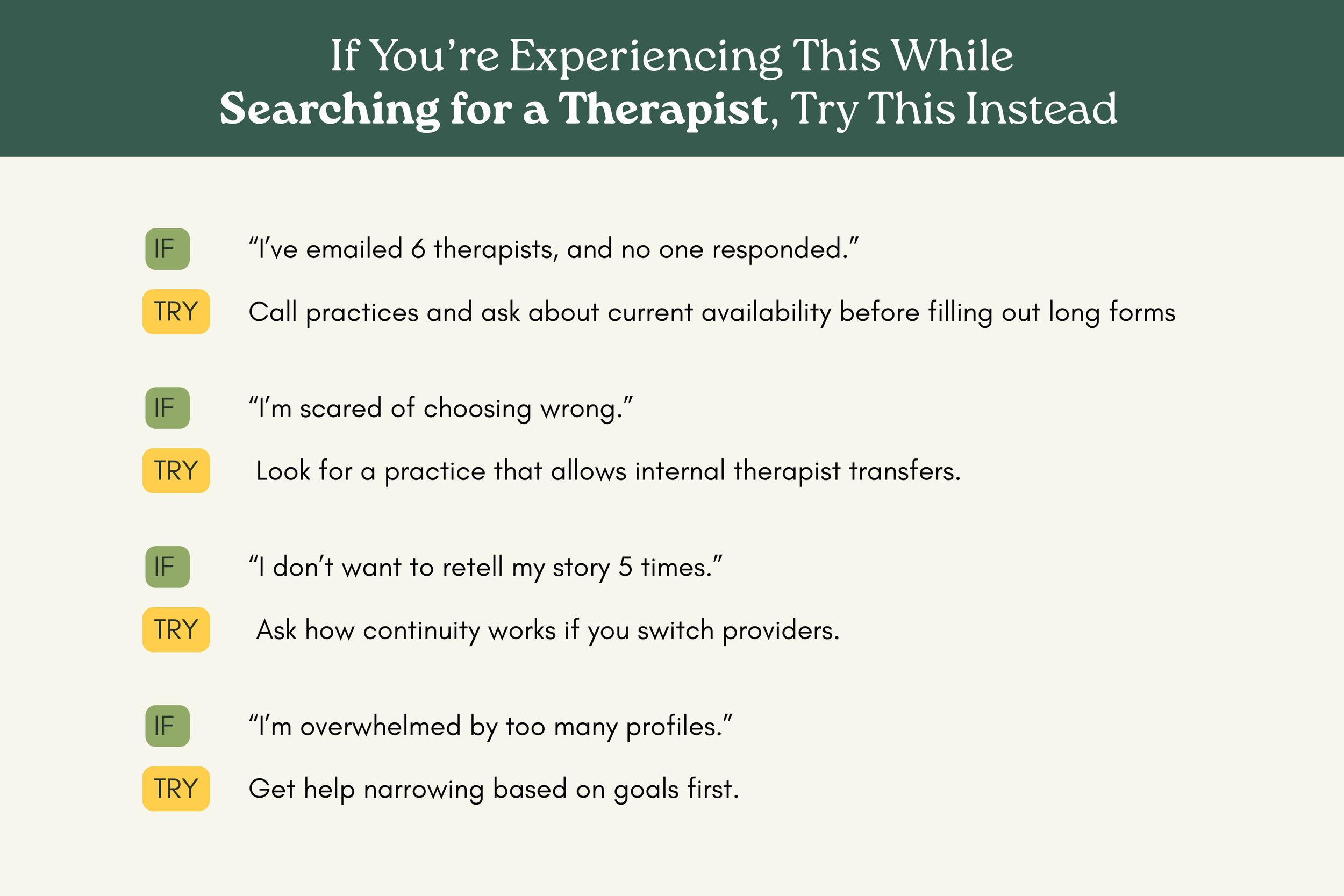
Dead end #1: Directory doom
You find a directory.
You scroll.
You message a handful of people.
You get no replies.
Or you get “not accepting new clients.”
You’re doing work, but it doesn’t create progress. Meanwhile, you’re still struggling with the difficult issues that led you to try to find a therapist in the first place.
Fix: Don’t start with “who looks good.” Start with “what do I need?” (I’ll show you how in a second.)
Dead end #2: “Nobody takes new clients” / “Nobody takes my insurance”
This is the loop that makes people give up.
You finally reach out — and you hit a wall.
Fix: You need fewer, better outreach attempts, and you need someone to help you triage options based on your needs and constraints.
Dead end #3: In-person vs. telehealth mismatch
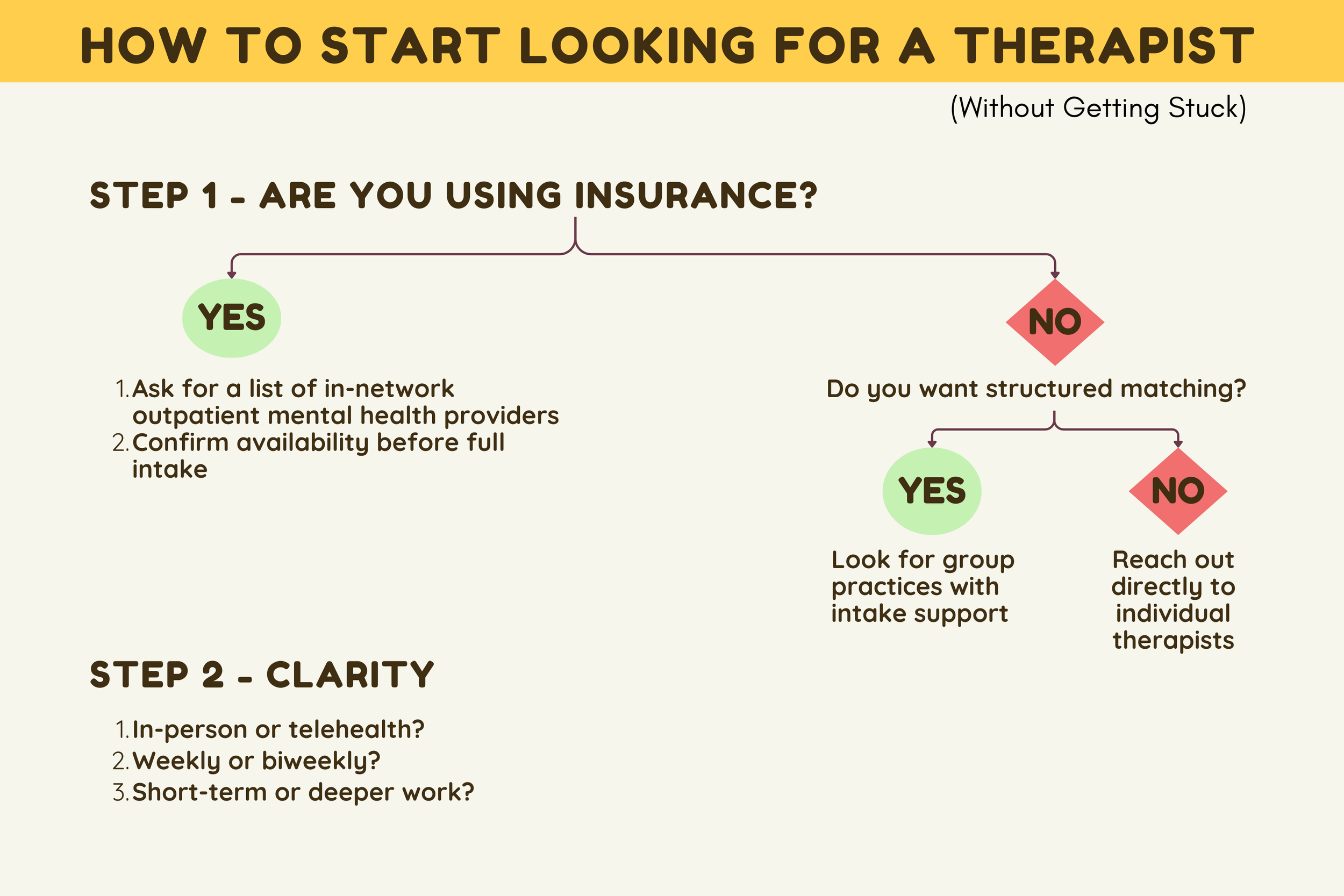
Some people strongly prefer in-person. Others need the flexibility of telehealth.
When you’re searching without a plan, you lose time and energy just learning what’s actually available.
Fix: Make format preferences explicit upfront (and understand the trade-offs for availability).
Dead end #4: Insurance phone-tag + administrative friction
Even when you’re doing everything “right,” insurance-based systems create delays.
If you’re already struggling, the added friction can be enough to make you stop trying.
Fix: If you’re using insurance, treat the process like a project: get clear on your network, ask the right questions early, and don’t assume “no response” means “no help exists.”
Dead end #5: Choosing based on availability alone
This is the big one.
When you’re tired, you’ll take whoever has an opening. And sometimes that works.
But sometimes it leads to:
a mismatch in approach (you need trauma-informed care, but you’re in a strictly skills-only model)
a mismatch in pace (you need depth, but the work stays surface-level)
a mismatch in relational style (you feel unseen, rushed, or constantly “talked at”)
Fix: Availability matters — but it can’t be the only filter.
If you’re ready for a therapy process that feels clearer and more supported from the beginning, connect with us here. Our intake process is built to match you thoughtfully, protect you from restart fatigue, and get you moving with momentum.
Three shifts that make therapist-finding less overwhelming
Here are three mindset-and-method shifts that reduce the “second job” feeling immediately.
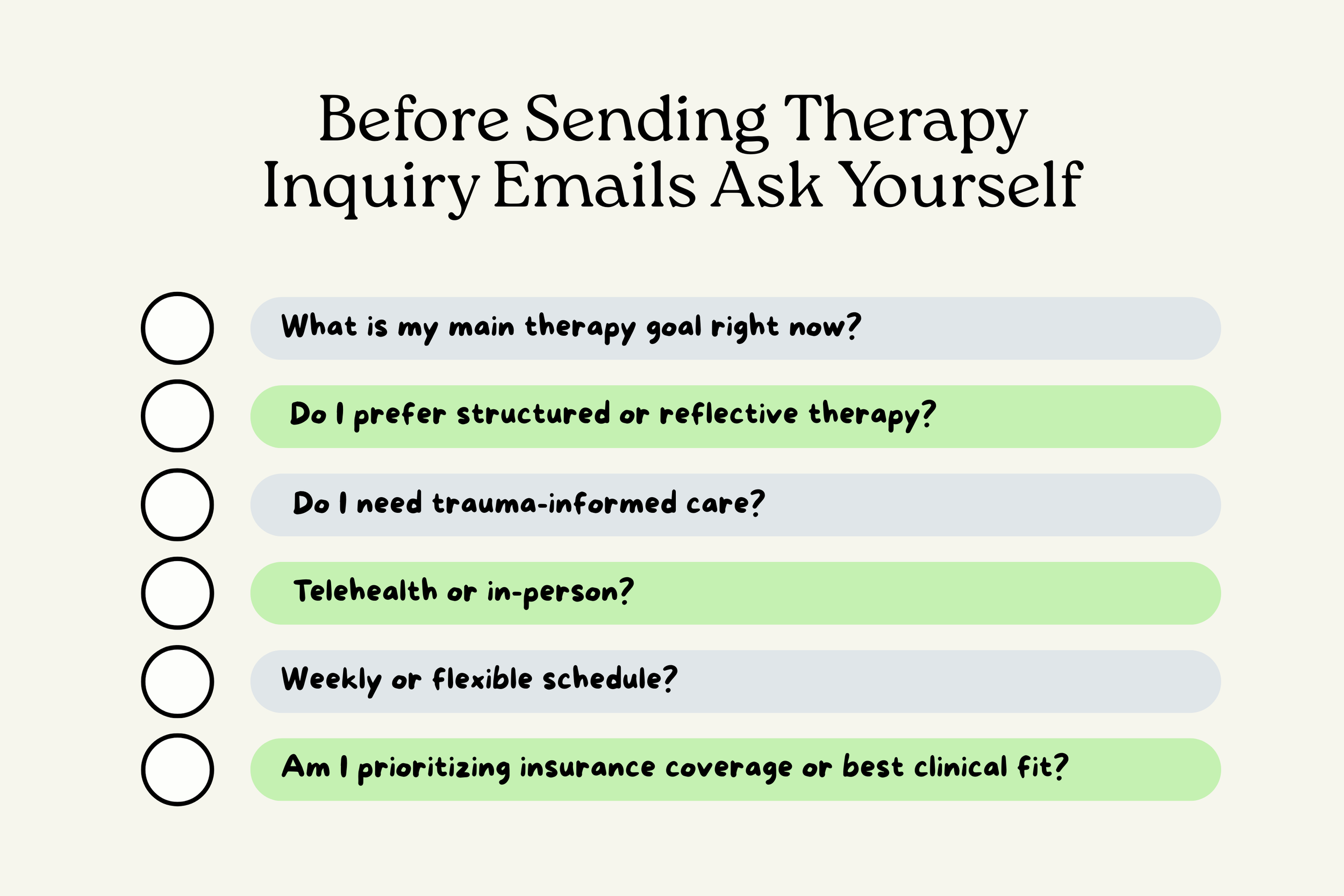
Shift #1: Stop searching for “the best therapist.” Search for the best fit.
The best therapist for your friend may be the wrong therapist for you.
Fit includes:
Approach: trauma-informed, relational, CBT/DBT, somatic, attachment-focused, etc.
Style: direct vs gentle, structured vs open-ended, more reflective vs more skills-oriented.
Logistics: weekly vs biweekly, in-person vs telehealth, schedule compatibility.
Shift #2: Get clear on your “right now” goal
A lot of people skip this step because they feel like they should already know.
You don’t need a perfect goal. You just need a direction.
Examples:
“I want to stop feeling overwhelmed all the time.”
“I want to stop spiraling after arguments with my partner.”
“I want to be able to relax.”
“I want to stop repeating the same patterns in my relationships.”
“I need support while I make a big change in my life.”
Shift #3: Remove the ‘starting over’ penalty
This is the reason therapy shopping becomes emotionally expensive.
The fear isn’t just “what if this isn’t a fit.”
It’s: “I don’t have it in me to tell my story all over again.”
A better therapy model doesn’t just match you well — it also protects you if we need to adjust.
How Thrive removes the dead ends (and why we built it this way)
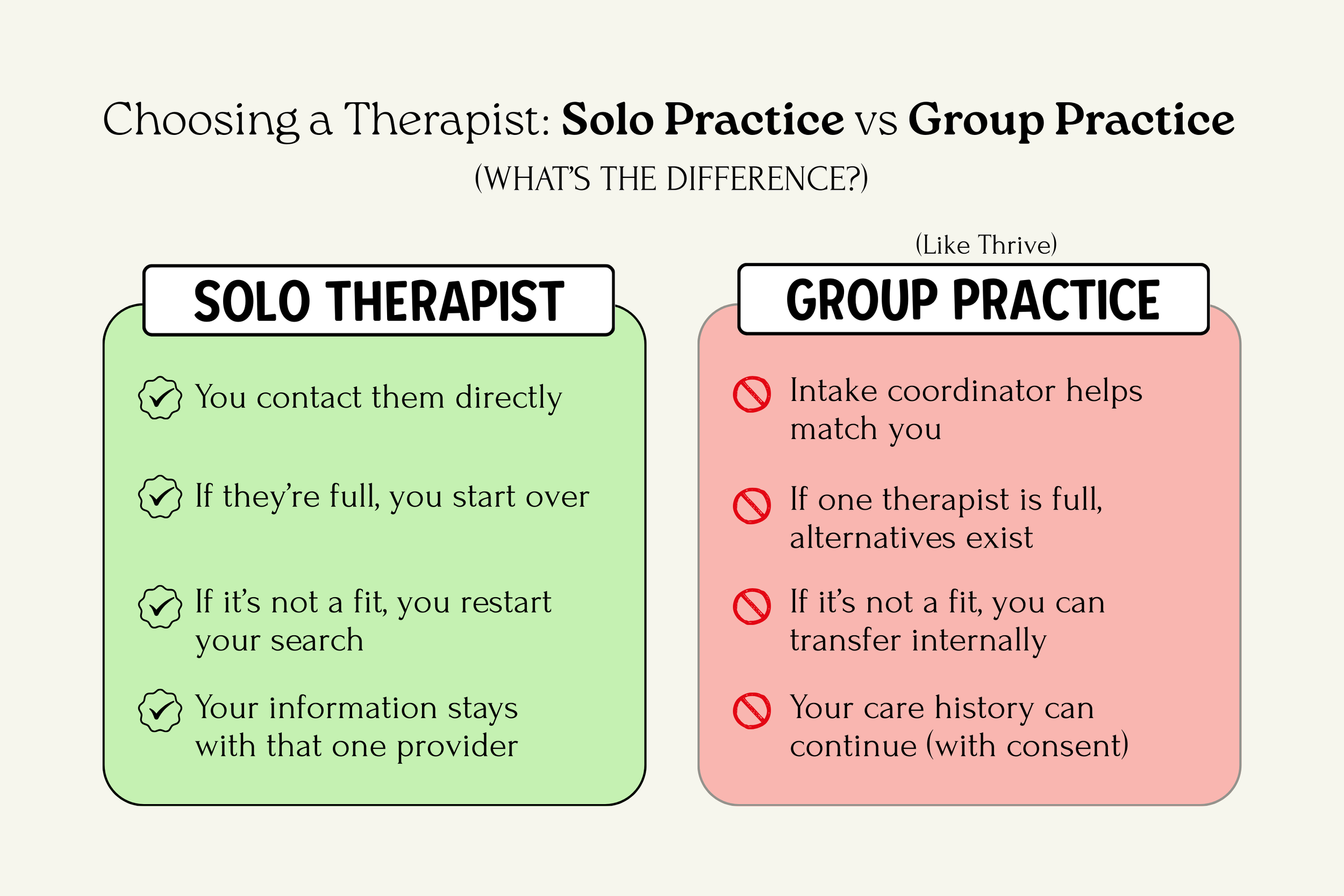
This is exactly why Thrive is structured as a group practice with an Intake Coordinator.
Not because we want to complicate things.
Because we want to make the start easier and reduce the risk of getting stuck.
1) You don’t have to triage everything alone
We start with an Intake Coordinator (who’s also a therapist). She asks real questions — not just “what’s your availability?” We’ll ask about:
what you’re dealing with
your identities that might be an exact fit for our specialties
what constraints you have (schedule, format, budget)
Your preferences - for telehealth or in-person, weekly or biweekly sessions
Whether you’ve already identified one of our therapists who you connect with or whether you’d like help identifying who is right for you
Then we help match you to the therapist most likely to be a good fit.
2) You can still choose — with support
Some people want to browse the therapist list and pick someone who feels right.
Great. You can do that.
And you can also share preferences during intake, like:
“I prefer a therapist who is more structured.”
“I need someone trauma-informed.”
“I do better with a therapist who is direct.”
“I’m not ready to go deep right away.”
We’ll take that seriously.
3) If it’s not a fit, we can shift you internally
Sometimes you can do everything right and still realize: this isn’t the right match. It’s natural that personalities and styles are complex, and sometimes it’s hard to know exactly how it’s going to feel until you try.
That’s not a failure.
That’s information.
And in a group practice, it doesn’t have to mean starting from scratch. We can transfer you to a different therapist inside Thrive — faster and with less emotional cost.
4) Your notes don’t disappear (so you don’t have to relive everything)
With your consent, internal care continuity can mean:
your new therapist can understand the context
you don’t have to re-tell every detail just to get back to where you left off
you can focus on progress instead of repeating your history
You still get to share what feels important. You’re still in control.
But you don’t have to pay the full “starting over” price.
Want to stop therapy shopping and start with a process designed to match you right the first time? Connect with us here. Our intake process is built to match you thoughtfully, protect you from restart fatigue, and get you moving with momentum.
So… what’s the best fit for you right now?
Here’s the honest answer: it depends on what you’re optimizing for.
If you’re optimizing for lowest cost and access:
insurance-based care may be the right place to start
you’ll likely need more patience with the system
it helps to be very clear about your goals and preferences upfront
Start by requesting a list of” in-network outpatient behavioral/mental health therapists” from your insurance. Then search for therapists who list that they take your insurance.
If you’re optimizing for fit, momentum, and continuity:
a practice that supports matching (and adjustments) can save you months
you’re reducing the risk of “wrong fit → burnout → quitting”
Either way, you deserve support.
And you deserve a process that doesn’t drain you before therapy even starts
Next step: let us help you get matched
If you’re tired of doing this alone, we can help.
Option A: Start with our intake process and let our coordinator help match you.
Option B: Browse our therapist team and tell us who you’re drawn to — and we’ll help confirm fit.
If you’ve been stuck in the therapy-shopping loop, you don’t need more willpower.
You need a better system.
In the first session with your therapist, you’ll talk about:
what you want to change
What you’ve tried - what’s helped and what hasn’t
what kind of therapist style helps you (and what doesn’t)
Your strengths, hobbies, and interests
Your support system
Your hopes for therapy
And, we’ll check in about how the session felt and whether we are a good fit to work together.
Plus, we’ll start setting goals for your therapy, based on what’s important to you, so you can be clear from the beginning that we’re heading in the right direction.